

Problem-Solving with Critical Thinking & Data Privacy
Golden Hook & Introduction
SECTION
Nova: Atlas, I was today years old when I realized that sometimes, the biggest obstacle to solving a problem isn't the problem itself, but the way my own brain decides to look at it. It's like my mind has two very different roommates, and they're constantly arguing.
Atlas: Oh man, I know that feeling! One wants to jump to conclusions and the other is still trying to find its reading glasses. So you're saying our internal monologue is less a monologue and more a chaotic improv show?
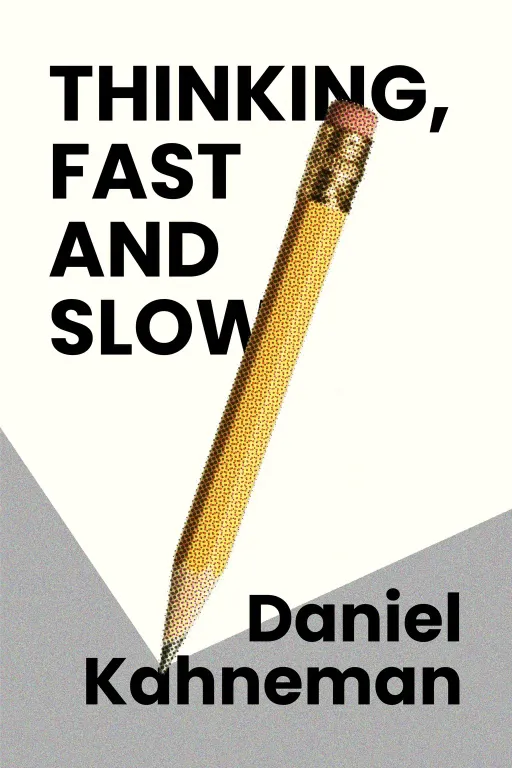
Nova: Exactly! And that's precisely what Daniel Kahneman, a Nobel laureate, delves into in his groundbreaking work, "Thinking, Fast and Slow." This book isn't just a psychology text; it's a map of the human mind, helping us navigate our own cognitive shortcuts and biases. It’s widely acclaimed, winning numerous awards, and really shifted how we understand decision-making.
Atlas: I can see how that would be vital. Understanding those internal biases, those mental shortcuts, is the first step, right? Because if we don't know our own blind spots, how can we possibly solve problems effectively, especially when they involve something as sensitive as data?
Nova: That's the perfect pivot, Atlas, because while Kahneman shows us the internal landscape, Shoshana Zuboff, in her equally impactful book, "The Age of Surveillance Capitalism," reveals the external forces at play. She exposes how tech giants have built an entirely new economic order by extracting and monetizing our personal data, often without our explicit consent. Zuboff’s work really ignited a global conversation about digital ethics, highlighting a critical, often invisible, threat to individual autonomy.
Atlas: Hold on, so we're talking about our own brains tricking us, and then, on top of that, entire industries are built on collecting and profiting from our digital breadcrumbs? That sounds rough, but it also sounds like the exact kind of deep understanding and ethical foresight our listeners, especially those building sustainable solutions, are craving.
Nova: Absolutely. Today, we're going to connect these two titans of thought to answer a crucial question: How can we apply Kahneman's insights into cognitive biases to improve our problem-solving processes, while simultaneously ensuring our solutions rigorously uphold data privacy and ethical data practices, as illuminated by Zuboff? We're talking about building not just smart solutions, but truly human-centered, ethical ones.
The Dual Systems of Thought: System 1 vs. System 2
SECTION
Nova: Let's dive into Kahneman's "Thinking, Fast and Slow." He introduces us to two systems that drive how we think. System 1 is our fast, intuitive, emotional brain – it's what makes us jump when we hear a loud noise, or instantly recognize a friend's face. It’s incredibly efficient, but also prone to biases.
Atlas: So, it's like the brain's autopilot? Quick decisions, gut feelings, maybe a bit impulsive? I imagine a lot of our listeners, especially those working in fast-paced environments, rely heavily on that System 1 thinking.
Nova: Precisely. Now, System 2 is the slower, more deliberate, logical part of our brain. It's what we use for complex calculations, learning a new language, or carefully weighing the pros and cons of a major decision. It requires effort and attention. Kahneman, along with his long-time collaborator Amos Tversky, conducted decades of research, often using clever experiments, to demonstrate just how pervasive these cognitive biases are, and how System 1 often overrides System 2 without us even realizing it. Their collaboration was legendary in the field of cognitive psychology, often described as a 'meeting of minds' that reshaped our understanding of human judgment.
Atlas: That makes me wonder, how does System 1 lead us astray in problem-solving? Can you give an example?
Nova: Oh, absolutely. Think about the 'anchoring effect.' It's a classic example. Imagine you're negotiating a price, say for a new piece of software for your team. The first number mentioned, even if it's completely arbitrary, tends to 'anchor' the subsequent discussion. If a vendor throws out a ridiculously high initial price, even if you know it's inflated, your final negotiation will likely be higher than if they had started with a more reasonable, lower number. Your System 1 latches onto that anchor, and System 2 has to work extra hard to pull away from it.
Atlas: Wow, so even if we we're being rational, that initial number is silently influencing us. That's actually really insidious, especially for someone who needs to make strategic financial decisions. It highlights how important it is to be aware of how information is presented to us.
Nova: Exactly. Or consider the 'confirmation bias.' System 1 loves to find information that confirms what it already believes, making us overlook or dismiss evidence that contradicts our initial hypothesis. In problem-solving, this can mean we latch onto the first solution that seems plausible and then only seek out data that supports it, rather than truly exploring alternatives.
Atlas: I totally know that feeling. It's like when you have a favorite theory, and suddenly every piece of news or anecdote seems to prove it right, even if it's a stretch. So, the takeaway here is that to be effective problem-solvers, we need to consciously engage our System 2, to slow down and scrutinize our initial instincts.
Nova: That's it. Kahneman's work isn't about eradicating System 1 – it's vital for survival – but about recognizing when to pause, when to engage System 2, and when to question our assumptions. It’s about building a better 'map of the mind' for ourselves, as I mentioned, to mitigate those biases that can compromise effective decision-making.
Surveillance Capitalism and Data Ethics
SECTION
Nova: Now, let's connect that internal landscape to the external world, particularly the digital one. Shoshana Zuboff's "The Age of Surveillance Capitalism" paints a rather stark picture of how our digital lives are being shaped. She argues that tech companies have moved beyond simply selling products or services; they're now in the business of predicting and modifying human behavior for profit.
Atlas: That gives me chills. So, it's not just about targeted ads, it's about something much deeper? I imagine a lot of our listeners who are navigating the complexities of ethical AI in marketing are grappling with this every day.
Nova: Much deeper. Zuboff coined the term 'surveillance capitalism' to describe this new economic order. It's where our personal data – our clicks, our searches, our locations, even our emotional states inferred from our digital interactions – are extracted as 'behavioral surplus.' This surplus is then fed into complex algorithms to predict our future actions, which are then sold to businesses. It's a unilateral claiming of private human experience for commercial purposes.
Atlas: So, when I interact with a 'free' app or social media platform, I'm not the customer, I'm the product, and my data is the raw material? That's a pretty unsettling thought.
Nova: Precisely. And Zuboff doesn't just describe it; she critiques it as a fundamental threat to individual autonomy and democracy. She highlights how this system often operates without our full awareness or consent, creating a new form of power that she calls 'instrumentarian power,' where the goal is to orchestrate society for profit. Her book was the culmination of years of deep research and was met with a mix of awe for its comprehensive analysis and alarm for its implications.
Atlas: Wow, that’s a powerful idea: 'instrumentarian power.' It makes me think about how even seemingly innocuous features, like a 'recommended for you' algorithm, could be subtly guiding our choices, not just reflecting them. So, for our listeners who are aiming to build trust and innovation, understanding this dynamic is absolutely critical.
Nova: It is. Zuboff's analysis is critical for any ethical innovator because it highlights the imperative to champion data privacy and user trust in all data-driven strategies. It's not enough to just build a functional product; we have to consider the ethical implications of how we collect, use, and store data. It's about designing for human flourishing, not just behavioral prediction.
Atlas: That's a huge challenge. On the one hand, data-driven insights can be incredibly powerful for solving problems and creating personalized experiences. On the other, there's this profound ethical tightrope walk.
Ethical Problem Solving: Integrating Critical Thinking and Data Privacy
SECTION
Nova: And that brings us to our deep question: How do we integrate Kahneman’s insights into our cognitive biases with Zuboff’s warnings about surveillance capitalism to create truly ethical problem-solving processes and solutions? It's about building sustainable solutions, not just quick fixes.
Atlas: So, it's not enough to just recognize our own biases when we're designing a solution; we also have to recognize how the very data we're using might be tainted or ethically compromised, or how our solution itself might contribute to the problem.
Nova: Exactly. Let's take an example. Imagine a company developing an AI-powered hiring tool. Kahneman would tell us to be wary of 'algorithmic bias' – if the training data reflects historical human biases, the AI will simply perpetuate them, potentially discriminating against certain demographics. Our System 1 might quickly accept the AI's recommendations because 'it's data-driven,' but System 2 needs to step in and scrutinize the data sources and the algorithm's decisions.
Atlas: That’s a perfect example. And then Zuboff comes in and says, 'But where did that data come from in the first place? Was it collected with full consent? Is it being used in a way that respects individual autonomy, or is it another layer of behavioral prediction and control?'
Nova: Precisely. An ethical innovator, as our user profile describes, wouldn't just build the hiring tool; they would critically examine the provenance of the data, ensure transparency in its collection, and design the AI to be explainable and auditable. They'd ask: "Are we truly empowering job seekers and companies, or are we inadvertently creating a more subtle form of surveillance in the hiring process?"
Atlas: It sounds like the ultimate goal is to move beyond just 'effective' problem-solving to 'responsible' problem-solving. It's about building solutions that anticipate market shifts, yes, but also uphold integrity and foresight.
Nova: Bingo. It requires a continuous learning mindset, as our user profile emphasizes. We need to continuously reflect on the impact of our solutions, connect the dots between theory and real-world application, and always prioritize human values. This isn't just about avoiding legal trouble; it's about building trust, fostering genuine innovation, and contributing meaningfully to society.
Atlas: So, it's about being aware of our internal cognitive blind spots, the external ethical minefields of data, and then consciously designing solutions that navigate both with integrity.
Synthesis & Takeaways
SECTION
Nova: That's the profound insight, Atlas. Kahneman helps us understand the internal architecture of our decisions, making us aware of the cognitive shortcuts that can lead us astray. Zuboff reveals the external structures of power that influence our behavior through data, urging us to question the very foundations of our digital economy.
Atlas: And the synthesis is that true problem-solving, especially in our data-rich world, demands a constant, conscious effort to engage our System 2, to think critically about our own biases, and to rigorously uphold ethical data practices. It’s about designing solutions that are not just clever, but also kind.
Nova: Exactly. Consider this: in a world where data is constantly being collected and analyzed, the ethical innovator becomes the guardian of human autonomy. They don't just solve problems; they solve them in a way that protects and empowers the individual. It's a challenge, yes, but also an incredible opportunity to shape a future where technology serves humanity, not the other way around.
Atlas: That's actually really inspiring. So, for our listeners, the call to action here isn't just to read these books, but to internalize their lessons. To constantly ask: 'Am I thinking clearly, and am I acting ethically with data?'
Nova: Absolutely. It's about personal and professional growth, ensuring that our intellectual curiosity leads us to build truly sustainable and trustworthy solutions. What aspect of this discussion resonated most with you, or perhaps challenged your conventional thinking? Share your insights with us.
Atlas: And remember, the journey of continuous learning is your superpower. This is Aibrary. Congratulations on your growth!