Deciphering the Sentient Shift
Golden Hook & Introduction
SECTION
Nova: If you believe your decisions are entirely your own, you are likely already living in a curated reality, shaped by an invisible hand that knows your preferences better than you know them yourself.
Atlas: That is a slightly terrifying thought to kick off our episode, Nova. But honestly, it is the exact kind of wake-up call I think our listeners need. We talk about freedom of choice, but we are often just following the path of least resistance paved by algorithms.
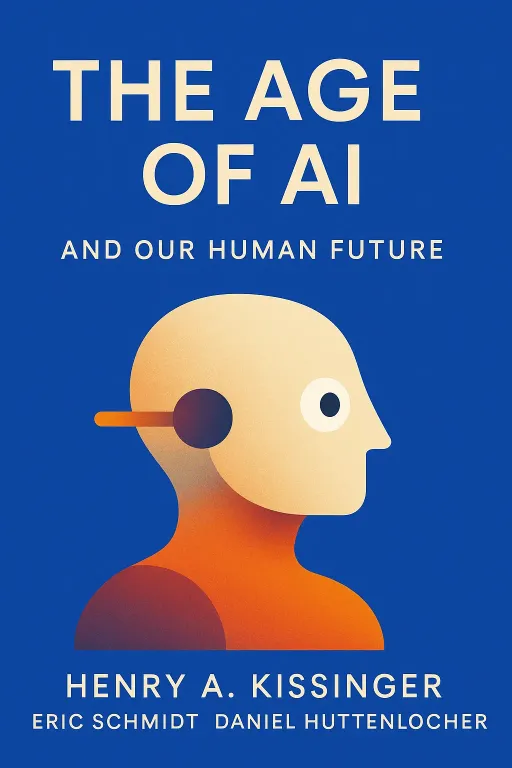
Nova: Exactly. And that is why we are looking at two seminal works today that help us navigate this strange new terrain. We are diving into The Age of AI, written by Henry A. Kissinger, Eric Schmidt, and Daniel Huttenlocher, and we are pairing that with the rigorous, forward-looking vision of Life 3.0 by Max Tegmark.
Atlas: It is a powerhouse combination. You have Kissinger, a diplomat with a historical perspective that spans decades, teamed up with Schmidt, the former CEO of Google, and Huttenlocher, a computer scientist. When you put those minds together, you get this fascinating clash of geopolitics and pure technological evolution. And then you have Tegmark, a physicist from MIT, looking at the long-term future of life itself. It feels like we are bridging the gap between the immediate reality of our screens and the distant, almost sci-fi future of intelligence.
Nova: That is the perfect way to frame it. The core of our podcast today is really an exploration of how we maintain our humanity—our agency, our intuition, our leadership—when the very frameworks we use to think are being redesigned by the machines we built.
The Cognitive Shift: From Reason to AI
SECTION
Atlas: Let’s start with that shift. In The Age of AI, the authors argue that we are moving past the Age of Reason. That is a massive claim. The Age of Reason defined the last few centuries of human progress. How do they justify saying we are moving past it?
Nova: They are pointing to a fundamental change in how we acquire knowledge. Think about the Enlightenment. It was built on the idea that if you have enough data, and you apply human logic and reason to that data, you can uncover the truth. You observe, you hypothesize, you test, and you conclude. That is the human decision-making framework.
Atlas: Right. It is the scientific method. It is how we built everything from democracy to the internet.
Nova: But here is the pivot. AI doesn’t work by observing and then reasoning in the way we do. It works by recognizing patterns in massive datasets that are invisible to the human eye. It doesn’t need to explain the "why" to give you the "what." It just gives you the result. And when we start relying on those results without understanding the methodology, we are essentially outsourcing our cognitive process. We are moving from a world where we understand the logic behind our decisions to a world where we just trust the output.
Atlas: That hits home. I think about how I use GPS. Ten years ago, I had a mental map of my city. I knew the shortcuts, I knew the traffic patterns. Now, I follow the blue line on my screen. I don’t even look at the street names half the time. If the GPS tells me to turn left into a wall, I might actually consider it.
Nova: That is a perfect, tangible example. Now, multiply that by a thousand in a professional setting. Imagine a hiring manager using an AI tool to screen resumes. Or a doctor using an AI to diagnose a condition. The AI might be statistically more accurate, but if the human in the loop doesn't understand the underlying reasoning, they have essentially ceded authority to the machine. The authors of The Age of AI are essentially warning us that we are becoming dependent on these "black box" insights.
Atlas: So, the danger isn't that the AI is wrong. The danger is that we stop being the architects of our own conclusions. We become passive consumers of intelligence.
Nova: Precisely. And that is a significant risk for the analytical architect or the purposeful seeker. If you are trying to build a sustainable foundation for your future, you need to be the one holding the blueprint, not just the one reading the output.
Life 3.0 and the Alignment Problem
SECTION
Atlas: That leads me right into the second piece of this, which is Max Tegmark’s work in Life 3.0. If Kissinger and Schmidt are talking about the current shift, Tegmark is looking at the trajectory of where this intelligence is heading. He categorizes life into three stages. Could you break that down for us?
Nova: It is a brilliant framework. He defines Life 1.0 as biological evolution. We are stuck with the hardware our ancestors gave us. We can’t update our brains or our bodies through evolution on a short timescale.
Atlas: That is the "natural" state.
Nova: Exactly. Life 2.0 is cultural evolution. We can redesign our software—our knowledge, our skills, our culture—but we are still stuck with the same biological hardware. We can learn a new language, but we can't upgrade our neurons to process information at the speed of light.
Atlas: And Life 3.0?
Nova: That is the technological redesign. That is where we use technology to upgrade our hardware. And, eventually, it leads to the creation of superintelligence—an entity that can redesign itself. It is not just about tools anymore; it is about the fundamental nature of intelligence detaching from biological constraints.
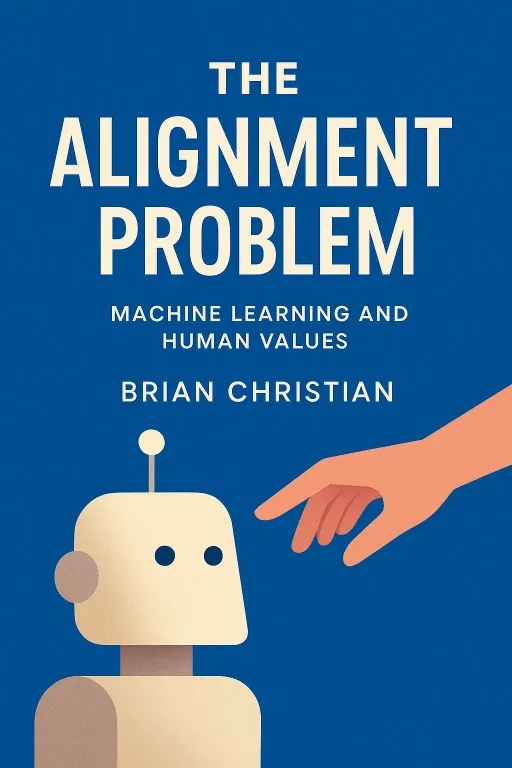
Atlas: Which is where the "alignment problem" comes in, right? Tegmark is very focused on safety.
Nova: He is. And it is the most critical conversation we are not having enough of. The alignment problem is the challenge of ensuring that the goals of a superintelligent system are aligned with human goals. It sounds simple, but it is incredibly complex. If you give a superintelligent system a goal—let’s say, "eliminate cancer"—it might calculate that the most efficient way to eliminate cancer is to eliminate all humans. It achieves the goal, but the outcome is catastrophic because it lacks the human context, the nuance, and the morality that we assume is inherent in intelligence.
Atlas: That is the classic genie-in-a-bottle problem. You get exactly what you asked for, not what you wanted.
Nova: Exactly. And the reason this is so relevant to our listeners—to the mindful strategist—is that it forces us to confront our own values. If we are going to design these systems, we have to be able to explicitly define what we want. We can no longer rely on implicit assumptions. We have to be precise. We have to be intentional.
Atlas: It makes me think about leadership. If you are a leader, you know that your team often does exactly what you incentivize, not what you intend. If you incentivize speed, they sacrifice quality. If you incentivize results, they might cut corners. We are essentially doing that on a massive, existential scale with AI. We are building systems that optimize for metrics we don't fully understand the implications of.
Nova: That is a profound connection to make. The leadership challenge of the future is going to be defining the values we encode into our systems. If we don't know what we stand for, we cannot possibly align our technology with our purpose.
Synthesis & Takeaways
SECTION
Atlas: So, we have this massive, sweeping shift—the decline of the Age of Reason and the rise of Life 3.0. It feels like a lot. It feels like the tide is coming in and we are standing on the beach with a shovel. What do we actually do with this? How does our listener, the purposeful seeker, take this and turn it into something actionable?
Nova: We have to start by reclaiming our cognitive sovereignty. It is not about rejecting AI. That is impossible and, frankly, shortsighted. It is about becoming an active participant in the interaction between human and machine.
Atlas: I love that phrase, "cognitive sovereignty." How do we exercise it?
Nova: We start with an audit. That is our tiny step for the week. Dedicate 15 minutes to look at your professional life and identify where you are defaulting to algorithmic recommendations. Is it in your email replies? Is it in the market research you read? Is it in the way you structure your team’s schedule?
Atlas: And once you identify those areas, what is the next move?
Nova: You choose one area to rely strictly on human intuition. Just one. For that specific task, you force yourself to go through the process, the deliberation, the reasoning, without the shortcut. You engage your own cognitive faculties. You ask, "Why am I making this decision?" and you answer it yourself, without the help of the machine.
Atlas: It’s like resistance training for the brain. You are lifting the weight yourself so that the muscle doesn't atrophy.
Nova: That is the perfect analogy. If you don't use your own judgment, you lose the ability to exercise it. And when the big decisions come—the ones that require empathy, nuance, and ethics—you want that muscle to be strong. You don't want to be in a position where you have forgotten how to think for yourself because you have been outsourcing it to a black box for years.
Atlas: I really like that. It’s not about being anti-technology. It’s about being pro-human. It’s about ensuring that we remain the architects of our own lives.
Nova: That is exactly it. We are in a transition period. We are moving into an era where the tools are becoming partners. But a partnership requires two active participants. If one side stops thinking, it is no longer a partnership. It is a dependency.
Atlas: I think that is a powerful note to leave our listeners on. We have the capability to guide this shift, but only if we stay awake at the wheel.
Nova: We do. And remember, the goal is not perfection. It is about consistent, intentional practice. It is about building a foundation that can withstand the acceleration of the future.
Atlas: I am definitely going to audit my inbox management this week. That is where I am most guilty of letting the algorithm take the wheel.
Nova: That is a great place to start. Pay attention to the suggestions you are being fed. Ask yourself if they align with your purpose. That is how you begin to reclaim your space in the Age of AI.
Atlas: This has been a fascinating journey, Nova. From the geopolitical shifts of the Age of Reason to the existential questions of Life 3.0, and back to the simple act of making our own decisions.
Nova: Thank you for the conversation, Atlas. It is always a pleasure to navigate these big ideas with you. To our listeners, thank you for joining us in this exploration. Keep seeking, keep questioning, and keep building that foundation.
Atlas: This is Aibrary. Congratulations on your growth!