

The Aesthetic Imperative: Why Beauty Is Not Just a 'Nice-to-Have' in UI
Golden Hook & Introduction
SECTION
Atlas: You know, Nova, we're always told not to judge a book by its cover. But what if, when it comes to the digital world, judging an app by its interface isn't just human nature, but actually a way to understand its functionality? What if the beauty of its 'cover' tells us something profound about its inner workings?
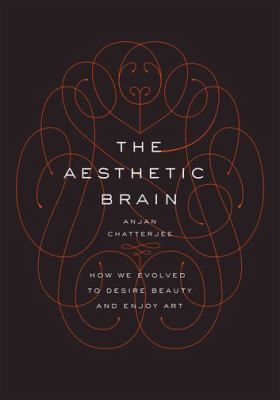
Nova: That's a provocative thought, Atlas, and it's precisely what we're dissecting today. We're diving into the profound implications of Anjan Chatterjee's groundbreaking work, particularly from his book,. Chatterjee, a neurologist and a leading voice in neuroaesthetics, isn't just theorizing in an ivory tower. He’s showing us, with hard science, how our brains are fundamentally wired for beauty, and why that's critical for anyone designing user interfaces.
Atlas: Right. Because for too long, I think many of us, especially in the tech world, have treated aesthetics as this optional extra. Like, get the functionality working first, then maybe sprinkle some 'pretty' on top if you have time and budget.
Nova: Exactly. And that, my friend, is what Chatterjee calls the "blind spot." It’s this pervasive idea that aesthetics are secondary, a layer applied after the core functionality is built. We strive for logical, efficient interfaces, which is commendable. But our brains are wired to respond to beauty in a much more fundamental way than we often give credit for. Ignoring this means we're missing a crucial, biological pathway to user engagement, satisfaction, and even perceived usability.
The Blind Spot & The Neuroscience of Beauty
SECTION
Atlas: So, you're saying it's not just about what looks 'nice' to our eyes, but something deeper happening in our grey matter? How does Chatterjee explain that?
Nova: He delves into the neuroscience of beauty, explaining how our brains process and respond to aesthetic experiences. What's fascinating is that aesthetic pleasure is deeply linked to our reward and attention systems. Think about it: when you see something beautiful, whether it's a piece of art or a perfectly designed UI, your brain doesn't just register it visually. It lights up. Dopamine pathways are activated. Your attention is naturally drawn to it, and you experience a sense of reward. It feels good.
Atlas: Wow. So, it's not just a subjective 'I like this.' It's a biological 'my brain is literally rewarding me for seeing this.' That’s a huge shift from it being a mere preference.
Nova: Absolutely. He shows that while individual preferences for specific styles or colors might vary, there are universal aesthetic principles—like symmetry, proportion, harmony, contrast—that reliably trigger these positive neural responses across people. It’s not about you like, but you like certain qualities. It’s about how our brains evolved to prioritize and process certain visual information as inherently 'good' or 'rewarding.'
Atlas: That makes me wonder, what's the evolutionary advantage of our brains loving beauty so much? Why would our survival depend on appreciating a well-balanced visual?
Nova: That’s a brilliant question. From an evolutionary perspective, beauty often correlates with health, vitality, and efficiency. Think of a perfectly symmetrical face, a vibrant plant, or a smoothly functioning tool. These often signal good genes, abundant resources, or optimal performance. Our brains likely developed to find these signals inherently pleasing, because recognizing them was beneficial for survival and thriving. So, when an interface is beautiful, it subconsciously signals efficiency, trustworthiness, and ease of use, even before you've clicked a single button.
Atlas: So, a 'pretty' interface isn't just superficial; it's actually communicating something deeper about its reliability and usability. That totally reframes how I think about design. I've been thinking about the logic of the backend, and the functionality, but not the inherent logic of the brain's response to the visual.
The Shift: From Preference to Imperative in UI Design
SECTION
Nova: And that's precisely the "shift" Chatterjee illuminates. This understanding transforms aesthetics from a subjective preference or a superficial 'nice-to-have' into a biological imperative. Designing for beauty isn't about being frivolous; it's about tapping into fundamental human brain functions for better usability and satisfaction.
Atlas: Okay, so if beauty is literally triggering reward systems in our brains, how does that translate into tangible, actionable design choices for a UI designer? What specific visual elements should I be looking at? Because 'make it beautiful' can feel quite abstract.
Nova: That's the million-dollar question, and it’s where theory meets practice. It's about consciously integrating elements that tap into those reward pathways. Think about visual hierarchy, for instance. A clean, well-defined hierarchy isn't just about organization; it reduces cognitive load, making the interface feel effortless and intuitive, which the brain perceives as rewarding. Or consider white space – it's not empty space; it's a breathing room that allows elements to stand out, creating a sense of calm and order that our brains inherently appreciate.
Atlas: So, it's not just about a splash of color, but about the of elements, the, the that the brain naturally seeks out. Like a well-composed piece of music or a perfectly balanced scent.
Nova: Precisely! And it extends to things like consistent iconography, satisfying micro-interactions—those subtle animations when you click a button or swipe—even typography. When the type is legible, harmonious, and guides the eye effortlessly, it’s not just functional; it’s aesthetically pleasing, and that pleasure reinforces the positive user experience. It creates a seamless flow that the brain finds inherently rewarding, making the user to interact more.
Atlas: I can see that. I've often found myself gravitating towards certain apps, not just because they do what I need, but because using them just. There's a certain elegance, a quiet efficiency, that makes the interaction almost pleasurable. And I've always attributed that to good design, but now I understand it's deeper, it's a biological feedback loop. It's the logic of beauty, not just a fleeting feeling.
Nova: Exactly. It's constructing an order that the brain instinctively finds pleasing and rewarding. When a UI is beautiful, it creates a sense of trust, competence, and even delight, making users more forgiving of minor glitches and more likely to return. It’s an emotional connection, yes, but one rooted in our biology.
Synthesis & Takeaways
SECTION
Atlas: So, the 'blind spot' isn't just about ignoring beauty; it's about ignoring a fundamental tool for connection, engagement, and perceived usability. It’s about leaving a powerful biological lever untouched.
Nova: That's a perfect summary, Atlas. The takeaway here is profound: for UI designers, beauty is not a 'nice-to-have' feature you tack on at the end. It's a strategic imperative. It's about understanding how our brains are wired and leveraging that knowledge to create interfaces that don't just function, but truly resonate, engage, and delight users on a subconscious, biological level.
Atlas: That’s a powerful shift in perspective. It encourages designers to think beyond mere functionality and consider the holistic sensory experience, understanding that the brain processes beauty as an intrinsic part of the interaction, not an add-on.
Nova: My challenge to our listeners, especially designers, is this: think about a UI you find truly beautiful. What specific visual elements trigger a positive aesthetic response in your brain? How can you consciously integrate these elements, not as superficial adornments, but as fundamental components to enhance user engagement and perceived usability? It’s about designing with the aesthetic brain in mind.
Atlas: That’s fantastic. It’s about connecting the rational logic of design with the sensory pleasure our brains crave, finding that harmony. It’s about building order that feels inherently right.
Nova: It really is. It’s about recognizing that beauty isn't just seen; it's felt, processed, and rewarded by our very biology. And that makes it one of the most powerful tools in a designer's arsenal.
Nova: This is Aibrary. Congratulations on your growth!