

The Habits of High Performers: Building Systems for Sustainable Success
Golden Hook & Introduction
SECTION
Nova: Alright, Atlas, quick game. I’m thinking of a book—no, two books—that promise to fundamentally reshape your life, to turn you into a high performer. Give me five words. Just five, to describe the of reading a book like that.
Atlas: Oh, man, five words? Hmm. "Finally, a manual for living."
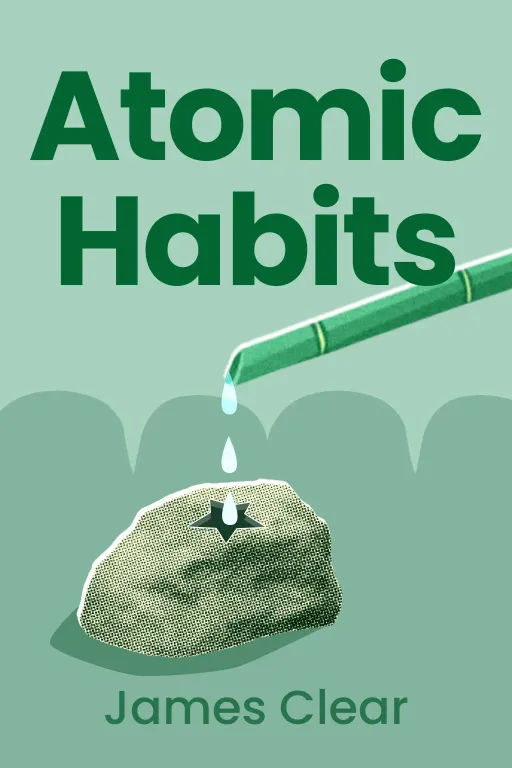
Nova: "A manual for living." I love that! A little bit of that weary search for answers in there, huh? Well, today, we're diving into the absolute powerhouses of personal development: James Clear's "Atomic Habits" and Stephen Covey's timeless classic, "The 7 Habits of Highly Effective People."
Atlas: Two absolute titans! Clear, the entrepreneur and speaker, who basically codified the science of tiny changes. And Covey, the academic whose principle-centered approach influenced generations of leaders. Both widely acclaimed, but in very different ways.
Nova: Exactly. Clear's work, an absolute global phenomenon, is praised for its crystal-clear, actionable advice on habit formation. It's the ultimate 'how-to.' Covey, on the other hand, comes from a more academic background, and his book has been a cornerstone of leadership and personal development for decades, shaping how we think about effectiveness at a much deeper level. What’s fascinating is how these two seemingly different approaches actually complement each other so beautifully. One gives you the tools, the other gives you the compass.
Deep Dive into Core Topic 1: The Engineering of Micro-Habits
SECTION
Atlas: Okay, so let's start with the tools. "Atomic Habits." The idea of "atomic" always makes me think of something incredibly small, yet incredibly powerful.
Nova: Exactly! It's about how these seemingly insignificant actions, when consistently applied and strategically engineered, can compound into monumental life transformations. Clear argues that true change comes from hundreds of tiny decisions, not one big, dramatic overhaul. Think about the British Cycling team. They didn't just try to find one superstar rider or one revolutionary training method.
Atlas: Right, I remember that story. It was about "the aggregation of marginal gains," wasn't it?
Nova: Precisely! Their head coach, Dave Brailsford, implemented a strategy of continuous improvement, looking for tiny 1% improvements in. Not just the bike, but the pillow the athletes slept on, the type of massage gel, even the way they washed their hands to reduce illness. The results were astounding: Olympic gold medals, Tour de France victories. That's the power of atomic habits. It's about designing your environment, your systems, so that good habits are almost inevitable and bad ones are nearly impossible.
Atlas: That makes perfect sense for someone who values efficiency and wants to understand how things work. It's not just about willpower, then, it's about engineering. But how? How do you make flossing, for example, "attractive"? Because right now, for most people, it's a chore.
Nova: That’s a brilliant question, and it gets to the heart of Clear’s Four Laws of Behavior Change. First, Make it Obvious. Put the floss right next to your toothbrush, not in a drawer. Second, Make it Attractive. This is where it gets interesting. Can you pair it with something you? Maybe you only listen to your favorite podcast while you floss. Third, Make it Easy. Buy those pre-threaded floss picks, so there’s zero friction. And fourth, Make it Satisfying. Acknowledge that clean feeling, or even track your streak. The point is, you’re not relying on heroic self-control. You're making the desired action the path of least resistance.
Atlas: So, it’s almost like tricking your brain, but in a good way. You're building a system, not just setting a goal. I imagine a lot of our listeners, who are constantly looking for better ways to manage their demanding schedules, might find this incredibly practical. It’s not about finding more time; it’s about making the most of the time you have, and making good choices easier.
Nova: Exactly. It's about understanding the mechanics of human behavior. Clear, in his work, makes it clear that we often think we lack motivation, but what we really lack is clarity or a conducive environment. If you want to read more, don't just say "I'll read more." Make it obvious: put a book on your pillow. Make it attractive: read a genre you genuinely love. Make it easy: read for five minutes before bed. Make it satisfying: put a checkmark on a calendar. These tiny shifts create momentum.
Atlas: Wow, that's actually really inspiring. It takes the pressure off the "big change" and focuses on the achievable "small wins." It's less about a grand transformation and more about a continuous evolution.
Deep Dive into Core Topic 2: The Re-alignment with Universal Principles
SECTION
Nova: But here's the thing, Atlas. Are tiny habits enough? Can you just engineer your way to success without ever asking you're doing it, or what kind of person you want to become? This is where Stephen Covey steps in, and he offers a much deeper, more profound shift in worldview.
Atlas: Ah, the compass to Clear’s tools. I can see how for our listeners, who care about well-being and personal growth, just building habits without purpose could feel a bit hollow.
Nova: Precisely. Covey talks about "paradigm shifts." He says many people try to change their behavior, their habits, but they don't change their underlying paradigms—their fundamental way of seeing and interpreting the world. It’s like trying to navigate a forest with a perfectly functioning compass, but you’re holding the map upside down. You need to correct your fundamental perspective first.
Atlas: So, it’s about starting with the "why" before the "how." What are some of those core principles he emphasizes?
Nova: He has seven, of course, but let's touch on a few key ones. "Be Proactive" is huge. It's about taking responsibility for your choices and not blaming circumstances. It's understanding that between stimulus and response, there's a space where you choose your response. Then, "Begin with the End in Mind." This is about defining your values and what you want your life to stand for, personally and professionally, before you start climbing the ladder. And "Put First Things First" is about prioritizing based on those values, not just what's urgent.
Atlas: That sounds a bit abstract, though. How do you "be proactive" on a Tuesday morning when your inbox is overflowing and you've just spilled coffee on your shirt? For someone in a high-pressure environment, it feels like external forces are always dictating your day.
Nova: That's a fair challenge, and it's where the paradigm shift comes in. Being proactive isn't about having challenges; it's about how you to them. The spilled coffee? You can choose to let it ruin your day, or you can choose to clean it up and move on. The overflowing inbox? A proactive person might schedule specific times to check email, rather than reacting to every ping. It’s about focusing on your "circle of influence" rather than your "circle of concern." You can't control everything, but you can control your response.
Atlas: I can see how that connects to mindfulness and stress reduction. If you're constantly reacting, you're constantly stressed. But if you're choosing your response, even in small ways, you reclaim some control.
Nova: Absolutely. And "Begin with the End in Mind" is incredibly powerful. Covey asks you to imagine your own funeral. What do you want people to say about you? That's a profound way to clarify your values. Then, every decision, every habit, can be aligned with that ultimate vision. It gives purpose to the "atomic habits." You're not just building habits for their own sake; you're building them to fulfill a deeper purpose.
Atlas: So, Clear gives us the micro-level tactics, the small levers to pull. And Covey gives us the macro-level strategy, the fundamental shifts in perspective that ensure those tactics are actually moving us in the right direction. It's not just about doing things right; it's about doing the right things.
Nova: Exactly that. And then there's "Sharpen the Saw," which Covey dedicates to self-renewal—physical, mental, spiritual, and social. It's about taking time for self-care, for continuous learning, for well-being. It's the ultimate counterpoint to the "grind culture" mentality, reminding us that constant productivity without renewal leads to burnout.
Synthesis & Takeaways
SECTION
Atlas: This really brings it all together. It's not one or the other, is it? It's the synergy between the two. You need the meticulous engineering of micro-habits, but those habits have to be guided by a clear, principle-centered vision.
Nova: Absolutely. True high performance isn't about brute force or endless hustle. It's about intelligent design—both of our actions and our underlying values. It’s about building a life where success is not just achieved, but deeply aligned with who we want to be, preventing burnout and fostering genuine well-being. The tiny habits give you the momentum, and the principles give you the direction. Without the principles, you might be very efficient at climbing the wrong ladder. Without the habits, your grand vision remains just a dream.
Atlas: That’s a powerful insight. It means high performance isn't just about output; it's about alignment and sustainability. It’s about finding better ways to not just do the job, but to live a life of purpose.
Nova: So, for all our listeners out there, consider this: what is one small habit you want to cultivate? And how can you make it obvious, attractive, easy, and satisfying, while also ensuring it connects to your deeper purpose and the kind of person you ultimately want to be? We'd love to hear your reflections on this. Share your thoughts with the Aibrary community!
Atlas: This is Aibrary. Congratulations on your growth!









