The Ethical Compass: Guiding Decisions Beyond Profit.
Golden Hook & Introduction
SECTION
Nova: What if I told you that chasing profit above all else isn't just ethically questionable, it's actually the least profitable strategy in the long run? That the very thing many leaders sideline as 'soft' is actually their strongest competitive advantage?
Atlas: Huh. That’s a bold claim, Nova. I imagine a lot of our listeners, especially those deeply involved in strategy and securing stability, might be thinking, "How is that even possible in such a competitive world?" It feels counterintuitive.
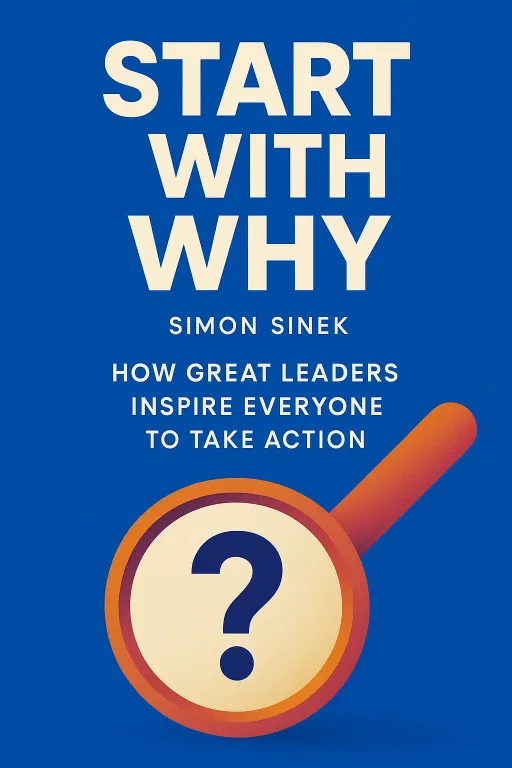
Nova: It absolutely does, Atlas. But that's exactly what we're dissecting today with our dive into "The Ethical Compass: Guiding Decisions Beyond Profit." This isn't just a new idea; it’s a synthesis of profound insights, heavily influenced by seminal works like Simon Sinek’s "Start with Why" and Stephen Covey’s "The Seven Habits of Highly Effective People." What's truly fascinating is that Sinek, a marketing expert, and Covey, a business consultant and academic, arrived at this same core truth: purpose and principles are paramount. Their convergent wisdom, despite their very different backgrounds, really underscores the universal power of understanding your 'why.'
Atlas: That's a great point. It makes you realize this isn't just some niche theory if it resonates across such diverse fields. So, let’s unpack this. Where do we even begin to look for this so-called "ethical compass?"
Deep Dive into Core Topic 1: The Blind Spot: Why Values are More Than Just Buzzwords
SECTION
Nova: We begin, Atlas, by shining a light on what I call "The Blind Spot." Many leaders are brilliant at driving results, hitting targets, and optimizing processes—the 'what' of their business. But they often overlook the 'how' and the 'why.' They miss the profound, long-term impact of their core values, or lack thereof, on everything from team morale to sustainable growth. It's like navigating with a perfectly calibrated speedometer, but no compass. You know how fast you're going, but not if you're headed in the right direction.
Atlas: That resonates. I can definitely see how someone focused on immediate outcomes might miss that bigger picture. So, what happens when that blind spot persists? What does that look like in the real world for a company?
Nova: Let’s imagine a tech startup, we’ll call them 'Velocity Innovations.' They launched with a revolutionary product and grew at an incredible pace. Their leaders were obsessed with market share, quarterly earnings, and rapid expansion. They talked about innovation and customer focus, but their actions told a different story. Internally, the culture became cutthroat. Employees were pitted against each other, work-life balance was non-existent, and corners were cut in product development to hit aggressive deadlines. The 'how' was entirely transactional—deliver results, no matter the cost to people or product quality.
Atlas: Wow. That sounds rough, but I also know that kind of pressure is very real in fast-paced environments. So, Velocity Innovations hit their numbers, at least initially, right? What was the ultimate outcome of that approach?
Nova: They did hit their numbers for a while, Atlas. But the cost was catastrophic. Employee turnover skyrocketed, taking institutional knowledge with it. The constant pressure led to burnout and a palpable sense of cynicism. Soon, their once-innovative product started showing cracks due to rushed development. Their reputation suffered, customer complaints mounted, and talented people started leaving for competitors with better cultures. Their rapid growth was completely unsustainable because it wasn't built on a foundation of shared purpose or ethical principles. Eventually, Velocity Innovations, despite its early success, imploded, becoming a cautionary tale of short-term gains leading to long-term pain.
Atlas: That’s a powerful example. It makes me wonder, how do leaders even these blind spots if they're so fixated on the metrics? For our listeners who are managing high-pressure teams and trying to secure stability, this concept of 'unsustainable growth' must feel like a ticking time bomb.
Nova: It absolutely is a ticking time bomb. The key is to understand that values aren't just buzzwords for a corporate poster; they are the invisible architecture of your organization. When that architecture is weak or misaligned, the whole structure becomes unstable. The blind spot persists because leaders often measure the wrong things. They measure output, but not the health of the system producing it.
Deep Dive into Core Topic 2: The Compass Shift: From Transactional to Transformative Leadership
SECTION
Nova: Understanding that blind spot is just the first step, Atlas. The real power comes from making "The Compass Shift"—moving from that transactional, results-only mindset to transformative leadership, where values drive actions and inspire deep connection. This is where Sinek’s 'Start with Why' and Covey’s 'principle-centered leadership' become our guides. It’s about leading from the inside out.
Atlas: Okay, so if Velocity Innovations was the cautionary tale, what does a company look like when they make this shift? Can you give an example of how this 'why' actually plays out?
Nova: Let's consider a contrasting example: a fictional company, 'Evergreen Manufacturing.' They've been around for decades, producing high-quality, durable goods. They faced disruption from cheaper competitors, and many thought they were doomed to become obsolete. But their CEO, Sarah, refused to just focus on cutting costs. She gathered her leadership team and asked, "Why do we exist, beyond making widgets and a profit?" They realized their core purpose was "to build lasting tools that empower people to create and endure." It was about craftsmanship, reliability, and community.
Atlas: I see. So it wasn't just about the 'what'—the tools—but the deeper impact they had on users and the values they upheld in making them. How did that shift from 'why' translate into their daily operations and ultimately, their success?
Nova: It transformed everything, Atlas. Instead of panic-cutting wages or outsourcing to the cheapest supplier, Sarah invested in retraining her skilled workforce, emphasizing their role as 'craftsmen of enduring quality.' They redesigned products not just for cost-efficiency, but for even greater longevity and repairability, aligning with their 'lasting tools' purpose. They started community initiatives, mentoring local apprentices, embodying their 'empower people' value. This wasn't about a mission statement on a wall; it was embedded in every decision.
Atlas: That’s a perfect example. It sounds inspiring. But wait, looking at this from a strategic perspective, how does a leader, especially one trying to secure long-term stability in a volatile market, this 'why' when daily pressures are screaming for immediate results? It's one thing to say 'start with why,' but quite another to live it when the quarterly reports are due.
Nova: That's the million-dollar question, and it speaks directly to the user's need for security and foresight. It's not a switch you flip, Atlas, it's a compass you calibrate. First, it requires deep self-reflection from the leader. What are core principles? What do truly value beyond the bottom line? Then, it's about consistently articulating that 'why'—not just in big speeches, but in small, daily decisions. It's about asking, "Does this decision align with our purpose?" before asking, "Does this decision maximize short-term profit?" It's like a true north compass: it doesn't give you the exact path, but it constantly reminds you of your ultimate direction, guiding every turn.
Atlas: So, it becomes less about a rigid map and more about a guiding star that helps you course-correct, even when the immediate path seems murky. I can see how that would provide a sense of stability and foresight, which is critical for long-term impact.
Synthesis & Takeaways
SECTION
Nova: Exactly. The synthesis here is clear: true leadership isn't just about the 'what'—the products, the profits, the market share. It's profoundly about the 'why' and the 'how.' When leaders authentically embed their core values into every decision, they cultivate something far more powerful and sustainable than mere compliance: they cultivate loyalty, resilience, and genuine inspiration. This shift doesn't just create a better workplace; it builds a more enduring, impactful enterprise.
Atlas: That’s actually really inspiring. It sounds like it’s not just about what a leader, but who they fundamentally. And that personal transformation must be a huge part of making this shift for the long haul.
Nova: It absolutely is. It's a journey of self-discovery as much as it is organizational leadership. So, for all our listeners out there, we want to leave you with this deep question: What core principle guides your most important decisions, and how would articulating that 'why' transform your team's approach, not just for short-term wins, but for enduring impact and genuine stability?
Atlas: That's a question worth pondering. We encourage you to reflect on your own 'why' this week. Think about how you might articulate it to your team, or even just to yourself, and observe the outcome. Share your thoughts with us on social media; we’d love to hear how this resonates with your own experiences.
Nova: This is Aibrary. Congratulations on your growth!