

Stop Managing, Start Leading: The Guide to Empowering Your Team.
Golden Hook & Introduction
SECTION
Nova: What if the very thing you're doing to get more done – trying to control every single detail – is actually the biggest roadblock to your success and your team's potential?
Atlas: Oh, I know that feeling all too well, Nova. There are days it feels like a badge of honor to be drowning in the minutiae.
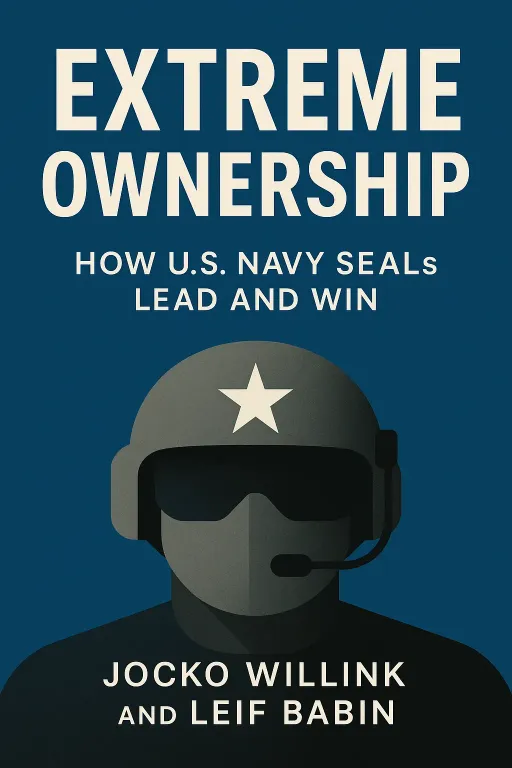
Nova: Exactly! That's the cold, hard truth many leaders face. They're overwhelmed, stressed, and their teams feel less ownership. But today, we're diving into a fascinating paradox, drawing insights from two seminal works: Jocko Willink and Leif Babin's "Extreme Ownership," born from their intense experiences as Navy SEALs, and Stephen Covey's enduring classic, "The 7 Habits of Highly Effective People," which has reshaped personal and organizational effectiveness for decades.
Atlas: So, we're talking about military discipline meets timeless principles to tackle that universal leadership challenge of feeling like you have to do everything yourself. How do we break free from that cycle?
Nova: We break free by understanding that true leadership is about empowering others, not just directing them. It's about the counter-intuitive act of letting go of direct control to actually gain more impact, more innovation, and more freedom to focus on the bigger picture.
The Paradox of Empowered Leadership: Extreme Ownership – The Foundation of Empowerment
SECTION
Nova: Many leaders operate under the assumption that if they want something done right, they have to do it themselves, or at least meticulously oversee every step. This leads to micromanagement, which, while well-intentioned, often creates a cycle of dependency and stress.
Atlas: I can definitely relate. For anyone juggling demanding responsibilities, it feels like letting go is just asking for chaos. You feel responsible for the outcome, so you control the process.
Nova: And that's where "Extreme Ownership" comes in, challenging that very assumption. Jocko Willink and Leif Babin, drawing from their incredibly high-stakes experiences leading SEAL teams in combat, argue that a leader is responsible for in their domain.
Atlas: Hold on, Nova. Taking responsibility for can sound like even work for an already stretched leader. How does that free you up instead of just burying you under more blame?
Nova: That's the paradox! It’s not about doing everyone's job. It’s about owning the and the. Imagine a mission goes sideways. A traditional leader might blame a team member for a mistake, or external factors like bad intelligence. Willink and Babin say, no. The leader owns it. They ask: "What did miss? How did fail to communicate clearly? How did not prepare my team adequately?"
Atlas: So, the blame shifts from the individual to the leadership, even if the individual made a mistake? That takes a lot of humility.
Nova: Absolutely. And that shift is incredibly powerful. Because when the leader owns the problem, they're forced to find within their sphere of influence, rather than just making excuses. This rebuilds trust and clarity within the team. The team sees their leader isn't pointing fingers, but is committed to fixing the system and empowering them to succeed next time. It clarifies expectations and fosters a culture where everyone feels safe to identify issues because the focus is on collective improvement.
Atlas: That makes sense. So it’s not about absorbing all the tasks, but absorbing all the for ensuring the team has what it needs and understands the mission. It’s about owning the gap between expectation and reality, then bridging it.
Nova: Precisely. It creates a foundation of trust and accountability, where everyone understands their role in the bigger picture. It allows the leader to step back from the tactical execution, because they've instilled a culture where everyone takes ownership.
The Paradox of Empowered Leadership: Proactive Leadership & Boundaries – Empowering Initiative
SECTION
Nova: And that naturally leads us to the second key idea, which shows us to build that self-correcting, empowered team. Stephen Covey, in "The 7 Habits of Highly Effective People," emphasizes proactive leadership and beginning with the end in mind.
Atlas: "Beginning with the end in mind" – that's a classic. But how does that translate into empowering a team, especially when you're trying to move away from micromanagement?
Nova: It means clearly defining the and the, but then empowering individuals to take initiative those boundaries. Think of it like this: a leader defines the destination and the non-negotiable safety parameters. But they don't dictate every turn or every gear shift. They trust their team to navigate.
Atlas: I imagine a lot of our listeners, especially those in high-pressure roles with tight deadlines, feel like they to define the "how" to ensure quality. How do you trust the team to find the "how" without constantly looking over their shoulder, especially when the stakes are high?
Nova: That's where the "proactive" part comes in. A proactive leader anticipates potential issues, provides the necessary resources and training upfront, and then steps back. They're not waiting for problems to react to; they're creating an environment where the team can succeed independently. It's about coaching, not commanding. It's building the capacity within the team.
Atlas: So, it's like setting the destination on a GPS, but letting the driver choose the route, knowing they'll get there efficiently because they own the journey and you’ve given them a reliable vehicle and good training?
Nova: Exactly! You've articulated the essence perfectly. It fosters self-management and innovation because the team members feel respected and trusted. They're not just executing commands; they're contributing their intellect and creativity to achieve a shared vision. This frees the leader from the day-to-day grind of micromanagement, allowing them to focus on strategic thinking, vision casting, and removing systemic obstacles for their team. It builds on the trust that "Extreme Ownership" creates.
Synthesis & Takeaways
SECTION
Nova: So, when you combine "Extreme Ownership" – taking full responsibility for the team's success and challenges – with Covey's proactive approach of clearly defining the "what" and "why" and then empowering the "how," you create a powerful synergy. You develop a team that's not just compliant, but genuinely bought-in, innovative, and self-sufficient.
Atlas: It really is counter-intuitive. The less you try to control the individual actions, the more actual control and impact you gain over the overall outcome. It's about leading the and the rather than managing every. You're essentially building a stronger, more resilient machine that can run itself.
Nova: And that's what truly frees up leaders from feeling overwhelmed. It allows them to elevate their focus from the weeds to the horizon, tackling bigger challenges and shaping the future, rather than just reacting to the present. The stress of constant oversight diminishes, and the joy of seeing your team thrive and take initiative grows exponentially.
Atlas: For anyone out there feeling the weight of doing it all, this isn't just about freeing up your time, it's about unlocking your team's full potential and, honestly, your own leadership potential. So, what's one tiny step someone can take today to move towards this empowered leadership?
Nova: Here's your tiny step: Identify just one task you usually micromanage. Pick something small, perhaps something you've done a thousand times. Delegate it completely to a team member. Offer your support if they ask, but make a conscious effort not to intervene directly unless absolutely necessary. Observe what happens.
Atlas: That's a low-risk, high-reward experiment. It forces you to trust, and it gives your team a chance to step up. It's about making that first small shift in mindset and action.
Nova: It’s the first ripple in a wave of transformation, for both you and your team. Embrace the paradox, and watch your leadership—and your team—flourish.
Nova: This is Aibrary. Congratulations on your growth!









