

Stop Guessing, Start Influencing: The Guide to Leadership Presence.
Golden Hook & Introduction
SECTION
Nova: Atlas, what’s the one thing leaders often they need more of, but actually don't, to truly command a room?
Atlas: Oh, that’s easy. More bullet points in their PowerPoints. Definitely more bullet points. And maybe a louder voice.
Nova: You know, you’re not entirely wrong about the of what’s needed. But the truth is, it’s rarely about more volume or more slides. Today we’re diving into a guide that cuts through that noise: "Stop Guessing, Start Influencing: The Guide to Leadership Presence." This book really emerged from observing countless leaders with brilliant strategic visions whose impact was inexplicably muted. They had the ideas, but not the resonance. It highlights a critical, often-overlooked gap in how influence is truly understood and applied.
Atlas: Right. Because you see so many people in positions of power who have the title, but not the actual gravitational pull of a leader. It’s like they’re the sun, but nobody cares about their orbit.
Nova: Exactly! And that brings us to our first core idea: the ethical psychology of influence. It’s about moving beyond the idea that authority equals influence.
The Ethical Psychology of Influence: Beyond Authority
SECTION
Nova: Many leaders believe their title, their seniority, their position, is enough to command a room, to inspire action. But the book argues that true influence isn't about that at all. It's about deeply understanding human psychology and leveraging it, ethically, to inspire genuine commitment.
Atlas: Huh. So it’s not about being the loudest voice in the room, but understanding what makes the other voices tick? That sounds a bit… subtle. For people who are used to building systems and driving hard metrics, 'subtle psychology' can feel a bit squishy.
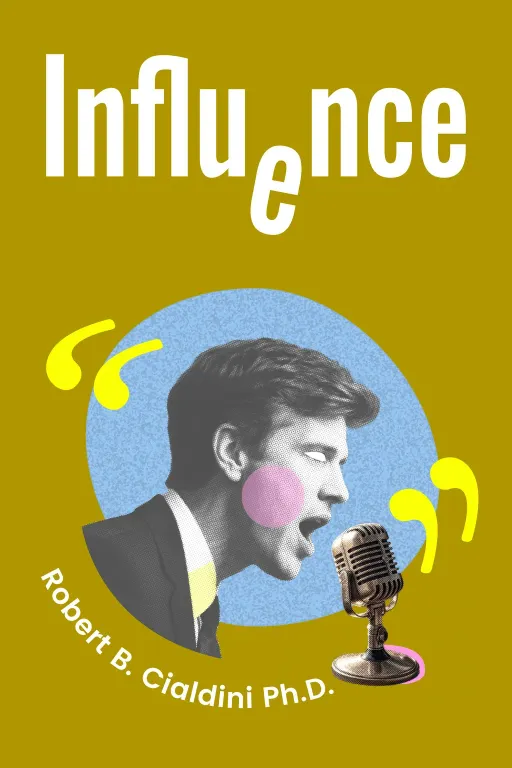
Nova: It can, but the impact is anything but squishy. Think about Robert Cialdini’s seminal work, "Influence: The Psychology of Persuasion." He lays out six universal principles that subtly guide human decisions. Take reciprocity, for instance. It’s the deeply ingrained human tendency to return a favor.
Atlas: So, if I buy someone a coffee, they owe me a favor? Is that what we're talking about? Because I've bought a lot of coffees.
Nova: Well, it’s a bit more nuanced and ethical than simply tallying up coffee debts. Imagine a project leader, we’ll call her Sarah. Her team is swamped, morale is a bit low, and a critical deadline is looming. Instead of just demanding more hours, Sarah notices one of her team members, Mark, is struggling with a complex coding issue outside of the current project. She takes an hour out of her incredibly busy day, sits down with Mark, and helps him debug his code, purely out of genuine support.
Atlas: Oh, I see. So she's not asking for anything, she's just… helping. Building goodwill.
Nova: Precisely. She’s investing in Mark, not for immediate gain, but because she genuinely cares about his success. A few days later, when Sarah needs the team to pull together for that critical project, Mark, and indeed others who witnessed Sarah’s genuine support, are far more inclined to go the extra mile. Not because they to, but because they to reciprocate that feeling of being supported. It's a powerful and ethical application of reciprocity that builds trust and loyalty, not just compliance.
Atlas: That’s actually really inspiring. It’s like, instead of just pushing the product, you’re building the relationship system around the product. For our listeners who are building complex systems, this concept might feel like an additional layer of overhead. But what you’re saying is, it’s foundational.
Nova: Exactly. It's foundational because it taps into deeper human motivations. Another of Cialdini’s principles is social proof. When we're uncertain, we look to others for cues on how to behave.
Atlas: So, like, if everyone else is adopting a new software, I'm more likely to try it too? Even if I'm usually a skeptic?
Nova: You got it. Think of a new product launch. Instead of just listing features, a smart leader highlights testimonials, user adoption rates, or industry endorsements. It’s not about lying, it’s about showcasing genuine enthusiasm and validation from others. A startup might leverage this by showcasing early adopter success stories, not just for marketing, but internally, to build confidence and alignment among their own team members. When the engineering team sees the sales team genuinely excited because customers are raving, it creates a powerful feedback loop. It’s using a psychological lever to align vision and action.
Atlas: That makes sense. It’s about creating an undeniable current, rather than just trying to push a boat upstream. But how do you ensure this isn't just… manipulation? Because 'leveraging psychology' can sound a bit Machiavellian if you're not careful.
Nova: That’s a crucial point, and it’s why the book emphasizes application. The goal isn't to trick people, but to understand what genuinely motivates them and then align your vision with those motivations. It's about authentic connection and mutual benefit, not one-sided gain. You're not forcing someone to do something they don't want to do; you're helping them see how your vision aligns with their own values and goals.
Strategic Empathy: Understanding Before Being Understood
SECTION
Nova: And that naturally leads us to the second key idea, which often acts as the bedrock for ethical influence: strategic empathy. Stephen Covey, in "The 7 Habits of Highly Effective People," championed the habit of 'seek first to understand, then to be understood.'
Atlas: Oh, I remember that one. It sounds so simple, but it’s so hard to actually when you’re in the thick of things. Especially for those of us who tend to see the big picture and want to jump straight to the solution. My brain is already five steps ahead.
Nova: I know that feeling! But Covey wasn't just talking about being polite. He was describing a profound strategic advantage. When you genuinely seek to understand another person's perspective, their concerns, their motivations, you disarm their resistance. You build trust. And only then, once they feel truly heard, can you effectively communicate your own vision in a way that resonates with.
Atlas: So, it's not about waiting for your turn to speak, it’s about genuinely processing what the other person is saying, and how perceive the problem. I imagine a lot of our listeners, especially those managing high-pressure teams, might struggle with carving out that 'vision time' for others, when their own 'vision time' is already so protected and scarce. How does this theory apply to someone in a high-stakes tech environment, where everything moves at light speed?
Nova: That’s a brilliant question, Atlas. Let’s imagine a project manager, let's call her Elena, who's spearheading a new software integration. The development team is pushing back, citing technical complexities and potential delays. Elena could just pull rank, reiterate the deadline, and demand compliance. But that often leads to grudging work, shortcuts, and ultimately, a less robust product.
Atlas: Which, for a Strategic Architect, is a nightmare. You don't just want the product built; you want it built, in a way that’s sustainable.
Nova: Exactly. So, instead, Elena schedules individual conversations with key developers. She doesn't go in to explain the integration is crucial; she goes in to. She asks open-ended questions: "What are the biggest technical hurdles you foresee?" "What concerns do you have about the proposed timeline?" "What would make this process smoother for you?" She listens intently, without interrupting, taking notes, and validating their concerns.
Atlas: So, she's not just gathering data points; she's gathering their on the data points. That's a key distinction for a Data Alchemist.
Nova: Absolutely. She's not just hearing they say, but understanding they're saying it. She learns that the team is worried not just about the integration itself, but about the legacy code it has to interact with, a problem she hadn't fully appreciated. With this deeper understanding, Elena then reframes her pitch. She acknowledges the legacy code issue, proposes bringing in a specialist for that specific part, and adjusts the timeline slightly to accommodate the newfound complexities.
Atlas: And suddenly, she's not the 'boss demanding the impossible,' she's the 'leader who gets it.' The one who actually.
Nova: Precisely. By seeking first to understand, Elena gained invaluable insights, validated her team's concerns, and built a bridge of trust. When she finally communicated her revised plan, the team didn't just comply; they bought in. They were committed because they felt heard, respected, and part of the solution. That's authentic, lasting influence. It's not just about getting the job done; it's about building a system where people to get the job done, and done well.
Atlas: Wow, that gives me chills. It’s like, you think you’re being efficient by just pushing your vision, but you're actually creating friction and resistance. By slowing down to understand, you're ultimately accelerating the entire process and making it more robust. It's a strategic move, not just a soft skill.
Synthesis & Takeaways
SECTION
Nova: It’s absolutely a strategic move. What Nova’s take on this content highlights is that mastering these psychological levers – like reciprocity and seeking to understand – allows your strategic vision to resonate deeply, leading to genuine commitment from your team. It’s the difference between a team that executes because they to, and a team that executes because they in the vision and feel valued within it.
Atlas: So, true leadership presence isn't about the charisma you project, or the authority you wield, but the deep, ethical understanding you cultivate of the human beings you're trying to inspire. It’s about building those connections, understanding the systems of motivation within people.
Nova: Exactly. It's about moving from guessing what might motivate people to truly influencing them through insight and empathy. And for anyone listening who’s a Strategic Architect, an Empathetic Leader, or a Data Alchemist, this isn't just theory. It’s a profound shift in how you build, connect, and impact.
Atlas: So, for our tiny step this week, it’s not about overhauling your entire leadership style overnight. It's about observing.
Nova: Right. This week, simply observe a recent conversation you had. Which of Cialdini's six principles — maybe reciprocity, or social proof, or even commitment and consistency — might have been at play? And, looking back, how could you have used one of those principles, ethically, to better guide the outcome? Not to manipulate, but to foster deeper understanding and commitment.
Atlas: That’s a powerful challenge. Because it's not about changing you are, but changing you engage. It’s about leveraging the invisible forces of human connection to make your vision not just seen, but felt and acted upon.
Nova: It's about cultivating a presence that invites others to co-create solutions, fostering genuine, lasting impact.
Atlas: This is Aibrary. Congratulations on your growth!









