

Stop Feeling Stuck, Start Moving Forward: The Guide to Embracing Change
Golden Hook & Introduction
SECTION
Nova: You know, the biggest lie we tell ourselves about change isn't that it's hard. It's that we have a choice in whether or not it happens.
Atlas: Oh, I like that. That’s a bold statement right out of the gate. Because it certainly like we have a choice, doesn't it? Like, I can just decide to stay put.
Nova: Exactly! We cling to this illusion of stability, even when the ground is visibly shifting beneath our feet. And that blind spot, that resistance, it’s what keeps us stuck. Today, we're unpacking that truth through two groundbreaking narratives.
Atlas: Oh, I'm ready. Lay it on me.
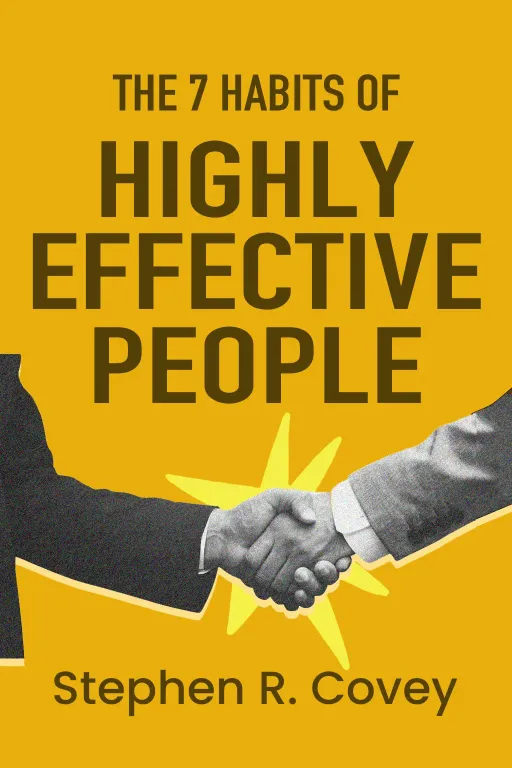
Nova: First up, Spencer Johnson's 'Who Moved My Cheese?'—a book so universally impactful it's been translated into dozens of languages and sold tens of millions of copies worldwide. And then, Stephen Covey's 'The 7 Habits of Highly Effective People,' which, despite its title, is far more about fundamental character development and internal mastery than just productivity hacks.
Atlas: It’s interesting how those two titles alone evoke such different feelings. One sounds almost whimsical, the other very serious. But they both tackle this fundamental human challenge: how we deal when things inevitably change.
Nova: Absolutely. And they both, in their own ways, illuminate how we can stop feeling paralyzed by change and instead, consciously choose to move forward, turning every transition into a launchpad for personal and professional growth.
The Blind Spot & Anticipating Change
SECTION
Nova: So, let's start with this idea of the 'blind spot.' It’s that uncomfortable truth that we often resist change, clinging to what is known, even if that 'known' no longer serves us. You know that feeling, Atlas?
Atlas: Oh, I know that feeling. It’s like when you’ve got a perfectly good routine, a comfort zone, and suddenly something shifts and you’re just… annoyed. You want things to go back to how they were. It’s a very human reaction, isn’t it?
Nova: It’s incredibly human. And that's where 'Who Moved My Cheese?' shines a spotlight. Johnson's simple parable tells the story of four characters: two mice, Sniff and Scurry, and two 'littlepeople,' Hem and Haw. They live in a maze and find a gigantic supply of cheese at 'Cheese Station C.'
Atlas: Okay, I’m picturing it. Big pile of cheese. Everyone’s happy.
Nova: Exactly. They get comfortable. Hem and Haw even build routines around it, thinking their cheese supply will last forever. They grow complacent. But then, one day, the cheese is gone. Poof. Vanished.
Atlas: Whoa. That’s a rude awakening.
Nova: It is. Now, the mice, Sniff and Scurry, they’d noticed the cheese supply dwindling. They weren't emotionally invested in that specific cheese. So, what do they do? They immediately put their running shoes back on and scurry off into the maze, sniffing for new cheese. They adapt.
Atlas: Right, like, they just accept it and move on. No drama.
Nova: Precisely. They anticipate, they act quickly. Hem and Haw, on the other hand? They are utterly devastated. They feel betrayed. They complain, they analyze, they get angry. They keep going back to Cheese Station C, hoping the cheese will miraculously reappear. They resist the reality of the situation.
Atlas: That sounds rough, but isn’t it natural to feel that initial shock, that sense of injustice? For our listeners trying to navigate a new industry or a career shift, it’s rarely as simple as just “running off to find new cheese.” It feels like a massive loss.
Nova: It absolutely is. Johnson isn't saying don't feel. He's illustrating the of that feeling and the to move past it. The cheese isn't just food; it's a job, a relationship, a belief system, a comfortable routine—anything we value. And the maze? That's our environment, our career path, the world around us. Hem and Haw were stuck because they were emotionally attached to the cheese and the station. They let fear of the unknown paralyze them.
Atlas: So, how does one 'sniff out' change, then, when things seem stable? Because often, we don’t get a clear warning sign like dwindling cheese. Things just… change.
Nova: Excellent question. Sniff and Scurry weren't just lucky. They were observant. They noticed small shifts. The lesson here is about continuous awareness. It's about not getting so comfortable that you stop paying attention to your environment, to market trends, to new technologies, to your own evolving needs. It's about proactive observation, not just waiting for a crisis to hit. It’s about building the muscle of flexibility you need it.
The Proactive Shift & Taking Responsibility
SECTION
Nova: And that naturally leads us to the second key idea we need to talk about, which often acts as a powerful counterpoint to just anticipating change: how we to respond. Because anticipating change is one thing, but mastering your reaction to it is another.
Atlas: Okay, so we’ve sniffed out the change. Now what? Because knowing the cheese is gone doesn't magically make new cheese appear, or make the journey to find it any less daunting.
Nova: Exactly. That's where Stephen Covey and 'The 7 Habits of Highly Effective People' come in, specifically his first habit: Be Proactive. Covey argues that our fundamental freedom lies in our ability to choose our response to any given situation. We're not victims of circumstance; we are responsible for our reactions.
Atlas: I can see how that would be a powerful idea. But wait, isn't it easier said than done? When the 'cheese' is gone, and the world feels against you – maybe a project gets cancelled, or a big opportunity falls through – isn't it natural to feel like a victim? To feel overwhelmed? For someone trying to carve out a new path, that can feel incredibly personal.
Nova: Absolutely, that feeling is natural. But Covey clarifies the distinction between 'reactive' and 'proactive' people. Reactive people are driven by feelings, by circumstances, by their environment. They say things like, "I can't help it; that's just the way I am," or "They made me do it." Their language often absolves them of responsibility.
Atlas: Right, like, "My boss makes me stressed," or "The market conditions are impossible." I’ve definitely heard that, and honestly, felt it myself sometimes.
Nova: We all have. Proactive people, however, understand their 'response-ability' – their ability to choose their response. They don't ignore external problems, but they focus their energy on what they control, within their 'Circle of Influence,' rather than dwelling on things outside it, in their 'Circle of Concern.'
Atlas: Can you give an example? For someone trying to build a new skill or navigate a career change, how does this shift from 'victim' to 'proactive' actually manifest day-to-day? Because planning steps requires a lot of practical action.
Nova: Think of it this way: a reactive person, when faced with a sudden job loss, might spend weeks feeling angry, blaming the economy, and sinking into despair. A proactive person, while still acknowledging the difficulty, will quickly shift to what they do. Update their resume, network, learn a new skill, reassess their career goals. They say, "I control how I respond to this." They might even see it as an opportunity to pivot into something they've always wanted to do.
Atlas: So it's not about pretending the problem doesn't exist, but about channeling your energy into solutions, even when the solution isn't immediately obvious. It's about taking ownership of the next step, no matter how small.
Nova: Exactly. It's the difference between being carried by the current and actively steering your boat, even if it's against a strong tide. It’s a fundamental shift in perspective that empowers you to turn challenges into stepping stones, rather than stumbling blocks. It’s about understanding that while the world might move your cheese, you decide what you do next.
Synthesis & Takeaways
SECTION
Nova: So, bringing these two powerful ideas together, we see that navigating change successfully isn't just about 'sniffing out' where the new cheese might be, but also about the profound choice we make in we go about finding it. It's about being observant enough to anticipate the shifts, and then proactive enough to take responsibility for our journey through the maze.
Atlas: That’s a really profound connection. It means that even if you're dreaming big and seeing beyond your current circumstances, you're not just waiting for the world to align. You're actively engaging with it, shaping your own path forward.
Nova: Precisely. It fundamentally shifts your perspective from fearing change to actively seeking and adapting to it. It’s about transforming those challenges into stepping stones, as we said.
Atlas: So, Nova, what's the smallest step someone can take today to stop resisting and start moving forward, especially when they're dreaming big but perhaps feeling a little stuck? What's one small change they might be resisting that could open a new door tomorrow?
Nova: I love that question, Atlas, because it brings it right back to the individual. The smallest step is often to simply that resistance. To identify one small change you’ve been putting off—maybe it’s learning a new software, speaking up in a meeting, or even just restructuring your morning routine. Then, instead of fighting the discomfort, choose to engage with it.
Atlas: That makes sense. Because every journey starts with a single word, or in this case, a single proactive step. It’s about trusting your voice, trusting your ability to adapt.
Nova: Absolutely. Change is constant, but our response to it is always a choice. And that choice, that proactive step, is where all real growth begins.
Atlas: This is Aibrary. Congratulations on your growth!









