

Unlocking Your Leadership Potential: Influence & Impact
Golden Hook & Introduction
SECTION
Nova: Think about the last time you felt truly inspired by a leader. Not just directed, but. What was it about them? Was it their charisma? Their big ideas? Or something deeper, more fundamental?
Atlas: Oh, I like that. Because it’s easy to confuse 'boss' with 'leader,' right? We’ve all seen the difference between someone who just tells you what to do and someone who makes you to do it. It's night and day.
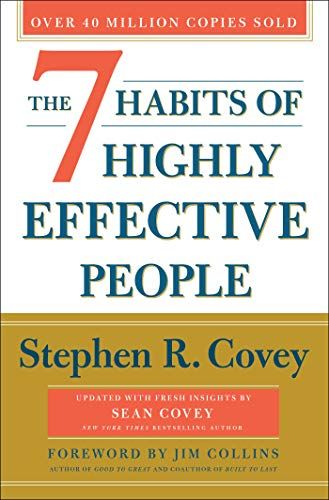
Nova: Absolutely. And that fundamental difference, that wellspring of true influence, is exactly what we're dissecting today. We're pulling apart two monumental works that, when combined, offer a complete blueprint for not just leading, but leadership. We're talking about Stephen Covey's seminal work, "The 7 Habits of Highly Effective People," and Simon Sinek's incredibly impactful "Start with Why."
Atlas: Two absolute titans! And it’s fascinating how Covey, who was a globally recognized leadership authority and even advised presidents, focuses so much on the work, the character building, almost like a personal operating system. While Sinek, with his background in advertising and anthropology, zeroes in on that singular, powerful external communication piece.
Nova: Exactly. And what's interesting about Covey is that he didn't just write a self-help book; he synthesized decades of success literature and philosophical thought. He was a deeply principled man, a devout Mormon, whose work transcended typical business advice by grounding it in universal principles of fairness, integrity, and human dignity. His insights, born from his academic work and consulting, have been translated into dozens of languages and continue to resonate decades later, proving the timelessness of his principles.
Atlas: So he’s giving us the internal compass, the 'how-to-be-a-leader' from the inside out. And Sinek then takes that internal clarity and shows us how to project it outwards.
Nova: Precisely. Let's start with Covey, because his work really lays the groundwork.
Principle-Centered Leadership: The Foundation of Influence
SECTION
Nova: Covey’s core message is about principle-centered living and leading. He argues that true effectiveness, especially in leadership, doesn't come from quick fixes or personality ethics, but from aligning with timeless, universal principles like fairness, integrity, human dignity, and service. He codifies this into seven habits, but the first three are particularly foundational for our discussion on influence: Be Proactive, Begin with the End in Mind, and Put First Things First.
Atlas: Okay, so 'Be Proactive'… that sounds like taking initiative, right? Not waiting for things to happen to you. But what's the deeper leadership implication there? Because 'initiative' can sometimes just mean 'busywork.'
Nova: That’s a really sharp distinction, Atlas. Covey goes beyond mere initiative. For him, proactivity is about taking responsibility for your choices and your life. It’s recognizing that you have the freedom to choose your response to any situation. It’s about not blaming circumstances, conditions, or conditioning for your behavior. He tells a powerful story about Viktor Frankl, a psychiatrist who survived Nazi concentration camps. Frankl observed that even in the most horrific circumstances, the one freedom that could not be taken away was the freedom to choose one's attitude, one's response.
Atlas: Wow. So it’s not just about something, it’s about your reaction to everything, even the stuff you can’t control. I imagine a lot of our listeners, especially those building something or leading teams, often feel overwhelmed by external pressures, market shifts, or internal team conflicts. It’s easy to feel like a victim of circumstance.
Nova: Exactly. And a proactive leader doesn't just react to problems; they anticipate, they take responsibility, and they choose their response. They operate within their 'Circle of Influence,' focusing energy on things they can change, rather than their 'Circle of Concern,' which includes things they can't. Think of a project falling behind schedule. A reactive leader might blame the team, the resources, the client. A proactive leader immediately asks, "What can do right now to move this forward? What choices can make to mitigate this?"
Atlas: That’s a fundamentally different mindset. It shifts from 'what's happening me' to 'what can do this.' And that directly impacts influence, because who wants to follow someone who constantly feels like a victim?
Nova: Precisely. And that leads us to the second habit: Begin with the End in Mind. This is about defining your values and direction before you start climbing the ladder. It's the habit of personal leadership, ensuring that you're not just efficient, but – that you're climbing the ladder. Covey often asks, "What do you want people to say about you at your funeral?" It's a stark, powerful question designed to make you think about your ultimate contribution.
Atlas: Okay, that's a profoundly deep question. It’s not just about quarterly reports or annual goals, it’s about your entire life’s purpose. For someone who’s building a legacy, who cares about impact, that funeral test is a powerful filter. How does that translate into day-to-day leadership?
Nova: Well, it means that every decision, every team project, every strategic move, should ideally be aligned with that ultimate vision, that 'end in mind.' It’s like an architect who designs the entire building before laying the first brick. A leader who begins with the end in mind doesn't just manage tasks; they manage. They ensure that the team's efforts contribute to a larger, shared vision that resonates with everyone's deepest values. It’s about defining your personal mission statement, and then your team’s, and your organization’s. This isn't just fluffy HR talk; it's the strategic clarity that prevents wasted effort and builds enduring commitment.
Atlas: So, if 'Be Proactive' is about owning your choices, and 'Begin with the End in Mind' is about knowing your destination, then 'Put First Things First' sounds like the execution piece – actually getting there.
Nova: You've got it. This is the habit of personal management. It's about prioritizing and executing your mission, focusing on what's truly important, not just what's urgent. Covey gives us a brilliant time management matrix, dividing tasks into four quadrants: Urgent/Important, Not Urgent/Important, Urgent/Not Important, and Not Urgent/Not Important. He argues that highly effective people, and by extension, highly effective leaders, spend most of their time in the 'Not Urgent/Important' quadrant.
Atlas: Not Urgent but Important… that’s fascinating. That sounds like strategic planning, relationship building, professional development, and even self-care. The stuff that often gets pushed aside for the 'fire drills.'
Nova: Exactly! It's the critical work that prevents future crises. Imagine a leader constantly dealing with emergencies. They're stuck in the Urgent/Important quadrant. A leader who proactively 'puts first things first' invests in preventing those emergencies. They build robust systems, develop their team's skills, foster strong relationships, and strategically plan for the future. This creates a calm, focused environment where real influence can flourish, because the leader isn't just reacting; they're. They're building.
The Power of 'Why': Inspiring Action and Building Legacy
SECTION
Nova: And this is where Simon Sinek's "Start with Why" seamlessly connects. Covey gives us the internal alignment, the personal operating system for principled leadership. Sinek then shows us how to articulate that internal 'why' in a way that inspires others.
Atlas: So Covey helps us our 'why,' and Sinek helps us it. I'm curious, Sinek's work really exploded, becoming a global phenomenon. What's the backstory there?
Nova: Sinek's work really took off after his TED Talk in 2009, which became one of the most-watched talks of all time. He was a marketing consultant who felt frustrated by the lack of lasting success in many businesses. He observed that while many companies knew they did and they did it, very few could articulate they did it – their purpose, cause, or belief. He then codified this into the 'Golden Circle' framework, drawing inspiration from biology and psychology. His book, published a year later, expanded on these insights, showing how leaders like Steve Jobs, Martin Luther King Jr., and the Wright brothers all operated from the 'why' first. The book resonated widely because it tapped into a fundamental human need for meaning and connection, offering a fresh perspective on leadership beyond just profit and performance.
Atlas: That Golden Circle is so powerful. It's concentric circles: Why in the middle, then How, then What. And most organizations, most people, communicate from the outside in: "Here's what we do, here's how we do it, want to buy it?"
Nova: Right. And Sinek argues that truly inspirational leaders, the ones who build movements and fierce loyalty, communicate from the inside out. They start with their 'Why.' They articulate their purpose, their belief, their cause, and they explain how they do it, and finally, what they do. People don't buy you do, they buy you do it.
Atlas: That makes me wonder… for our listeners who are strategic mentors, who are trying to guide new talent, how does this 'why' principle really help them? Because it’s one thing to have a 'why' for a product, but for guiding people, it feels a bit more abstract.
Nova: It’s even crucial for mentorship! If you, as a mentor, can articulate your 'why' – your belief in empowering others, your commitment to fostering growth, your vision for a better future that your mentee can contribute to – you're not just giving advice. You're inviting them into a shared purpose. You’re not just telling them to do, you’re showing them their journey matters, why their contribution is part of something bigger. It moves from instruction to inspiration.
Atlas: So, for a mentor, their 'why' might be "I believe in unlocking human potential," or "I believe in building a future where everyone thrives." And then the 'how' is through guidance and support, and the 'what' is the specific advice or tasks.
Nova: Exactly! And when your mentee connects with that 'why,' they internalize it. They become intrinsically motivated, not just externally compliant. It's the difference between a team member who does their job because they have to, and one who does it because they believe in the mission. For a leader looking to empower their team, this is the ultimate tool for alignment and engagement. It creates a sense of belonging and shared identity.
Atlas: I've been thinking about this. If Covey's habits help us define our personal 'why' effectively, by encouraging us to 'Begin with the End in Mind,' and then Sinek shows us how to vocalize that 'why' to the world, what happens if your 'why' isn't fully formed or authentic? Can you fake it till you make it with a 'why'?
Nova: That’s a critical question, Atlas. And both authors would emphatically say no. Covey’s entire framework is built on principles, on character. If your 'why' isn't rooted in genuine principles, if it's not authentic to, it becomes manipulation, not inspiration. People can sense insincerity. Sinek himself emphasizes that the 'why' isn't invented; it's discovered. It's an excavation of your deepest beliefs and motivations. If you try to fabricate a 'why,' it won't resonate, and it certainly won't build a legacy of impact. It becomes just another marketing slogan.
Atlas: So true leadership isn't about looking good, it's about good, and then clearly communicating that goodness. It's about coherence between who you are, what you believe, and what you do.
Nova: You've hit the nail on the head. True influence comes from that complete alignment. It's about integrity. It's about building trust. It's about creating a culture where people feel seen, valued, and connected to a purpose larger than themselves. These books, together, don't just offer tips; they offer a profound philosophy for life and leadership.
Synthesis & Takeaways
SECTION
Nova: So, bringing it all together: Covey gives us the internal operating system for principled living – being proactive, beginning with the end in mind, and putting first things first. This is the crucial inner work. And Sinek then shows us how to articulate that deeply understood personal and organizational 'why' to inspire others, moving beyond mere transactions to true transformation.
Atlas: It’s a powerful combination. It takes leadership from a set of external actions to a deeply internal, purpose-driven journey. For anyone looking to empower their team, to grow their influence, or simply to leave a lasting mark, this isn't just about managing projects; it's about mastering yourself first, and then clearly illuminating the path for others. It’s about building something that outlives you.
Nova: Absolutely. It’s about building a legacy not just of achievement, but of profound impact and genuine inspiration. It's about moving from being a director to being an aligner, an empowerer, someone who fundamentally shifts the trajectory of those around them.
Atlas: And that, I think, is the ultimate goal for any leader who truly cares about making a difference. This is Aibrary. Congratulations on your growth!