

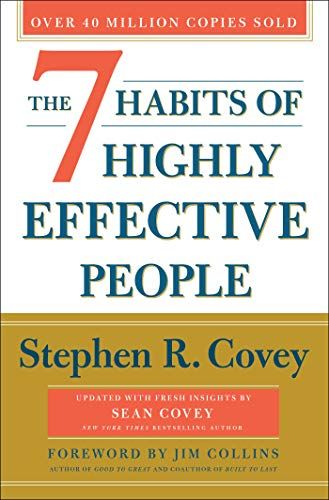
The Habits of Highly Effective People: A Guide to Personal and Professional Mastery
Golden Hook & Introduction
SECTION
Nova: We're all told to "work smarter, not harder," right? It's the mantra. But what if even "working smarter" is still missing the point entirely? What if the real secret to personal and professional mastery isn't about more, or even more, but about radically more?
Atlas: Whoa, okay, "radically eliminating more"? That’s a bold claim, Nova. My ears just perked up. I feel like my entire to-do list just sent a shiver down my spine. Are we talking about some kind of productivity magic trick, or something deeper?
Nova: Something far deeper, Atlas. Today, we’re fusing two titans of personal development: Stephen Covey's seminal work, "The 7 Habits of Highly Effective People," and Greg McKeown's incredibly insightful "Essentialism." Covey, you know, was this brilliant management consultant and academic who, decades ago, synthesized centuries of wisdom into a framework that became a global phenomenon, selling millions and influencing leaders and individuals worldwide. It wasn't just a business book; it was a guide to a complete philosophy of life.
Atlas: Right, and McKeown's "Essentialism" feels like a modern response to the overwhelm we all feel, doesn't it? A challenge to the "more is better" mentality.
Nova: Exactly. And when you combine Covey's timeless, character-based principles with McKeown’s strategic focus on ruthless prioritization, you don't just manage your time. You start to master your entire life.
Principles-Centered Living: The Enduring Power of Covey
SECTION
Nova: So, let’s start with Covey. He famously introduced the idea of a character ethic versus a personality ethic. For him, true effectiveness stems from deep character traits like integrity, humility, and courage, not just superficial techniques or "hacks."
Atlas: Oh, I like that distinction. So it’s not about learning how to effective, but how to effective from the inside out. For someone who values real-world application, that foundational integrity really resonates.
Nova: Precisely. And the first three habits, what he calls the "Private Victory," lay this groundwork. "Be Proactive," "Begin with the End in Mind," and "Put First Things First." Now, "Be Proactive" often gets misunderstood. People hear it and think, "Oh, just be busy, take initiative."
Atlas: Yeah, I imagine a lot of our listeners, especially those who are builders and doers, might interpret "proactive" as just adding more tasks to an already overflowing plate. Like, "Great, another thing I need to."
Nova: That’s the common trap. But Covey clarifies it's not about being busy; it's about taking responsibility for your choices and your life, rather than blaming circumstances or genetics. It’s recognizing your "response-ability." You have the power to choose your response to any situation.
Atlas: That’s actually really inspiring. It means even in chaos, you own your reaction. So it’s about shifting from just reacting to intentionally creating, even when life feels chaotic.
Nova: Exactly. Which leads us to "Begin with the End in Mind." This habit is all about envisioning your eulogy. What do you want people to say about you at your funeral? What kind of person do you want to have been?
Atlas: Wow. That's a gut punch, in the best possible way. For people like our listeners who are constantly building and connecting, it's easy to get caught up in the day-to-day grind. To just keep doing without truly asking. I still struggle with that myself.
Nova: It’s a deeply personal exercise, and often overlooked by doers who just jump straight into action. It forces you to clarify your deepest values and long-term vision. Once you have that clarity, then "Put First Things First" falls into place. This is about organizing and executing around your priorities. It's not about managing time; it's about managing yourself in relation to time and priorities.
Atlas: That makes perfect sense. If you know your "end in mind," then "first things" become obvious. It’s about aligning your daily actions with that eulogy vision. This sounds like the ultimate toolkit to ensure a powerful work ethic is directed towards what truly matters.
Disciplined Pursuit of Less: The Power of Essentialism
SECTION
Nova: Speaking of chaos and intentional creation, that actually leads us perfectly to Greg McKeown's "Essentialism," which almost feels like the modern-day tactical companion to Covey's foundational principles. McKeown’s core message is simple: the disciplined pursuit of less.
Atlas: "The disciplined pursuit of less." That sounds revolutionary in our current culture. We’re constantly bombarded with messages to do more, be more, have more.
Nova: It truly is. McKeown contrasts the "non-essentialist" who says yes to almost everything, feels constantly busy but unproductive, and eventually burns out, with the "essentialist" who identifies the vital few and eliminates the trivial many. It's about doing only what truly matters, and doing it exceptionally well.
Atlas: Whoa, that sounds great in theory, but for someone constantly building and connecting, eliminating things feels like saying no to opportunities or even people. How does that balance with being a "Relationship Builder" or a "Practical Innovator" who needs to say yes to new ideas?
Nova: That’s the critical tension, Atlas. McKeown argues that Essentialism isn't about doing nothing, but doing the things. It requires courage to say no, clarity to know what's essential, and discipline to execute. It's about making conscious trade-offs. You're not saying no to the opportunity itself; you're saying yes to something important.
Atlas: Right, so it's not about being lazy, it's about being strategic. It means asking, "Is this the important thing I could be doing right now?" which is a really hard question to consistently answer, especially when you're juggling diverse roles.
Nova: Exactly. And it actually time and energy for what truly matters, including those important relationships. It’s not about being selfish; it's about being strategic about where your finite energy goes. McKeown's book came out at a time when digital overload was really taking hold, and people were feeling the intense pressure of always-on culture. It was a wake-up call that simply managing your inbox wasn't enough; you needed a philosophy to decide what even to be in your inbox.
Atlas: That makes so much sense. It's like having a crowded closet, and instead of just trying to organize everything, you decide to only keep the clothes that truly fit, make you feel great, and you actually wear. And suddenly, getting dressed is easier and more effective.
Nova: Perfect analogy! It’s about creating space for your highest contribution, not just filling every void.
Synthesis & Takeaways
SECTION
Nova: So, if Covey gives us the compass – our character, values, and long-term vision – then McKeown gives us the map and the machete to clear the path. It’s about aligning our essential activities with our deepest principles.
Atlas: That's a powerful combination. It's not just about managing tasks; it's about managing your entire life's direction and impact, especially for those of us who feel pulled in a million directions. That really speaks to optimizing diverse roles and reducing stress.
Nova: Absolutely. Think about Covey’s seventh habit, "Sharpen the Saw," which is about continuous renewal—physical, mental, spiritual, and social. If you’re constantly overwhelmed by non-essential tasks, you never have the time or energy to truly sharpen your saw. Essentialism frees up that vital space.
Atlas: So, it's about creating a virtuous cycle: clarity from Covey helps identify the essential, focus from McKeown frees up time, and that time allows for the renewal that makes you even more effective. It's designing your life with intent, rather than letting it be designed for you.
Nova: Precisely. This isn't just theory; it's a practical framework for anyone seeking deeper impact and balance. For our listeners who are constantly building, fixing, and connecting, this sounds like the ultimate toolkit to ensure their powerful work ethic is directed towards what truly matters.
Atlas: So, as a tiny step this week, what's one non-essential activity or commitment you can identify and eliminate or delegate to free up time for your most important priorities? And which of Covey’s 7 Habits resonates most with your current challenges, and how can you integrate one small action based on that habit into your daily routine?
Nova: It’s about making conscious choices to live a life that's not just busy, but deeply meaningful and impactful. This is Aibrary. Congratulations on your growth!