

Mastering the Art of Engineering Leadership
Golden Hook & Introduction
SECTION
Nova: You know, Atlas, I was recently on a forum where someone posed this question: "If you could only give one piece of advice to an aspiring engineer about leadership, what would it be?" And the answers were fascinating, but also wildly varied.
Atlas: Oh, I love this kind of thought experiment. That makes me wonder, what was the most unexpected answer you saw? Was it something like, "always carry a multi-tool" or "learn to code in Python blindfolded"?
Nova: Not quite so literal, though I appreciate the practical bent! One that really stuck with me was, "Leadership isn't about being the smartest person in the room; it's about making everyone else feel smart enough to contribute their best." It’s such a simple idea, but it cuts right to the core of what effective leadership actually is.
Atlas: That’s actually really inspiring. Because honestly, for a lot of our listeners, especially those in engineering, there’s this pressure to the smartest, to have all the answers. But what you’re suggesting, what that quote suggests, is a completely different kind of power.
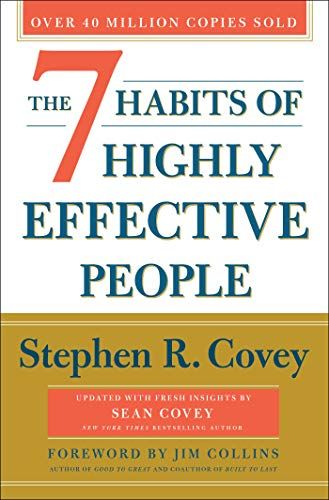
Nova: Exactly. And it’s a power that isn't always taught in textbooks. Which brings us perfectly to today's deep dive:. We're pulling insights from some foundational texts, namely Stephen Covey's "The 7 Habits of Highly Effective People," Simon Sinek's "Leaders Eat Last," and Jim Collins' "Good to Great." These aren't your typical engineering manuals, but they offer blueprints for building something even more complex than a bridge: a truly effective leader and a thriving team.
Atlas: Right, like, how do you even begin to apply something like "The 7 Habits" when you're knee-deep in a project deadline and just trying to make sure your code compiles? It sounds great in theory, but I’m curious how we bridge that gap to real-world engineering challenges.
Cultivating Impactful Leadership: The Inner Game
SECTION
Nova: That's precisely where we start, Atlas. We're talking about cultivating impactful leadership, and it really begins with the inner game. Covey, a massively influential author whose work has been translated into dozens of languages and sold tens of millions of copies worldwide, argues that true effectiveness stems from character, not just technique. He wasn't just writing self-help; he was almost engineering personal operating systems.
Atlas: So you're saying, before you can lead a team building the next big thing, you have to engineer yourself first? That’s a pretty fundamental shift from just learning project management software.
Nova: Absolutely. Take his first habit: "Be Proactive." It's about taking responsibility for your choices and actions, rather than blaming circumstances. For an engineer, this isn't just about owning up to a bug; it's about anticipating problems, designing for resilience, and taking initiative to improve processes before they break.
Atlas: Oh, I love that. So it's not just about reacting when something fails, but actively looking for ways to prevent failure, or even optimize. That makes me wonder, how does "beginning with the end in mind" translate for someone who’s, say, designing a new component?
Nova: That’s a fantastic question. "Beginning with the end in mind" means clarifying your values and priorities, and then visualizing the desired outcome before you even start. For an engineer, it’s not just about delivering a functional component; it's about understanding its ultimate purpose within the larger system, its impact on the user, and the long-term vision of the project. It’s anticipating the entire lifecycle, from design to disposal, right at the outset.
Atlas: That makes sense. It’s like, instead of just building a better mousetrap, you're asking, "What problem am I trying to solve here? Is it mice, or is it food storage, or maybe even preventing disease?" It completely reframes the problem.
Nova: Precisely. And then there's "Put First Things First," which is about disciplined execution. Prioritizing tasks based on importance, not just urgency. In engineering, where deadlines are tight and multiple demands pull you in different directions, this habit is crucial for ensuring that high-impact work doesn't get sidelined by urgent but less critical tasks.
Atlas: That sounds like the holy grail for anyone juggling multiple projects. I mean, how many times have we seen brilliant engineers get bogged down in minutiae because they couldn't distinguish between urgent and important? It’s a common pitfall.
Nova: It’s incredibly common. And Covey's work, while seemingly simple, provides a very robust framework for addressing these challenges. It’s about building a strong internal foundation, a personal operating system that allows you to operate at peak effectiveness, which then naturally extends to how you lead others.
Team Dynamics & Psychological Safety: Building the 'Circle of Safety'
SECTION
Nova: And speaking of leading others, that brings us to our second core idea: the critical role of team dynamics and psychological safety, especially through the lens of Simon Sinek's "Leaders Eat Last." Sinek's insights gained widespread acclaim, resonating with a broad audience from corporate leaders to military personnel, because he taps into something deeply human about leadership.
Atlas: Okay, "Leaders Eat Last." That sounds counterintuitive to the traditional image of a powerful leader. So, what exactly is this 'Circle of Safety' and how does it relate to, say, a group of engineers collaborating on a complex, high-stakes project?
Nova: Sinek argues that a 'Circle of Safety' is a feeling of trust and belonging within a group, where individuals feel protected from external threats and internal politics by their leaders. In this environment, people feel safe to take risks, admit mistakes, and ask for help without fear of humiliation or punishment. For an engineering team, this is paramount.
Atlas: Wow, that’s a pretty big deal. I imagine a lot of our listeners, the aspiring innovators and strategic leaders, they've probably been in situations where that 'Circle of Safety' was definitely present. And the impact on innovation and problem-solving must be huge.
Nova: It’s monumental. Think about a team trying to innovate. Innovation requires experimentation, and experimentation inevitably involves failure. If engineers are afraid to propose a radical idea because it might fail and they'll be penalized, or if they're hesitant to point out a flaw in a senior colleague's design, innovation grinds to a halt. The 'Circle of Safety' fosters an environment where failure is seen as a learning opportunity, not a career-ender.
Atlas: So, it's not about being soft. It's about creating a safe space for people to be vulnerable, to be human, and that actually makes the team stronger and more resilient, especially when things go wrong. Like, if a critical system fails, and everyone's pointing fingers, nothing gets solved. But if there’s trust, they can unite to fix it.
Nova: Exactly. Sinek illustrates this beautifully with military examples, where leaders literally put their soldiers' needs before their own, creating unbreakable bonds of trust that are essential in life-or-death situations. While engineering projects might not be life-or-death in the same way, the principles of trust and mutual support are identical for achieving ambitious goals.
Atlas: I can definitely see how this applies. For anyone building complex systems, psychological safety means you’re not just building a product, you’re building a team that can the challenges of building that product. It's about shared responsibility and collective problem-solving.
The Humility-Will Paradox: Level 5 Leadership for Enduring Greatness
SECTION
Nova: And that brings us to our final, and perhaps most intriguing, concept: the humility-will paradox, encapsulated in Jim Collins' idea of Level 5 Leadership from his highly influential book "Good to Great." Collins' research, which involved a rigorous analysis of companies that achieved sustained excellence, revealed some truly counterintuitive findings.
Atlas: Okay, Level 5 Leadership. That sounds like something out of a video game, like you've unlocked the ultimate achievement. But 'humility' and 'professional will' together? They almost sound like opposites. How do they combine to create greatness?
Nova: That's the paradox, Atlas. Collins and his team found that the leaders who transformed good companies into great, enduring ones were not charismatic, larger-than-life figures. Instead, they were often self-effacing individuals who possessed a fierce, almost stoic, resolve for the company's success. They were incredibly ambitious, but that ambition was channeled into the institution, not themselves.
Atlas: So, it’s not about the rockstar CEO who gets all the headlines. It’s more about the quiet force, the person who's relentlessly driving the organization forward, but doesn't need personal glory. How does that look in practice for an engineering leader?
Nova: Imagine an engineering leader who insists on the highest standards of quality and innovation, pushing their team to achieve seemingly impossible technical feats. That's the professional will. But at the same time, when success comes, they deflect credit to the team, and when things go wrong, they look in the mirror, taking responsibility. That's the personal humility. They build a powerful team, and then they build successors, ensuring the company's greatness extends beyond their tenure.
Atlas: That’s a completely different model than what we often see portrayed in the media. It’s not about ego, it’s about impact. And it makes perfect sense for engineering, where the collective effort often outweighs any individual's contribution. The project is bigger than any single person.
Nova: Precisely. Collins found that these Level 5 leaders were often described as "plow horses, not show horses." They were fanatically driven to produce results, but they avoided personal accolades and often seemed almost shy. They built enduring greatness by prioritizing the enterprise over their own celebrity.
Atlas: That gives me chills, actually. Because it means that the kind of leadership that truly makes a difference isn't about fitting a certain mold or having a certain personality. It's about a very specific, powerful combination of character traits. For our aspiring innovators, for someone wanting to build a better future, this is a profound lesson: that true impact comes from a blend of intense professional drive and a deep, humble commitment to something larger than yourself.
Synthesis & Takeaways
SECTION
Nova: So, Atlas, when we weave these three threads together—Covey's personal effectiveness, Sinek's 'Circle of Safety,' and Collins' Level 5 humility-will paradox—what emerges is a holistic picture of engineering leadership. It's about self-mastery, team empowerment, and ultimately, building something that lasts.
Atlas: Honestly, that’s incredibly powerful. It’s not just about managing projects or people; it’s about cultivating an environment where innovation isn't just possible, but inevitable. It's about engineering trust, purpose, and disciplined action into the very fabric of your work and your team.
Nova: Exactly. True leadership isn't just about giving orders; it's about cultivating an environment where innovation thrives through trust, purpose, and disciplined action. It’s about understanding that the greatest engineers aren't just technical wizards, but human architects who can design systems not just of code or steel, but of collaboration and shared vision.
Atlas: That’s a great way to put it. And for our listeners, especially those pursuing mechanical engineering and driven by a desire to create and make a tangible difference, the takeaway is clear: don't just build products, build yourself as a leader. Build your team with trust. And build a legacy with humility and fierce will.
Nova: Absolutely. It’s a journey of continuous learning, embracing curiosity, and seeking out hands-on opportunities to build something. Anything. Because that’s where real leadership is forged.
Atlas: That’s a fantastic call to action. It’s about applying these theories, not just studying them.
Nova: This is Aibrary. Congratulations on your growth!