

The Invisible Handshake: How Ethical Leadership Builds Unshakeable Trust.
Golden Hook & Introduction
SECTION
Nova: Most leaders chase power, influence, or the next big win. They focus on the visible metrics, the tangible achievements. But what if the strongest, most enduring leadership isn't about what you, but what you – an invisible, yet unshakeable trust?
Atlas: Whoa, Nova, that's a bold claim right out of the gate. "Invisible, yet unshakeable trust." It almost sounds like a paradox in a world obsessed with quantifiable results and visible authority. Are you saying the traditional power plays are... a distraction?
Nova: Exactly, Atlas. We're diving into that very idea today with a profound book titled, "The Invisible Handshake: How Ethical Leadership Builds Unshakeable Trust." This is a book that truly emerged from years of observing how some organizations thrive with deep loyalty and a vibrant culture, while others, despite brilliant strategies and resources, slowly crumble. It spotlights that the missing ingredient was almost always a profound lack of ethical trust at the top.
Atlas: So, it's not just about the vision, then, but the foundation it's built upon. For anyone out there trying to literally something — a team, a company, a legacy — that sounds absolutely critical.
Nova: It is. The cold, hard fact the book lays bare is this: true leadership isn't about power; it's about trust. Without integrity, your grand vision will struggle to gain traction and inspire lasting loyalty. It's a quiet truth, often overlooked, but its impact is seismic.
The Foundational Pillars – Vulnerability & Values
SECTION
Atlas: Okay, so if it's about trust, not power, how do you actually that? Because for many leaders, especially those trying to establish a new culture or make their mark, projecting strength and competence feels paramount. Vulnerability... that sounds risky in a high-stakes environment.
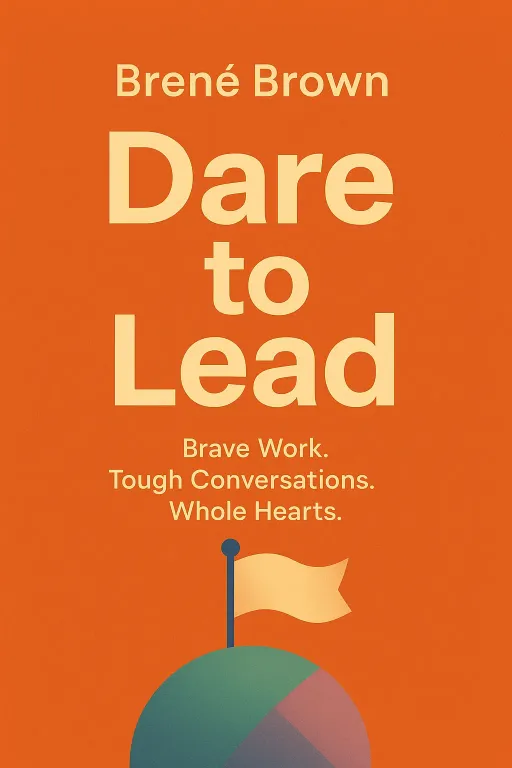
Nova: That's a crucial point, and it’s where Brené Brown's work, particularly in "Dare to Lead," becomes indispensable. She champions the idea that brave leadership vulnerability. It’s not about oversharing or weakness; it's about showing up authentically, living into your values, and building trust through consistent, courageous conversations.
Atlas: But how does that look in practice? Like, give me a real-world scenario. Because "vulnerability" can sometimes feel like a buzzword without concrete application.
Nova: Imagine a tech startup, let's call it "InnovateNow," facing a critical bug in their flagship product, just days before a major launch. The CEO, instead of trying to sweep it under the rug, or blaming an individual, calls an all-hands meeting. She openly states, "We have a problem. This is on me, as the leader, for not foreseeing this particular blind spot in our testing protocols. I need your collective expertise to fix this."
Atlas: Hmm. My initial thought is, wouldn't that undermine her authority? Wouldn't people think, "She doesn't know what she's doing?"
Nova: That's the common fear! But here's what happens: by admitting her fallibility, she models vulnerability. She creates psychological safety. Instead of a culture of fear where people hide mistakes, the team feels empowered to speak up, share ideas, and collaboratively problem-solve. The cause was her vulnerability, the process was open communication, and the outcome? They not only fixed the bug faster, but the team's trust in her leadership, and in each other, soared. They saw her as human, relatable, and genuinely committed to the mission, not just her own image.
Atlas: I guess that makes sense. It's like she's saying, "We're in this together, and I trust you enough to admit when I don't have all the answers." That’s going to resonate with anyone who's trying to cultivate a strong, collaborative culture from day one.
Nova: Exactly. It's the opposite of a top-down, command-and-control approach. It's about leading with an open hand, not a clenched fist. And that openness is directly tied to living into your values. If one of your stated values is "transparency," then admitting a mistake is a powerful demonstration of that value in action.
Character & Consistency – The Ripple Effect
SECTION
Atlas: So, if vulnerability opens the door to trust, what keeps it open? What solidifies that trust over time, especially for someone who wants to build something that truly lasts, a real legacy?
Nova: That naturally leads us to the second key idea, which Stephen Covey masterfully articulates in "The 7 Habits of Highly Effective People." Covey champions what he calls a "character ethic," where integrity and trustworthiness are foundational to personal and professional effectiveness. It's about consistency, Atlas. It's about your actions consistently aligning with your words.
Atlas: Consistency is interesting. Because in today's world, everyone talks about agility and adaptability. How do you maintain a character ethic and consistency without becoming rigid or slow to change?
Nova: That's a perceptive question. Consistency in character isn't about being rigid in your methods; it's about being steadfast in your. Imagine a leader, let's call her Maria, who consistently prioritizes her team's well-being, even when it means making a short-term financial sacrifice. When tough times hit, and she has to make difficult decisions, her team doesn't question her motives. They trust her because her past actions have consistently demonstrated her commitment to them.
Atlas: So, it's not about doing the every time, but about acting from the every time. That makes sense. It’s like an inner compass that guides your decisions, even when the path ahead is unclear.
Nova: Precisely. This consistent character ethic creates what the book calls a "ripple effect." When leaders operate with integrity, it fosters psychological safety throughout the team. People feel safe to innovate, to take calculated risks, to even disagree respectfully, because they trust their leader's intentions. This empowerment leads to higher performance, greater engagement, and ultimately, a more resilient and thriving organization.
Atlas: I can definitely see how that would cultivate a much stronger culture. For an "Architect" who's not just building a product, but an, that psychological safety is gold. It’s the difference between a team that just shows up, and a team that truly performs at their best.
Nova: It is. The invisible handshake is continuously sealed through these small, consistent acts of integrity. When a leader's walk matches their talk, trust isn't just assumed; it's earned, day in and day out. That's what empowers a team to perform optimally.
Synthesis & Takeaways
SECTION
Nova: Ultimately, it all circles back to that invisible handshake, doesn't it? The one that truly builds a legacy, not just a fleeting success. Ethical leadership, rooted in vulnerability and unwavering character, isn't some soft skill. It's the strategic advantage.
Atlas: It really is. For anyone out there who's driven by impact, who cares about legacy, and wants to build something that lasts, this isn't just about being a 'good person.' It's about strategic impact. This 'invisible handshake' of trust becomes the magnetic force that attracts the right people, inspires loyalty, and allows you to cultivate a thriving team from day one.
Nova: Absolutely. And the book offers a fantastic "Tiny Step" that anyone can take right now to begin strengthening their own invisible handshake. It asks you to reflect on a recent decision. Did it align with your stated values? Then, it encourages you to share this reflection with a trusted colleague to build transparency.
Atlas: That's a brilliant micro-investment in legacy. It's not some grand gesture; it's a small, consistent act of self-awareness and transparency that, over time, compounds into unshakeable trust. It’s the very essence of building to last.
Nova: It is. So, we invite our listeners to consider: how strong is your invisible handshake? What small, consistent act of integrity can you commit to today?
Atlas: Food for thought indeed. And a powerful reminder that the most impactful leadership isn't always the loudest or the most powerful, but the most trustworthy.
Nova: This is Aibrary. Congratulations on your growth!