

Defeating Procrastination in Five Seconds
Golden Hook & Introduction
SECTION
Nova: There is a specific, measurable gap between having an idea and talking yourself out of it. It is exactly five seconds long. If you do not act within that window, your brain is designed to kill the idea before it ever leaves the starting gate.
Atlas: That sounds like a biological trap. I mean, we are walking around with an internal saboteur that is actively working against our best interests. I have definitely felt that gap. You have the impulse to start a difficult project or speak up in a meeting, and then, five seconds later, you are just sitting there, convincing yourself why it is safer to stay quiet.
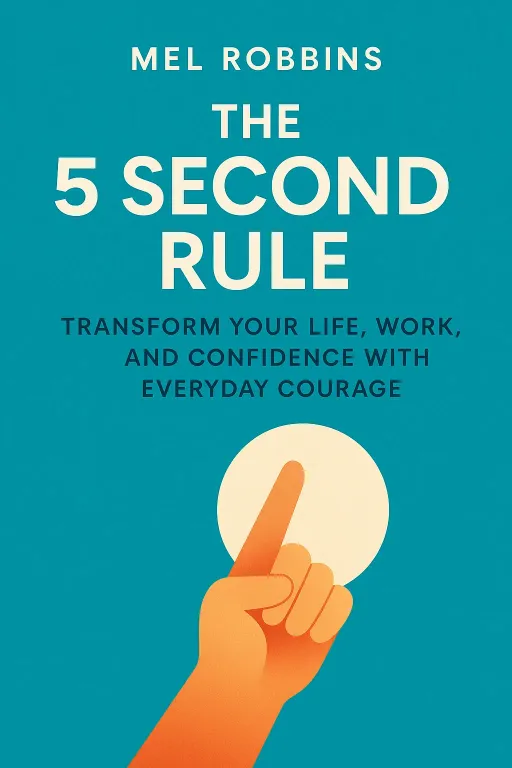
Nova: That is the exact mechanism we are breaking down today. We are looking at The 5 Second Rule by Mel Robbins. This book is widely recognized for taking a very simple, almost deceptively basic concept—counting backwards from five to one—and turning it into a framework for changing how we handle procrastination, self-doubt, and fear.
Atlas: I remember when this idea first surfaced. Mel Robbins was in a place where her career and marriage were struggling, and she was having trouble even getting out of bed in the morning. She essentially invented this countdown as a desperate, last-ditch effort to stop herself from pressing the snooze button. It is fascinating how something that came from such a personal rock-bottom moment became a global phenomenon.
Nova: It is. She went from that moment to becoming a viral sensation, largely because the simplicity of the rule makes it accessible. It does not require a complex mindset shift or weeks of meditation. It is a physical, immediate intervention.
Atlas: Let’s dive into that. Because on the surface, counting backwards sounds like something you would do to calm down a toddler. How does that actually translate to high-level productivity or leadership?
The Biology of Hesitation
SECTION
Nova: The key to understanding why this works lies in how your brain handles change. Your brain is wired for survival, not for success. When you have an idea, or you know you need to do something uncomfortable, your brain perceives that discomfort as a threat. It immediately tries to protect you by pulling you back to what is safe, familiar, and predictable.
Atlas: And that is where the hesitation comes in. You are sitting there, thinking about the work you need to do, and your brain is essentially whispering, "Wait, this is risky. Let's do this later."
Nova: Exactly. That is the brain putting on the brakes. When you hesitate, you are signaling to your brain that you are unsure, and your brain responds by flooding you with reasons to stop. The 5 Second Rule is a pattern interrupt. When you count 5-4-3-2-1, you are doing something that requires focus. You are shifting activity from the limbic system, which is the emotional, reactive part of your brain, to the prefrontal cortex, which is responsible for decision-making and logic.
Atlas: So, you are essentially forcing your brain to switch gears. You are moving from "emotional reaction" mode to "executive function" mode.
Nova: Precisely. You are overriding the autopilot. The countdown is a physical act that engages your prefrontal cortex. By the time you hit "one," you have essentially hijacked your own brain’s hesitation mechanism. You have created a window of opportunity where you can launch yourself into action before your brain has the chance to talk you out of it.
Atlas: I can see how that applies to the small stuff, like getting out of bed or starting a workout. But let’s talk about the person who is already in the trenches. Think of the resilient provider, the person working long hours, carrying the weight of their team, trying to grow into a leadership role. They are not struggling with getting out of bed; they are struggling with the mental fatigue of constant decision-making. Does this rule hold up when you are already running on empty?
Nova: That is a crucial distinction. For someone operating at that level, the 5 Second Rule is less about motivation and more about energy management. When you are fatigued, your prefrontal cortex is tired. It is much easier to fall back into habits of avoidance or passivity.
Atlas: That is the reality. You are at the end of a ten-hour shift, and you know you need to address a difficult piece of feedback with a team member, or you need to start that strategic plan for next quarter. Your brain is saying, "You are tired. Just send an email tomorrow."
Nova: And that is the exact moment to use the rule. You count 5-4-3-2-1 and you physically move. You stand up, or you open the document, or you walk to that person’s desk. The rule is a tool for bypassing the "I don't feel like it" feeling. You do not need to feel like doing it. You just need to act.
The Window of Courage
SECTION
Atlas: I am curious about the "courage" aspect. We often think of courage as this grand, heroic feeling. But Robbins frames it differently, doesn't she?
Nova: She does. She defines courage as the ability to do things that are uncomfortable, uncertain, or scary. Most people wait for the feeling of courage to arrive before they take action. They think, "I will launch this new initiative once I feel confident." But confidence is a result of action, not a prerequisite for it.
Atlas: That is a total reversal of how we usually operate. We think we need to feel ready to be brave.
Nova: But you are never going to feel ready. The 5 Second Rule teaches you that you have to act you feel ready. By counting down and moving, you are engaging in what psychologists call "behavioral activation." You are proving to yourself, through your actions, that you are capable of handling the discomfort.
Atlas: That resonates with the growth mindset we talk about. If you are an aspiring leader, you are constantly being put into situations where you don't have all the answers. The 5 Second Rule becomes a way to stop the "imposter syndrome" spiral. You feel the doubt coming on, and you interrupt it with the count.
Nova: Exactly. Think about a meeting where you have a brilliant idea but you are worried about how it will be perceived. Your brain is scanning for danger—social rejection, looking foolish. That is the fear response. If you wait, that fear will compound. If you use the rule, you count 5-4-3-2-1 and you raise your hand immediately. The action breaks the fear loop.
Atlas: It is almost like a physical anchor. By counting, you are grounding yourself in the present moment, rather than letting your mind wander into "what-if" scenarios about the future.
Nova: That is a perfect way to put it. It is a grounding technique. When you are in a high-pressure environment, your mind can easily get hijacked by future anxieties. The countdown forces you to return to the physical reality of the room. It says, "The only thing that matters right now is this next step."
Atlas: I am thinking about the "Resilient Provider" profile again. They are often the ones who are the "go-to" people. They are reliable, they are strong, but that strength can sometimes lead to stagnation because they are so focused on maintaining the status quo that they forget to push for their own growth.
Nova: And that is where the danger of "quiet strength" lies. It can turn into "quiet resignation." You are doing the work, you are supporting everyone else, but you are not pushing yourself. The 5 Second Rule is a way to reclaim your own agenda. If you want to practice a new leadership skill—let’s say, delegating more effectively—you can use the rule to catch yourself when you are about to do the work yourself instead of assigning it.
Atlas: That is such a practical application. You find yourself about to jump in and "fix" a problem that a team member should be solving. 5-4-3-2-1. Stop. Step back. Let them handle it.
Nova: Precisely. It is a moment of self-regulation. You are observing your own behavior, identifying the habit, and using the countdown to pause the impulse.
Nuance and Limitations
SECTION
Atlas: I want to push back on this a little bit. Is there a risk of using this for? Could this become a way to just bulldoze through life without reflection? If I am constantly counting down and acting, am I losing the ability to pause and think deeply?
Nova: That is a fair critique. The rule is not meant to replace critical thinking. It is meant to replace. There is a massive difference between thinking before you act and procrastinating because you are afraid.
Atlas: Okay, so the rule is for the "gap." It’s for when you know what you need to do, but your brain is putting up roadblocks. It is not for when you are genuinely unsure of the best course of action.
Nova: Exactly. If you are in a complex situation and you need to analyze data or consider the long-term impact of a decision, you should absolutely take the time to reflect. But if you have already analyzed the situation, you have the data, and you are just stalling because you are nervous or overwhelmed, that is when the rule is your best friend.
Atlas: I like that distinction. It is a tool for execution, not a tool for decision-making. Once the decision is made, the rule helps you execute.
Nova: And it helps you execute with conviction. Because when you act quickly, you reduce the amount of time your brain has to build up a case against you. You are essentially outrunning your own self-doubt.
Atlas: I can also see how this helps with mindfulness. We often talk about mindfulness as sitting in silence, but practicing the 5 Second Rule is a form of active mindfulness. You are becoming hyper-aware of your own internal resistance. You are noticing when that voice says "no," and you are choosing to say "yes" anyway.
Nova: It is the ultimate mindfulness practice for high-performers. It is about self-mastery in real-time. It is the ability to observe your own impulses and choose to override the ones that do not serve your goals.
Synthesis & Takeaways
SECTION
Atlas: When we look at the big picture, this isn't just about productivity hacks. It’s about the relationship we have with our own potential. We often let our lives be dictated by our comfort zones, simply because we are biologically programmed to avoid discomfort.
Nova: And the tragedy is that most of our potential is locked away right on the other side of that discomfort. Mel Robbins’s insight is that you don't need to be a different person to unlock that potential. You don't need a new personality or a massive overhaul of your lifestyle. You just need to change the way you respond to your own hesitation.
Atlas: It is empowering to realize that the difference between who you are and who you want to be is just five seconds. It makes the goal feel achievable. It is not about climbing a mountain; it is about counting down from five.
Nova: And repeating that process, over and over again. It is a habit. The more you use the rule, the stronger your "courage muscle" becomes. You start to trust yourself more. You start to see yourself as someone who takes action, rather than someone who waits for the right moment.
Atlas: That is the ultimate shift. You stop waiting for the "right moment" and start creating it. For anyone listening who feels like they are stuck in a cycle of overthinking or procrastination, the challenge is simple. You don't need to change your whole life by tomorrow. You just need to catch yourself in the next moment of hesitation and count 5-4-3-2-1.
Nova: Just pick one small thing. Tomorrow morning, when the alarm goes off, or when you are about to start that task you have been dreading. Use the rule. See what happens. The impact is often immediate, and the long-term compounding of those small actions is where the real transformation happens.
Atlas: I think that is a perfect note to end on. It is about the small, consistent acts of courage that build a life of purpose. It is not about grand gestures; it is about the quiet, five-second decisions we make every single day.
Nova: Exactly. You are the architect of your own growth, five seconds at a time. Thank you for joining us in this exploration of how to bridge the gap between intention and action.
Atlas: This has been a great conversation. And to our listeners, remember: your next breakthrough is only five seconds away.
Nova: This is Aibrary. Congratulations on your growth!









