

The Chessboard of Careers: Decoding Power Dynamics with Mansour
Golden Hook & Introduction
SECTION
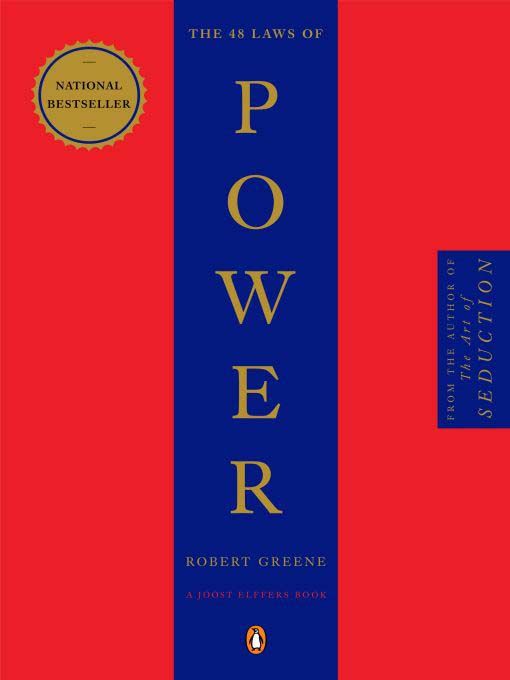
Nova: Imagine throwing the most lavish party of the century to impress your boss, only to find yourself thrown into a dungeon for the rest of your life. Sounds like a movie, right? But this actually happened to Nicolas Fouquet, the finance minister of France, all because he forgot one golden rule: never outshine the master. Today, we're cracking open Robert Greene's controversial classic, The 48 Laws of Power, to understand the invisible forces shaping our careers. We're joined by Mansour, an analytical thinker navigating his first year in the professional world. Today, we'll tackle this book from two distinct angles: first, we'll look at the danger of the spotlight and why strategic silence is a superpower; and second, we'll explore why winning arguments is a trap, and how to let your actions do the talking instead. Welcome, Mansour! It is so wonderful to have you here with us today.
Mansour: Thanks, Nova! It's great to be here. You know, when I first picked up Robert Greene's book, I have to admit, it felt a bit intimidating. It has this reputation for being almost Machiavellian, right? Like it's a manual for corporate villains. But as I started analyzing it, especially from the perspective of someone just starting out in their career, I realized it's actually a fascinating study of human psychology. It’s less about being ruthless and more about understanding the unwritten rules of the game so you don't accidentally step on a landmine.
Nova: Oh, I love that framing! A map of the landmines. Because let's face it, when we first enter the professional world, we are so eager to prove ourselves. We want to show everyone how smart, capable, and hardworking we are. But Greene argues that this exact eagerness can sometimes be our downfall. Let's dive into that historical story I teased earlier, because it is just wild.
Deep Dive into Core Topic 1
SECTION
Nova: So, back in 1661, Nicolas Fouquet was the Superintendent of Finance for King Louis XIV. Fouquet was brilliant, generous, and loved a good party. He built this absolutely magnificent chateau called Vaux-le-Vicomte. It was a masterpiece of architecture and landscape design. To celebrate its completion, and to show his absolute devotion to the young King, Fouquet threw this mind-blowing party. We are talking about a seven-course feast prepared by the most famous chef in Europe, a brand-new play commissioned by Molière, and a spectacular fireworks show that lit up the night sky. Fouquet thought he was being the ultimate host, showing the King how prosperous France was under his financial guidance. But, Mansour, how do you think Louis XIV actually felt watching all of this?
Mansour: Well, looking at it analytically, Fouquet made a classic cognitive error. He assumed that showing off his own brilliance and wealth would make his superior feel good. But in reality, it did the exact opposite. Louis XIV was a young, incredibly proud king who wanted to be the center of the universe. By throwing a party that was more magnificent than anything the King could afford or organize at the time, Fouquet accidentally made the King look second-rate. He triggered the King’s deepest insecurities.
Nova: Exactly! The King felt completely outshone. He felt like a guest in his own kingdom. And the very next day, the King started looking for a way to get rid of Fouquet. Three weeks later, Fouquet was arrested by musketeers on charges of embezzling funds—which, ironically, he hadn't really done any more than anyone else at the court. He spent the rest of his life in a lonely fortress prison. It’s a tragic story, but it perfectly illustrates Law Number One: Never Outshine the Master.
Mansour: It really does. And what's fascinating to me is how this translates to the modern workplace, especially for someone in their first year. When you're new, you have this intense drive to show your value. You might want to jump into a meeting and point out a flaw in your manager's strategy, or showcase a brilliant new tool you mastered, thinking, "Wow, they're going to love how smart I am!" But if you don't understand the psychological safety of your manager, you might accidentally trigger that same defensive reaction Louis XIV had. It's not about hiding your talent; it's about framing your talent in a way that makes your team and your leader look good.
Nova: That is such an insightful connection, Mansour. It really is about psychological safety. If a manager feels insecure, any display of extreme brilliance from a subordinate can feel like a threat to their position. So, how do we navigate that without dimming our own light? How do we show competence without triggering those alarms?
Mansour: I think it comes down to attribution and collaboration. Instead of saying, "Look at this amazing system I built all by myself," you frame it as, "Building on the direction you gave me last week, I put together this system to help us streamline our workflow." You're still showing your incredible execution skills, but you're aligning yourself with their vision. You're making them feel like a genius for hiring you and guiding you. It's a win-win.
Nova: Oh, that is a golden tip right there! "Building on the direction you gave me." It's respectful, it's collaborative, and it keeps the ego dynamics perfectly balanced. And this ties in beautifully with another law that I know you found intriguing, Mansour: Law Number Four, Always Say Less than Necessary. Tell us why that one stood out to you.
Mansour: Well, as an analytical person, I tend to think out loud sometimes, or I want to explain the entire logical chain of my thoughts. But in a professional setting, especially early on, talking too much can actually dilute your impact. When you say less, what you say carries much more weight. It creates this aura of thoughtfulness and mystery. People start to wonder, "What is he thinking? What does he know?"
Nova: Yes! It’s like a vacuum. When you leave silence, other people rush to fill it, and in doing so, they often reveal their own cards, their own insecurities, or their own plans.
Mansour: Exactly. There's a great historical example of this with King Louis XIV again. He was famous for his silence. When his ministers would bring him complex, stressful problems and argue passionately for different solutions, the King would just sit there, looking at them with this calm, unreadable expression. And when they were completely finished, he would simply say, "I shall see," and walk away.
Nova: Oh, that is so powerful! "I shall see." It drives people crazy, but in a way that keeps them completely on their toes!
Mansour: Right! Because they didn't know if he was angry, pleased, or planning something. It forced his ministers to go back and work even harder, to refine their ideas, and to be incredibly careful around him. For someone starting out, practicing the art of active listening—really listening, nodding, and only speaking when you have a high-value, concise point to make—can make you stand out far more than being the loudest voice in the room. It shows maturity beyond your years.
Deep Dive into Core Topic 2
SECTION
Nova: That is incredibly true. Silence is a form of power. And that naturally leads us to our second key idea today, which often acts as a counterpoint to verbal persuasion. We're talking about Law Number Nine: Win through your Actions, Never through Argument. Oh, this one is a personal favorite of mine because we've all been in those endless, exhausting debates where nobody actually changes their mind, right?
Mansour: Oh, absolutely. Arguing is incredibly inefficient. When you argue with someone, especially a colleague or a client, you're challenging their beliefs, their intelligence, and their ego. Even if you win the argument with flawless logic, you've likely made them feel resentful. You've won the battle but lost the war because they won't want to cooperate with you in the future.
Nova: Yes! The resentment can last a lifetime. And Robert Greene has this wonderful story about the great Renaissance artist Michelangelo that perfectly illustrates how to handle this. It took place in Florence, around 1504. Michelangelo had just finished his magnificent statue of David. The mayor of Florence, Piero Soderini, came to inspect it. Now, Soderini fancied himself a bit of an art critic, and he looked at this towering masterpiece and said, "You know, Michelangelo, it's beautiful, but the nose is just too big."
Mansour: I love this story so much. Michelangelo knew that if he argued with the mayor about anatomy and perspective, he would just embarrass Soderini in front of everyone. Soderini would get defensive and probably demand the nose be changed anyway. So, what did Michelangelo do?
Nova: It was pure genius. Michelangelo didn't say a word of protest. He just nodded, picked up his chisel, and secretly scooped up a handful of marble dust from the scaffolding planks. He climbed up to the face of the statue, with Soderini watching closely from below. Michelangelo began to tap lightly with his chisel against the nose, pretending to work on it, while slowly letting the marble dust fall from his hand. He didn't actually change a single millimeter of the nose! After a few moments of this performance, he looked down and asked, "How does it look now?" And Soderini looked up and said, "Ah! It is much better. You have given it life!"
Mansour: It's just brilliant! Michelangelo won completely. He preserved the statue exactly as he wanted it, and he preserved the mayor's ego. Soderini got to feel like a brilliant art patron who improved a masterpiece, and Michelangelo got to keep his work intact. No arguments, no hurt feelings, just pure, elegant action.
Nova: It’s so beautiful. And it shows that sometimes, people just want to feel involved or heard. By giving them the of influence through your actions, you can bypass the need for a fight entirely. How do you see this playing out in a modern office or project environment, Mansour?
Mansour: I see this all the time in project management or design. Let's say a stakeholder wants to make a change to a project that you know, based on data, is a bad idea. Instead of having a heated debate in a meeting, which can stall the project, you can build a quick, visual prototype or run a small A/B test. Show them the data. Let the results speak for themselves. When they see the actual outcome, they'll arrive at the correct conclusion on their own, and they won't feel like they "lost" an argument to you. They'll feel like they discovered the right path.
Nova: Yes! "Show, don't tell." It is the ultimate rule of persuasion. And when you show the results, it also ties into another fascinating law: Law Number Thirty, Make your Accomplishments seem Effortless. Why do you think making things look easy is so much more powerful than showing everyone how hard you worked?
Mansour: It’s the psychology of grace. Think about a world-class athlete or a master musician. When they perform, they make the most incredibly difficult movements look as natural as breathing. That effortless grace creates a sense of awe. If they were up there sweating, groaning, and looking stressed, the magic would be gone. In the workplace, if you are constantly complaining about how busy you are, how stressed you are, or how hard a task was, it can actually make people question your competence. They might think, "Wow, is this job too big for them?" But if you deliver high-quality work calmly and smoothly, it creates this perception of immense capability.
Nova: It really does! It’s like the classic metaphor of the swan. On the surface, the swan is gliding effortlessly across the water, looking serene and beautiful. But underneath, its little feet are paddling furiously! We all have to paddle furiously sometimes, but the world only needs to see the glide.
Mansour: Exactly. And as someone in their first year, mastering that "glide" is so important. It builds trust. When your team sees that you can handle pressure without panicking, they feel safe giving you more responsibility. It shows you have emotional self-regulation, which is one of the most critical leadership skills you can develop.
Synthesis & Takeaways
SECTION
Nova: This has been such a rich conversation, Mansour. We've journeyed from the grand courts of Louis XIV to the scaffolding of Michelangelo, and brought it all right back to the modern desk. If you had to synthesize everything we've talked about today into one core philosophy for navigating a career, what would it be?
Mansour: I think the biggest takeaway is that professional success isn't just about technical skill; it's about emotional intelligence and situational awareness. Robert Greene’s laws, when stripped of their cynical reputation, are really about empathy. They force us to look at the world through the eyes of others—our managers, our colleagues, our clients. Once you understand their perspectives, their insecurities, and their needs, you can navigate your career with so much more grace, integrity, and impact.
Nova: That is beautifully put. It’s about empathy and self-regulation. Instead of reacting impulsively, we observe, we listen, and we act strategically.
Mansour: Exactly. It’s about playing the long game.
Nova: Well, to our wonderful listeners out there, we want to leave you with one simple, actionable challenge for this week: The next time you find yourself in a meeting, eager to jump in and win an argument, or eager to show off a quick win, take a deep breath. Channel your inner Michelangelo. Ask yourself: "How can I show, rather than tell?" or "How can I make my team look good here?" Try practicing that strategic silence, and see how the dynamics around you begin to shift. Mansour, thank you so much for sharing your brilliant analytical mind with us today. This was absolutely fantastic.
Mansour: Thank you, Nova! It was an absolute pleasure.
Nova: And to everyone listening, keep gliding, keep observing, and we will see you next time on the podcast!