Sovereignty, Markets, and Personal Autonomy
Golden Hook & Introduction
SECTION
Nova: Most people think security looks like a steady paycheck and a locked-in retirement date, but the reality is that the most dangerous position you can be in is having your entire existence tied to a single source of income.
Atlas: That is a jarring way to start our Tuesday, Nova. You are essentially calling the traditional career path a high-risk gamble. But I see exactly where you are going with this. Most of us are taught that the path to safety is through dependency, which is the exact opposite of what we are going to talk about today.
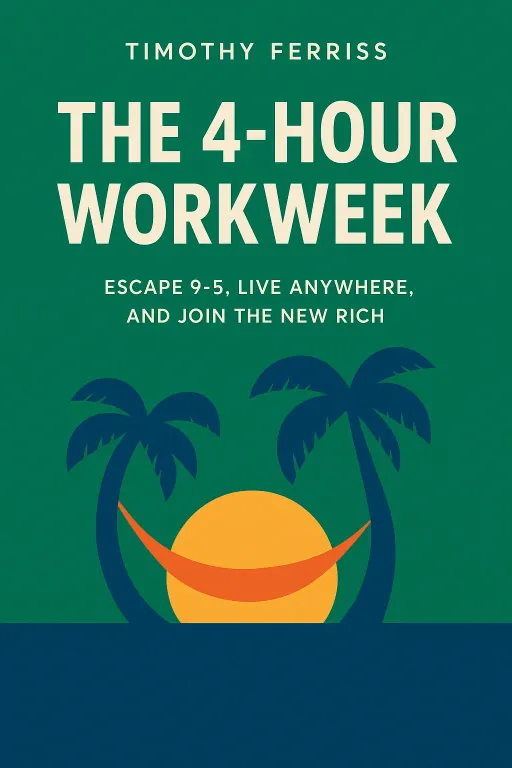
Nova: Exactly. We are looking at the architecture of personal sovereignty. To do that, we are bringing together two heavy hitters who, on the surface, seem like they belong in different universes. We have the academic rigor of Milton Friedman and his seminal work, Capitalism and Freedom, and we have the tactical, guerrilla-style approach of Timothy Ferriss in The 4-Hour Workweek.
Atlas: That is quite the pairing. You have Friedman, who was a towering figure of the Chicago School of economics, a Nobel laureate, and a man who spent his life arguing that economic freedom is the foundation for all other types of liberty. And then you have Ferriss, who basically wrote the manual for digital nomads and lifestyle designers. It is fascinating to see them side-by-side because Friedman provides the philosophical framework, and Ferriss provides the operational manual.
Nova: That is the perfect way to frame it. Friedman was writing in the early sixties, a time when the world was trying to figure out how to rebuild after the war, and he was radical for suggesting that the state should interfere less so that the individual could thrive more. Fast forward to 2007, and Ferriss takes those same principles of decentralized, free-market thinking and shrinks them down to the size of a single human life.
Atlas: It makes me think about how we define our own personal economies. Most people operate as if they are employees of a system, but these authors are suggesting we should be the architects of our own. Let us dive into how that actually works.
The Macro-Micro Connection
SECTION
Nova: The core of the Friedman argument, which we really need to unpack first, is this idea that economic freedom is a prerequisite for political and personal liberty. He argued that if you do not have control over your own resources, you cannot truly be free in your choices.
Atlas: I can see the logic there. If your boss or the state controls your ability to earn, they ultimately control your ability to speak, to move, to decide what you value. But I wonder, how does that translate for someone who is sitting in a cubicle or managing a high-pressure team today? How do they take that high-level economic theory and make it useful?
Nova: That is where the bridge to Ferriss becomes so clear. Ferriss operationalizes that theory. He realized that if you want to be free, you have to decouple your time from your income. Friedman talked about the market as a mechanism for freedom, and Ferriss applied that to the individual. He suggests that you should view your life as a business—a lean, efficient, and autonomous business.
Atlas: So you are saying that instead of just looking at the market as this big, abstract thing that happens on Wall Street, we should look at our own daily output as a market?
Nova: Precisely. Think about the concept of geo-arbitrage, which Ferriss champions. It is a market-based solution to personal constraints. If you are living in a high-cost-of-living area, your time is devalued because you are forced to trade it for high overhead. By shifting your location, you are essentially engaging in a market transaction that buys you back your time. You are using the principles of the free market to create a private, personal advantage.
Atlas: That really shifts the perspective. It makes the individual a strategist rather than a cog. But let us push on that for a second. Is there a danger in this? If everyone starts treating their life like a lean startup, do we lose the stability that comes from collective effort?
Nova: That is a fantastic point. Critics of both authors have often pointed out that this approach can feel isolating or that it prioritizes the individual at the expense of the collective. Friedman faced massive pushback because his ideas were seen as dismantling the safety nets that many felt were essential. And Ferriss has been criticized for promoting a lifestyle that, for some, feels like it lacks the substance of traditional career dedication.
Atlas: Which is a valid critique. But if we look at it through the lens of the Analytical Architect, maybe the goal is not to abandon collective effort, but to choose how we contribute to it. Perhaps the goal is to reach a level of personal sovereignty where you can choose to contribute to the collective because you want to, not because you are forced to by economic necessity.
Nova: That is a profound distinction. It is the difference between being a participant in a system by choice versus being a captive of a system by design. When you have personal autonomy, your contribution to society becomes voluntary, and therefore, more meaningful.
Decoupling Time from Income
SECTION
Atlas: Okay, let us get into the mechanics of this. If we accept the premise that we need to decouple time from income, how do we actually start? Because for most people, the 9-to-5 feels like the only option. It is the default setting.
Nova: The shift begins with identifying what Ferriss calls the "new rich." It is not about having millions in the bank; it is about having the freedom of time and mobility. The first step is realizing that efficiency is not the same as effectiveness. We spend so much time optimizing tasks that should not be done at all.
Atlas: I love that. It is the difference between doing things right and doing the right things. I imagine a lot of our listeners are experts at doing things right, but they are completely stuck on doing the wrong things.
Nova: Exactly. Think about the Pareto Principle, which Ferriss emphasizes heavily. Eighty percent of your results come from twenty percent of your efforts. If you are an architect of your own life, you stop trying to optimize the eighty percent of low-value work and you ruthlessly cut it.
Atlas: So, it is about auditing your output. But how does that connect back to the market principles we started with?
Nova: It is about recognizing that your time is a finite resource. In a free market, when a resource is scarce, its value increases. If you treat your time as a scarce commodity rather than an infinite supply that you just trade for a monthly salary, you start to bid your time differently. You stop selling it to the highest bidder if that bidder also demands your total freedom.
Atlas: That is a powerful way to look at it. It is like being a consultant to your own life. You are the CEO of your time, and you have to decide who gets a contract for your attention. But wait, what about the psychological barrier? Because the 9-to-5, even if it is restrictive, provides a massive amount of psychological comfort. It is predictable. Embracing this level of sovereignty means embracing uncertainty.
Nova: You hit the nail on the head. That uncertainty is the price of admission for freedom. Friedman argued that the greatest threat to freedom is the concentration of power, and when you rely on one employer for your entire livelihood, you have concentrated your power in their hands. That is inherently risky, even if it feels safe.
Atlas: So the irony is that the "safe" path is actually the most volatile because you have no control over the variables.
Nova: Precisely. When you build an autonomous system, you diversify your risks. You create multiple streams of income, you build a network that isn't tied to one office, and you develop skills that are portable. You are essentially building a hedge fund of your own life.
Systems and Personal Autonomy
SECTION
Atlas: I want to zoom in on this idea of building a system. Because "lifestyle design" sounds like a buzzword, but the "Systems Thinker" in our audience wants to know how to actually build the infrastructure.
Nova: To build an autonomous system, you need an operating system for your life. That means having clear, documented processes for how you handle your income, your learning, and your decision-making. Ferriss talks about "low-information diets," which is a system for protecting your cognitive bandwidth. Friedman talks about the importance of information flow in a market—if the prices are distorted, the market fails.
Atlas: That is a brilliant analogy. If you are consuming garbage information, your personal market is distorted. Your decisions are based on bad data. So, the first system is the information filter.
Nova: Yes. And the second system is the income filter. How do you create value that doesn't require your physical presence? That could be through creative assets, automated business processes, or investing. You are moving from being a laborer to being a capital allocator.
Atlas: It sounds like you are describing the difference between working inside the machine and building the machine.
Nova: That is exactly it. And the beauty of this is that it scales. Whether you are a solo entrepreneur or you are trying to manage a team within a larger organization, the principles remain the same: reduce dependencies, increase mobility, and focus on high-leverage activities.
Atlas: This brings up a question about "strategic longevity." If we are constantly optimizing, how do we avoid burning out? Because the drive for total autonomy can become a treadmill in itself.
Nova: That is the ultimate trap, isn't it? The pursuit of freedom can become a new form of slavery if you are not careful. The goal of sovereignty isn't to be busy 24/7 with your own projects; the goal is to have the capacity to choose stillness. Friedman’s philosophy was never about "more, more, more"; it was about the of choice.
Atlas: Right. It is the optionality that matters, not the output. You don't build an autonomous system so you can work harder; you build it so you can work on what actually matters to you.
Synthesis & Takeaways
SECTION
Nova: So, if we look back at this, we see that the path to autonomy is paved with these deliberate, structural choices. We are talking about replacing the default settings of the industrial age with a custom operating system that prioritizes your agency.
Atlas: It really comes down to this: you are the architect. You can either live in the house that someone else built for you, or you can start drawing the blueprints for your own. And those blueprints start with the realization that your time is the most valuable currency you have.
Nova: Exactly. To put this into practice today, I would challenge our listeners to look at their current economy. Identify one structural change—maybe it is automating a recurring task, maybe it is renegotiating a contract, or maybe it is simply cutting out a source of information that is distorting your decision-making.
Atlas: Just one change. That is manageable. It is not about a total revolution overnight; it is about the incremental, structural shifts that lead to long-term autonomy.
Nova: And remember, the goal isn't just to be wealthy or to be successful by traditional metrics. The goal is to be free enough to define what success means for you.
Atlas: I love that. It takes the pressure off the "hustle" and puts the focus back on the "why." Thank you for this, Nova. This has been a great exercise in reframing how we look at our own potential.
Nova: It has been a pleasure. For our listeners, keep building your systems, keep questioning the defaults, and keep prioritizing your sovereignty.
Atlas: This is Aibrary. Congratulations on your growth!