

The Strategic Executor: Bridging Vision with Flawless Implementation
Golden Hook & Introduction
SECTION
Nova: Atlas, I was today years old when I realized that most people treat their grandest visions like a New Year's resolution: full of enthusiasm on January 1st, completely forgotten by February.
Atlas: Oh, I know that feeling. It’s like buying a gym membership, then wondering why you’re not ripped by March. So many brilliant ideas just… evaporate.
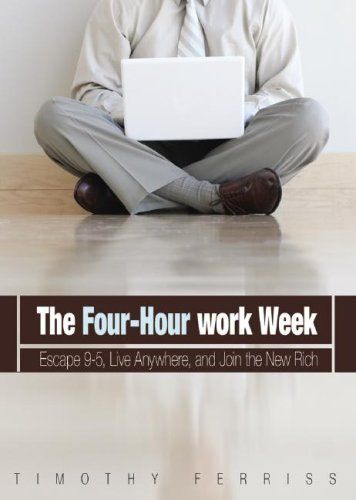
Nova: Exactly! And that’s why today, we’re dissecting a concept that shouldn’t be a mystery, but often is: the strategic executor. We’re pulling apart the insights from the immensely influential "The 4-Hour Workweek" by Timothy Ferriss, a book that truly redefined productivity and lifestyle design for a generation, and Larry Bossidy's "Execution: The Discipline of Getting Things Done," which offers a starkly different, but equally powerful, corporate lens. Ferriss, for instance, wasn't just some armchair theorist; he famously experimented with outsourcing his entire life while traveling the world, living proof that you could work less and achieve more, which was a pretty radical idea when his book first hit the shelves.
Atlas: That’s a bold combination. Ferriss, the digital nomad guru, and Bossidy, the CEO who literally wrote the book on corporate discipline. It's like asking a Zen master and a drill sergeant to collaborate on a business strategy. What’s the common ground?
Nova: The common ground, surprisingly, is execution. It’s the critical link between ambition and achievement, whether you’re trying to automate your life like Ferriss or run a multi-billion dollar corporation like Bossidy did at Honeywell. Our core idea today is that true strategic scaling isn't just about grand plans, but about the disciplined, intelligent execution of those plans to create a tangible and lasting impact.
Atlas: So, we’re talking about bridging that infamous gap between vision and reality. Because I imagine a lot of our listeners, the legacy builders and master achievers, have incredible visions, but the "how" can feel like a bottomless pit.
The Ferriss Philosophy - Automating Impact
SECTION
Nova: Precisely. Let's start with Ferriss because his approach often feels more accessible, more... human. In "The 4-Hour Workweek," he challenges the entire traditional notion of work. He advocates for defining and automating processes, outsourcing tasks, and focusing relentlessly on high-impact activities.
Atlas: Hold on, outsourcing tasks? For an entrepreneur, or someone trying to build a legacy, that sounds almost counterintuitive. Aren’t you supposed to everything, especially when you’re starting out or building something meaningful?
Nova: That's the common misconception, isn't it? Ferriss’s genius was in identifying the 80/20 rule, or Pareto Principle, in action. He realized that 80% of your results often come from 20% of your efforts. His entire system is built around finding that vital 20%, doubling down on it, and ruthlessly eliminating or automating the other 80%.
Atlas: Okay, so it’s not about slacking off, but about extreme efficiency. Can you give an example of how he applied this? Because for someone who's driven by a vision, the idea of "automating" parts of that vision might feel like delegating passion.
Nova: Absolutely. Think about his own experiments. He would identify repetitive, time-consuming tasks in his business – like customer service emails or even managing basic website updates. Instead of spending hours on them, he’d create detailed standard operating procedures, then hire virtual assistants, often for very reasonable rates, to handle them. The key wasn't to delegate his, but to delegate the that drained his time and energy from the vision.
Atlas: So basically, he’s saying if you’re a master achiever, you shouldn’t be spending your precious time on things a well-trained assistant could do for a fraction of your hourly value. It’s about leveraging your unique contribution.
Nova: Exactly. He called it "lifestyle design," but at its core, it's a profound lesson in strategic execution: identifying what truly moves the needle, and then creating systems—whether that's automation, outsourcing, or simply batching tasks—to ensure those high-impact activities get done consistently, without you having to be in the weeds all the time. He even famously outsourced answering his own emails and saw very little drop in quality, and a massive gain in his personal freedom.
Atlas: That’s incredible. It makes me wonder for our listeners who are trying to scale their businesses effectively: where are they currently spending 80% of their time that only yields 20% of their impact? It’s a complete mindset shift, moving from "I have to do it all" to "I have to orchestrate it all."
The Bossidy Discipline - Execution as a System
SECTION
Nova: That’s a perfect segue, Atlas, because while Ferriss focuses on personal leverage, Larry Bossidy, in "Execution: The Discipline of Getting Things Done," takes that concept to the organizational level. Bossidy, a former CEO of AlliedSignal and Honeywell, argues that execution isn't just tactics; it's a systematic process of rigorously discussing, questioning, and following through.
Atlas: Now that you mention it, "discipline" and "rigor" sound a lot less glamorous than "4-Hour Workweek." But for someone building foundations, for a legacy builder, discipline is foundational. What does Bossidy mean by execution as a "systematic process"?
Nova: He means it’s not an afterthought. It's deeply embedded in the company's culture, its leadership, and its processes. Bossidy highlights three core processes that are critical for execution: the people process, the strategy process, and the operations process. For him, you can have the most brilliant strategy in the world, but if you don't have the right people to execute it, if your strategy isn't realistic, or if your operations can't deliver, it's all just talk.
Atlas: Okay, so it’s not just about delegating, but about building an entire organizational machine that execute. Can you give an example of Bossidy’s approach? Because for a master achiever, understanding this systematic approach could be the difference between a fleeting success and a lasting legacy.
Nova: Consider his time at AlliedSignal. When he took over, the company was struggling. He didn't just come in with a new vision; he immediately focused on the. He understood that you need to put the right people in the right jobs, give them clear goals, and hold them accountable. He'd spend an enormous amount of time on performance reviews, not as a bureaucratic exercise, but as a deep, rigorous discussion about talent.
Atlas: So, it’s about aligning talent with strategy, and then making sure that strategy is actually executable in the real world. That sounds like a continuous feedback loop, not just a one-time plan.
Nova: Exactly. Bossidy famously said that "the biggest gap between what people want and what they get is strategy not execution." He viewed execution as the critical link between ambition and achievement. It's about translating those grand plans into concrete, measurable actions, consistently following through, and adapting when things inevitably go off track. He’d review every detail, question every assumption, and ensure that everyone, from the top down, understood their role in achieving the strategic goals.
Atlas: That’s a powerful contrast. Ferriss gives you the personal leverage to work smarter, not just harder, and Bossidy gives you the organizational framework to ensure that leverage translates into consistent, widespread impact. It really emphasizes the mindset shift from just having a vision to actually that vision enough to build the systems and people around it.
Synthesis & Takeaways
SECTION
Nova: That’s the profound insight, isn't it? Whether you’re scaling a personal brand or a global enterprise, the essence of strategic execution is aligning your actions with your intentions. It's about understanding that execution isn't a dirty word or just grunt work; it's the intelligent application of effort, the discipline to follow through, and the courage to build systems that allow your vision to manifest.
Atlas: That gives me chills. It’s like, for the impact drivers listening, it’s not enough to to leave a meaningful mark; you have to engineer the path for that mark to be made. It’s the difference between dreaming of a skyscraper and actually laying the foundation, brick by brick, with a clear blueprint.
Nova: Precisely. It brings us back to our deep question: where in your current strategic initiatives can you apply a more rigorous execution framework to ensure consistent progress and measurable results? It might mean automating that repetitive task you dread, or it might mean having the tough conversations with your team about true accountability.
Atlas: It’s about embracing the journey, even the less glamorous parts of it. Trusting your vision means trusting the process of execution. And that’s a powerful recommendation for anyone seeking self-mastery.
Nova: Absolutely. Dedicate 15 minutes daily to focus on one high-impact task, one piece of that execution puzzle. Release the need for immediate perfection, and embrace the consistent, disciplined journey.
Atlas: Because that’s where true lasting impact is forged.
Nova: This is Aibrary. Congratulations on your growth!