

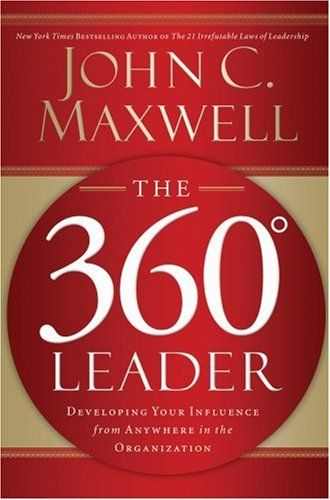
The 360 Degree Leader
Developing Your Influence from Anywhere in the Organization
Introduction: The Myth of the Corner Office
Introduction: The Myth of the Corner Office
Nova: Welcome back to The Leadership Lens. Today, we are diving deep into a book that fundamentally shifts how most people view their careers: John C. Maxwell's "The 360 Degree Leader." I want to start with a provocative thought: statistically, where do you think the vast majority of leadership influence actually happens in a large organization?
Nova: : That’s a great hook, Nova. My immediate thought is the C-suite, the executive floor. That’s where the decisions are made, right? The corner office.
Nova: That’s the traditional view, but Maxwell argues that’s a myth. He points out that the vast majority of professionals—the engineers, the mid-level managers, the project leads—are operating in the middle. They have titles, but they don't have ultimate authority over everyone they interact with. They are the true engine room, and if they can't lead, the whole organization stalls.
Nova: : So, this book isn't just for the people reporting to the CEO. It’s for the person who has a boss, peers, and people they mentor, but no formal power over those peers or that boss. It’s about leading from the middle, which sounds incredibly difficult.
Nova: Exactly. The central thesis is that leadership is influence, not position. If you wait for the title, you’ve waited too long. Maxwell breaks down how to exercise that influence in all 360 degrees: up to your superiors, across to your colleagues, and down to your team. Why does this matter to our listeners today?
Nova: : Because if you feel stuck, if you feel like you can't make an impact until you get that promotion, this book promises a roadmap to start leading. It reframes your entire job description from task execution to influence building. It’s a complete mindset overhaul.
Nova: It is. We’re going to break down the three critical directions of 360-degree leadership and look at the practical, sometimes counterintuitive, advice Maxwell gives for mastering each one. Get ready to rethink your organizational chart, because we’re starting with the toughest direction: Leading Up.
Nova: : I’m already leaning in. Leading up is where most people feel completely powerless. Let's see how Maxwell gives that power back.
Key Insight 1: Making Your Manager Successful
Leading Up: Mastering the Art of Influencing Your Boss
Nova: Chapter one in the 360-degree playbook is Leading Up. This is about influencing those who have authority over you. Maxwell is very clear: your primary goal here is to make your boss successful. If they win, you win.
Nova: : That sounds a bit subservient, Nova. Isn't that just being a yes-person? I’ve always been taught to challenge my leadership when necessary.
Nova: That’s the nuance we need to explore. Maxwell isn't advocating for blind agreement. He debunks the myth that leading up means being a sycophant. Instead, he frames it as being indispensable. One of his core principles for leading up is to lighten your leader’s load by being willing to do what others won't. Think about that. What is your boss constantly complaining about or putting off?
Nova: : Usually, it’s the tedious, high-visibility tasks that they hate, or the deep-dive analysis that requires hours of focus they don't have. If you proactively solve one of those chronic pain points, you immediately become a strategic asset, not just an employee.
Nova: Precisely. You become the solution to their biggest headache. Another key piece of advice he offers is understanding your leader’s vision and priorities. If your boss is laser-focused on cutting costs by 15% this quarter, and you spend your time launching a beautiful, but expensive, new internal communication tool, you are actively working against their success.
Nova: : So, it’s about strategic alignment. I remember reading a summary that mentioned knowing when to push forward and when to back off. How does that work in practice? When do you push a new idea if you’re trying to lighten their load?
Nova: It’s about timing and delivery. Pushing forward means presenting solutions, not just problems. Don't just say, 'The Q3 report is late.' Say, 'I noticed the Q3 report is lagging; I’ve already compiled the data from departments A and B, and I just need C’s input by Tuesday to deliver it to you Wednesday morning.' You’ve done the heavy lifting.
Nova: : That’s powerful. It shifts the dynamic from you reporting a failure to you presenting a managed recovery. What about the 'backing off' part? When is it crucial to just let the boss handle something?
Nova: When it’s their decision, their accountability, or when they’ve clearly signaled they want autonomy in that area. Maxwell stresses that you must respect the chain of command and the leader’s ultimate ownership. You can offer counsel, but you cannot seize the reins. If you constantly try to manage your manager, you erode trust, and you become a threat rather than an asset.
Nova: : It sounds like leading up requires a high degree of emotional intelligence—reading the room, understanding the political landscape of the leadership team, and having impeccable follow-through. If you promise your boss you’ll handle the vendor negotiation, you better deliver flawless results.
Nova: Absolutely. Flawless execution on delegated tasks builds the credibility needed to eventually influence strategy. Think of it as earning the right to speak into higher-level decisions. You earn that right by consistently excelling at the tasks they assign you. It’s influence through demonstrated competence. It’s the foundation upon which the entire 360-degree structure rests. If you can’t lead up, the other directions become irrelevant because your upward path is blocked.
Nova: : It’s a fascinating prerequisite. It forces us to see our superiors not as obstacles, but as our first and most important stakeholders. Let’s move to the next level, which I suspect is where many people think leadership: Leading Across.
Key Insight 2: Influence Through Collaboration
Leading Across: Building Horizontal Alliances
Nova: Now we pivot to Leading Across—influencing your peers. This is often the trickiest area because, unlike leading down, you have zero formal authority. Your peers are your equals, often competing for the same resources or recognition.
Nova: : This is where organizational politics can really derail you. If I’m a project manager, and I need the Marketing team’s budget sign-off, but the Marketing Lead sees me as competition for the next promotion slot, we have a problem. How does Maxwell suggest navigating that?
Nova: He emphasizes building trust and collaboration to achieve common goals. The key phrase here is to your peers. You must shift your mindset from 'What can I get from them?' to 'What can I give to them?'
Nova: : Give? Like giving away my best ideas?
Nova: Not necessarily giving away proprietary information, but giving away your, your, or your. If you see a peer struggling with a technical issue you’ve already mastered, offer to help them troubleshoot for an hour. If you have an extra resource for a week, offer it to a peer who is swamped on a critical deadline. You are investing in the relationship capital of the organization.
Nova: : That makes sense. It’s like making deposits in a relationship bank account. When you eventually need that budget sign-off, you’re not asking for a favor; you’re making a withdrawal from an account you’ve been actively funding.
Nova: Exactly. And Maxwell warns specifically against turf wars. When you lead across, you must be willing to share credit generously. If a joint project succeeds, make sure your peer gets equal, or even slightly more, public recognition. Why?
Nova: : Because it signals that your motivation isn't personal advancement, but organizational success. It makes you look secure and magnanimous, which are huge trust builders.
Nova: Precisely. A secure leader doesn't need to hoard credit. A 360-degree leader understands that if the whole team wins, they win by default, because they are the ones who fostered that winning environment. Furthermore, leading across involves championing the organization’s shared vision over departmental silos. You have to be the person who can speak the language of Finance to Engineering, and the language of Operations to Sales.
Nova: : That requires being a translator, a diplomat. It means understanding their metrics and respecting their constraints, even if they seem illogical from your department's perspective. It’s about seeing the whole chessboard, not just your own pieces.
Nova: That holistic view is critical. When you demonstrate that you care about the success of the entire enterprise, not just your own KPIs, your peers start looking to you for guidance, even without a title. You become the informal leader of the cross-functional team. It’s influence through shared purpose and mutual respect. It’s a much slower burn than leading down, but the alliances you forge here are often the most resilient when organizational change hits.
Nova: : I can see that. Those horizontal relationships are the safety net when the vertical structures shift. So, we’ve covered up and across. Now for the direction everyone assumes is the only one that matters: Leading Down.
Key Insight 3: Leading Those You Don't Manage
Leading Down: Influence Beyond Formal Authority
Nova: Leading Down is where most people start their leadership journey, but Maxwell gives it a significant twist. Yes, it covers managing your direct reports, but the real power of the 360-degree concept comes into play when we talk about leading those you formally manage.
Nova: : That’s the volunteer staff, the interns, the junior members on a project team who report to someone else but rely on your expertise. How do you command respect when you can’t write their performance review?
Nova: You lead through mentorship and empowerment. If you are the subject matter expert, your influence is immense. Maxwell suggests that leading down without authority means you must be the best example. Your actions must be unimpeachable. You mentor by sharing knowledge freely, not hoarding it as a source of power.
Nova: : It’s the classic 'servant leadership' model applied specifically to the junior ranks. You are investing in their future, which, by extension, invests in the quality of the organization you both serve.
Nova: Exactly. And when it comes to your direct reports—the people you manage—Maxwell’s advice aligns with modern best practices: focus on developing them. Don't just delegate tasks; delegate ownership. A key principle here is to empower them to make decisions within their scope. If they have to check with you on every minor detail, you haven't led them; you've just micromanaged them.
Nova: : That’s a huge trap. I’ve seen managers who are terrified of empowering their team because they fear the team might look better than them. That fear is the antithesis of 360-degree thinking.
Nova: It absolutely is. A 360-degree leader celebrates when their direct report solves a problem that the leader themselves couldn't solve. They see their team’s success as a direct reflection of their own leadership effectiveness. They are building future leaders, not just followers.
Nova: : So, if I’m leading down, I need to be generous with credit, clear with expectations, and consistent in my character. If I’m inconsistent, my direct reports will follow my behavior, not my words. If I preach work-life balance but send emails at 11 PM demanding immediate replies, they’ll learn that 11 PM emails are the real expectation.
Nova: That’s the integrity check. Your behavior sets the standard for the entire downward flow of influence. If you are sloppy, they will be sloppy. If you are committed to excellence, they will rise to meet that standard. It’s about modeling the behavior you want to see replicated throughout the organization. This isn't just about managing tasks; it's about shaping culture from the middle out.
Nova: : It feels like the common thread through all three directions—up, across, and down—is integrity and value addition. It’s a very selfless model of leadership, which is probably why it’s so effective but so hard to practice consistently.
Nova: It requires constant self-assessment. Which brings us to the final, often overlooked, dimension of the 360-degree leader: leading yourself. We’ll tackle that next, but first, let's take a quick break.
Key Insight 4: Self-Leadership as the Prerequisite
The Foundation: Leading Yourself Exceptionally Well
Nova: Welcome back. We’ve discussed influencing the boss, the peers, and the team. But before any of that influence can be authentic or sustainable, Maxwell insists on the foundational element: leading yourself exceptionally well. This is the invisible 360th degree.
Nova: : I find this fascinating because when people read a book about leadership, they expect strategies for managing others. Why does Maxwell put self-leadership first?
Nova: Because influence is a reflection of character. If you are disorganized, late, or constantly negative, no amount of strategic maneuvering will convince your boss, peers, or subordinates to trust your guidance. Your internal state dictates your external influence. Think of it this way: if you can’t manage your own time, priorities, and emotional responses, how can you possibly manage the complex dynamics of influencing others?
Nova: : It’s the classic analogy: you can’t pour from an empty cup, or perhaps more accurately for this context, you can’t steer a ship if you can’t steer yourself. What specific self-leadership habits does he emphasize?
Nova: He focuses heavily on continuous learning and self-awareness. You must be actively seeking feedback—and not just the easy feedback from those below you. You need to actively solicit the tough critiques from your peers and your boss about your blind spots. This is where that 360-degree assessment tool comes in handy, which he heavily promotes.
Nova: : That requires real courage. Asking your boss, 'What is one thing I do that makes your job harder?' That’s a high-stakes conversation.
Nova: It is, but that vulnerability builds massive credibility. It shows you prioritize growth over ego. Furthermore, self-leadership involves managing your own attitude. Maxwell notes that leaders often face setbacks—projects fail, initiatives get rejected. If you allow those external events to dictate your internal state, your influence evaporates. You must maintain a positive, forward-looking posture, regardless of the immediate outcome.
Nova: : So, if I’m leading up and my brilliant proposal gets shot down by the executive committee, my self-leadership dictates that I don't sulk or badmouth the committee to my peers. Instead, I analyze the feedback objectively and immediately start refining the next iteration.
Nova: Exactly. You process the failure privately and present the next step publicly. This consistency in character—the ability to absorb a hit and keep moving forward with grace—is what makes people to follow you, regardless of where you sit on the org chart. It’s the bedrock. If you skip this step, leading up becomes manipulation, leading across becomes transactional, and leading down becomes tyranny.
Nova: : That really ties it all together. The 360-degree leader isn't just skilled at external influence; they are masters of internal discipline. It’s a holistic approach to professional development. It’s not just about climbing the ladder; it’s about strengthening the entire structure you stand on.
Nova: Well said. We’ve covered the philosophy, the three external directions, and the internal foundation. It’s time to synthesize these powerful lessons into our final takeaways.
Conclusion: Your Influence Starts Now
Conclusion: Your Influence Starts Now
Nova: We’ve spent this episode unpacking John C. Maxwell’s "The 360 Degree Leader," and the message is loud and clear: stop waiting for permission to lead. Influence is available to you today, right where you are.
Nova: : The key takeaway for me is the redefinition of the middle. Most of us the middle. We are the connective tissue. And that tissue needs to be strong in three directions: Up, Across, and Down. Leading up means being indispensable and lightening the boss’s load; leading across means building trust by adding value to peers; and leading down means mentoring and modeling excellence, even over those you don't formally manage.
Nova: And underpinning it all is that crucial self-leadership. You must manage your own attitude, continuously seek critical feedback, and execute flawlessly on your commitments. If you are not leading yourself well, the other three directions are just empty gestures. Maxwell essentially gives us permission to be ambitious about our impact, regardless of our title.
Nova: : For our listeners looking to apply this immediately, what’s the first actionable step you’d recommend?
Nova: I’d suggest picking one direction you currently avoid—maybe it’s leading up—and identifying one specific, high-value task your boss consistently struggles with. Then, spend the next week mastering that task and presenting the solution, not the problem. That’s your first 360-degree influence move.
Nova: : I love that. It’s specific and measurable. For me, I’m focusing on leading across. I’m going to identify one peer whose success I can genuinely champion this month, even if it doesn't directly benefit my current project. It’s about shifting the focus from competition to collaboration.
Nova: Fantastic. The 360-Degree Leader framework isn't just a management theory; it’s a blueprint for career acceleration and organizational effectiveness. It teaches us that the highest form of leadership is the ability to elevate everyone around you, not just those below you.
Nova: : It’s a powerful, practical guide for anyone feeling constrained by their current role. It proves that your potential is limited only by your willingness to influence.
Nova: Absolutely. Thank you for joining us on this deep dive into Maxwell’s wisdom. We hope this conversation inspires you to look around your organization today and start leading from where you stand.
Nova: : This is Aibrary. Congratulations on your growth!