

Strategic Personal Growth for Business Impact
Golden Hook & Introduction
SECTION
Nova: What if the biggest secret to building a million-dollar business isn't some revolutionary market strategy, or a killer product launch, but simply how you tie your shoes every morning?
Atlas: Hold on, Nova. Are you seriously suggesting my morning routine is more impactful than my quarterly P&L report? That's quite a leap for any strategist focused on market entry and efficient systems. It sounds counterintuitive, to say the least.
Nova: Oh, I like that skepticism, Atlas. Because it's precisely that kind of thinking—that the 'big' things are separate from the 'small' things—that these two giants of personal development, Brian Tracy and John C. Maxwell, challenge so profoundly. They argue that the macro business success we chase is merely the sum of micro-personal disciplines.
Atlas: So you're talking about the foundational stuff? The invisible gears that turn the visible machinery of success? The underlying code, not just the user interface?
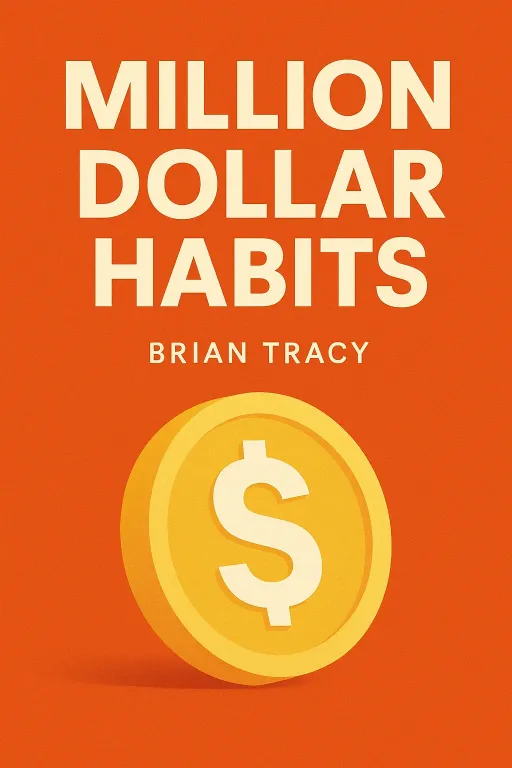
Nova: Exactly. Today, we're diving into Brian Tracy's "Million Dollar Habits" and John C. Maxwell's "The 15 Invaluable Laws of Growth." Tracy, a veteran in peak performance, has spent decades showing how seemingly small, consistent actions compound into massive, tangible results. He’s known for his practical, no-nonsense approach to productivity that has resonated with countless professionals. And Maxwell, a renowned leadership guru, has illuminated the fundamental principles that govern all growth, personal and professional, influencing business leaders and organizations worldwide with his clear, actionable frameworks. Their insights are indispensable for anyone, like our listeners, driven by scalable success and building resilient organizations.
Atlas: Right, like understanding the operating system before you try to write complex software. It makes sense, especially for those of us who are always analyzing business models and market dynamics. It implies a deeper, almost architectural approach to personal development, where your internal structure directly informs your external output.
Nova: Precisely. And that's where we start: with the intentional architecture of those daily habits.
The Architecture of Intentional Habits
SECTION
Nova: Tracy's core argument in "Million Dollar Habits" is disarmingly simple, yet incredibly powerful: your daily habits are the direct, quantifiable predictor of your financial and professional trajectory. He meticulously details how discipline, goal setting, and continuous self-improvement aren't just vague aspirations, but a structured sequence of actions that, when executed consistently, build an undeniable momentum.
Atlas: I mean, we all know habits are important, but "million-dollar habits"? That sounds like a marketing slogan. How does a daily routine actually translate into substantial business impact for someone building complex systems or innovating a business model? It feels like there's a gap between brushing your teeth and closing a major deal.
Nova: It’s about intentionality, Atlas, which links directly to Maxwell's Law of Intentionality: "Growth doesn't just happen; it has to be sought out." It’s not just habits, but deliberately habits that serve your highest, most strategic goals. Think of an entrepreneur we’ll call ‘Elena.’ She was brilliant, a true visionary with groundbreaking ideas for a tech startup. But her days felt like a chaotic scramble. She’d wake up, immediately check emails, get sucked into social media, get sidetracked by urgent but not important tasks, and by noon, she felt exhausted and unproductive, with her most critical strategic work untouched.
Atlas: Oh, I’ve been there. That’s a common trap, especially when you’re building something from scratch and feel like you need to be ‘on’ all the time, constantly reacting to the market. The digital noise can be overwhelming.
Nova: Right. So, Elena decided to apply Tracy's principles. She started with a radical shift in her first 90 minutes. No phone, no emails, no news. Instead, she’d spend 30 minutes on deep work for her most strategic challenge – say, refining a new market entry strategy or optimizing a core business process. This wasn't just busy work; it was focused, high-leverage intellectual effort. Then, 30 minutes on learning, perhaps a chapter from a book on advanced financial acumen or a deep dive into team dynamics research. And finally, 30 minutes on planning her top three priorities for the day, clearly outlining the critical path for her team.
Atlas: So basically, she built a fortress around her most valuable early hours, protecting them from the noise and dedicating them to high-impact activities. But what was the actual, measurable impact? Did it really move the needle on her business, beyond just making her more productive?
Nova: Absolutely. At first, it felt incredibly restrictive, even slow, as she resisted the urge to react. But within six months, she noticed something profound. The strategic challenge she tackled daily? It wasn't just getting, it was getting with a depth of clarity and foresight that she never had when rushing. Her cumulative learning allowed her to spot subtle market trends and innovate her business model in ways her competitors completely missed. And by proactively prioritizing, she stopped reacting to crises and started proactively shaping her company’s future. Her team, seeing her focused, disciplined start, also began to adopt more structured approaches, leading to a significant increase in overall operational efficiency.
Atlas: That’s a perfect example. It sounds like the cumulative effect of those small, disciplined actions created a significant strategic advantage. It wasn't just about personal productivity; it was about building a more robust, responsive, and ultimately, more scalable business. It’s like optimizing a small, critical component in a larger system, which then dramatically improves the entire system’s performance and output.
Nova: Exactly! It’s the butterfly effect of personal discipline. And Maxwell’s Law of Intentionality reminds us that growth doesn't accidentally stumble into your life; it has to be sought out, planned for, and built into your daily architecture. Elena didn't accidentally stumble into those habits; she intentionally cultivated them because she understood the direct correlation between her internal operating system and her external business outcomes.
Atlas: So, it's not just about doing the work, but deliberately choosing the work to do, and then building an automatic, disciplined system around it. That makes a lot of sense for anyone trying to scale operations or enter new markets. It's about engineering your own success.
Strategic Growth: Beyond Just Doing, Towards Being
SECTION
Nova: That makes sense, and it leads us beautifully into our second core topic: strategic growth, which moves beyond just the habits to understanding the deeper that govern sustained development. Maxwell's "15 Invaluable Laws of Growth" are a masterclass in this, especially his Law of the Mirror and the Law of the Ladder.
Atlas: Okay, so if the Law of Intentionality is about choosing your path, what are the Law of the Mirror and the Law of the Ladder telling us? Are we still talking about business growth here, or is this more abstract, more philosophical? I'm always looking for concrete levers for business impact.
Nova: Oh, it's absolutely about business growth, but from a profound, internal perspective. The Law of the Mirror says: "You must see value in yourself to add value to yourself." It's about self-perception. If you don't believe you're capable of significant growth, or that your ideas have merit, or that you deserve success, you simply won't invest the time, energy, and risk into cultivating those million-dollar habits or pursuing ambitious business models. Your internal dialogue becomes your glass ceiling.
Atlas: That sounds like a fundamental mindset shift. For a visionary trying to design the future of commerce, self-belief is critical, but how does it manifest in a tangible business context? What does it look like when someone see value in themselves?
Nova: Consider a visionary entrepreneur, let's call him ‘Marcus.’ Marcus had groundbreaking ideas for a new business model that could genuinely disrupt his industry. He was brilliant on paper, but he constantly second-guessed himself. He’d present an idea to investors or his team, then immediately undermine it with disclaimers or excessive caveats. He’d start promising initiatives but pull back at the first sign of resistance, convinced deep down he wasn’t 'good enough' or 'experienced enough' to lead such a disruptive change. His team, sensing his lack of conviction and his wavering confidence, struggled with morale, clarity, and execution. They saw a brilliant idea, but a leader who didn't fully own it.
Atlas: So, his internal mirror reflected doubt, and that doubt became a significant bottleneck for his entire organization, affecting everything from team dynamics to financial projections. It wasn't about the quality of his ideas. The key factor was his belief in his own capacity to execute them and lead others. That's a system failure originating from within the leader.
Nova: Precisely. He was hitting a growth ceiling not because of market forces, or a flawed business model. The real reason was his internal narrative. Only when Marcus worked on truly seeing his own value, understanding that his unique perspective the asset, did things shift. He started speaking with conviction, taking decisive action, and empowering his team to run with his vision, rather than constantly seeking external validation. The business outcomes, including successful funding rounds and market penetration, followed almost organically from that internal transformation.
Atlas: That’s powerful. It's almost like the Law of the Mirror is the internal precondition for the external results we talked about with habits. You can't consistently build if you don't believe you're worthy of the structure. But what about the Law of the Ladder? What does that add to this growth equation?
Nova: The Law of the Ladder states: "Character growth determines the height of your personal and professional growth." It’s about integrity, humility, resilience, and the foundational virtues that support sustained success. You can have all the right habits, and even believe in yourself, but if your character isn't robust—if you lack integrity, or crumble under pressure, or become arrogant with success—especially as you climb higher in leadership and responsibility, you’ll eventually fall, and often take your entire organization with you.
Atlas: So, it’s about building a resilient organization by building resilient leaders? That connects directly to our goal for listeners: building resilient organizations and fueling sustainable growth, not just short-term wins. It's about the long game.
Nova: Indeed. Think of it as the invisible infrastructure that holds everything together. You might build a magnificent skyscraper, but if its foundations are weak, or if the materials used for its core structure are compromised, it won't withstand the storms, no matter how shiny the exterior. The Law of the Ladder emphasizes that true, scalable success, especially in leadership and business model innovation, is built on a bedrock of strong, evolving character. It's why some brilliant minds, despite their initial success, falter at the top – they neglected the character growth necessary to sustain that altitude and impact. It’s the ultimate strategic advantage for long-term, ethical, and profound business impact.
Atlas: So, for anyone analyzing business models, building efficient systems, or leading teams, it’s not enough to just optimize processes. You also have to optimize the person doing the optimizing, right? It's about personal discipline, yes, but also about the self-perception and character that underpin everything. It's the ultimate strategic investment.
Nova: Exactly! It’s the ultimate feedback loop. Intentional habits build self-worth, and that self-worth fuels character growth, which in turn allows you to cultivate even more impactful habits and lead with greater integrity and influence.
Synthesis & Takeaways
SECTION
Nova: So, what we’ve really explored today is that strategic personal growth isn't a side project; it's the fundamental engine of business impact. It’s the profound realization that the way you approach your daily routine, your self-perception, and your character are not separate from your P&L, your market share, or your team's resilience. They are, in fact, the very building blocks.
Atlas: It’s fascinating how these concepts, from different authors, weave together to paint a holistic picture. It's not just about doing more, or even just doing the right things, but about more, and doing it with deliberate intention. For anyone building systems or driving innovation, this means looking inward as much as outward, recognizing that personal mastery is a prerequisite for professional mastery.
Nova: Absolutely. The true breakthrough isn't finding a new tactic; it's refining the underlying operating system of yourself. When you intentionally cultivate habits, grounded in a belief in your own value, and supported by robust character, scalable business success doesn't just become possible—it becomes an inevitable outcome. It's the most strategic investment you can make.
Atlas: That’s actually really inspiring. It frames personal growth not as a soft skill, but as a hard, essential component of any successful business strategy. So, for our listeners who are strategists, builders, and visionaries, what's one concrete step they can take today to apply these insights?
Nova: I’d say start small, but start with intention. Pick one daily habit that you know, deep down, would significantly move the needle on your most important strategic challenge. Maybe it’s 15 minutes of focused learning in financial acumen, or 30 minutes of deep work on a specific business model innovation. Do it for a week, and consciously reflect on how that intentional action shifts your self-perception and energy. Don't just do it; the impact on your internal state.
Atlas: And then, perhaps, notice how that shift starts to impact the larger systems you’re building and the teams you’re leading. That’s a powerful challenge, and a truly strategic one.
Nova: It is. Because ultimately, the future of commerce, the resilience of organizations, and sustainable growth all begin with the intentional growth of the individual.
Atlas: This is Aibrary. Congratulations on your growth!









