

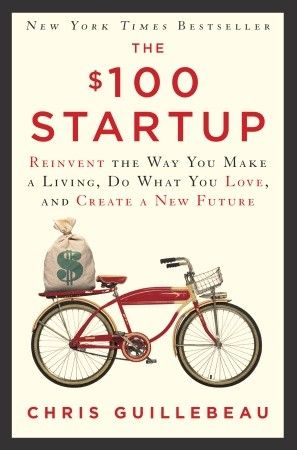
The $100 startup
Introduction
Nova: Imagine you have a brilliant idea for a business. What is the first thing that comes to mind? For most people, it is a mountain of paperwork, a pitch deck for investors, and a massive bank loan that feels like a weight around your neck. But what if I told you that some of the most successful small businesses in the world started with nothing more than a hundred bucks and a laptop?
Nova: That is exactly the myth Chris Guillebeau set out to bust in his book, The $100 Startup. He spent years traveling to every single country in the world, and along the way, he met thousands of people who had built what he calls micro-businesses. These are companies that earn at least fifty thousand dollars a year, often much more, and were started with almost no capital. We are talking about people who turned their skills into freedom.
Nova: Exactly. It is about reinventing the way you make a living so you can do what you love and create a new future. Today, we are diving deep into the blueprint Chris laid out. We are going to look at how to find that sweet spot where your passion meets a paycheck, how to launch without a massive business plan, and why staying small might actually be the ultimate power move.
Key Insight 1
The Point of Convergence
Nova: The foundation of the entire book is a concept Chris calls the Point of Convergence. He argues that most people fail because they focus too much on what they are passionate about without checking if anyone actually wants to pay for it.
Nova: Well, you might be surprised! But the formula is actually Passion or Skill plus Usefulness equals Success. You need that third ingredient: usefulness. Chris found that the most successful micro-entrepreneurs found a way to take something they were already good at and pivot it toward solving a specific problem for someone else.
Nova: Think about the story of the guy who loved urban farming. He did not just grow vegetables; he realized people were struggling to build their own chicken coops. So, he created a simple, digital guide on how to build a backyard coop. He spent almost nothing to make it, but it solved a very specific pain point for a growing niche of people. He turned a skill into a product that provided value.
Nova: That is the big hurdle. Chris emphasizes that you have to look for convergence, not just interest. He tells the story of a wedding photographer who realized that while she loved taking photos, her real value was in helping brides manage the stress of the big day. She started offering consulting services alongside her photography. She was not just selling pictures; she was selling peace of mind. That is the usefulness factor.
Nova: They do. The book warns against the trap of being a generalist. You want to be the person who solves one specific problem incredibly well. Chris found that the more specific the niche, the easier it was to start with that hundred-dollar budget because you are not competing with the giants. You are the big fish in a very small, very profitable pond.
Key Insight 2
The Art of the Launch
Nova: Once you have your idea, most people think they need a sixty-page business plan. Chris says throw that out the window. He advocates for the One-Page Business Plan. If you cannot explain your business on one sheet of paper, it is probably too complicated.
Nova: Chris argues that projections are usually just guesses anyway. His one-page plan focuses on only the essentials: What are you selling? Who is going to buy it? How will you get paid? And how will you reach customers? That is it. The goal is to get to the launch as fast as possible because the market is the only thing that can give you real feedback.
Nova: Definitely not. He actually provides a very detailed thirty-nine-step product launch checklist. It is broken down into three phases: pre-launch, the launch day, and post-launch. The key is building anticipation. You do not just wake up and say, hey, I have a product. You tell a story over several weeks. You explain the problem, you hint at the solution, and you create a sense of urgency.
Nova: In the book, he shows that the hundred dollars usually goes toward a domain name, basic hosting, and maybe a simple email marketing tool. He highlights people like Cindy Molchany, who started a web service business with almost nothing and scaled it to twenty thousand dollars in revenue very quickly. The secret is that they did not spend money on things they did not need yet. No fancy office, no expensive legal fees upfront, no inventory.
Nova: That is exactly the point! Chris calls it failing fast and cheap. If an idea does not work, you have only lost a hundred dollars and a bit of time. You take what you learned and you pivot to the next idea. It is a low-risk way to find a high-reward business model. He found that many of the most successful entrepreneurs in his study failed at two or three ideas before they hit the one that really took off.
Key Insight 3
Selling Benefits, Not Features
Nova: One of the most powerful sections of the book is about marketing. Chris makes a very clear distinction between features and benefits. Most people try to sell features, but customers only buy benefits.
Nova: Not really. The feature is the high-powered motor. The benefit is a clean house in half the time. The benefit is the feeling of pride when guests come over. Chris says that people do not buy products; they buy a better version of themselves. They buy freedom, they buy time, they buy status, or they buy the removal of a headache.
Nova: Exactly! You are selling the lifestyle. Chris uses the example of a mattress company. They do not just talk about the density of the foam. They talk about waking up without back pain and having the energy to play with your kids. When you focus on the benefit, the price becomes less of an issue because you are solving a deep emotional or practical need.
Nova: Right. And this leads into his One-Page Promotion Plan. Instead of a massive marketing budget, he suggests focusing on where your specific customers hang out. If you are selling a guide for marathon runners, you do not need a Super Bowl ad. You need to be on the three most popular running forums and have a great relationship with five key influencers in that space.
Nova: He suggests a value-based pricing model. Do not look at how much it cost you to make. Look at how much value it provides to the customer. If your guide saves a business owner ten hours a week, that is worth thousands of dollars, even if it only took you ten hours to write. He encourages entrepreneurs to experiment with different price points and always offer a guarantee to lower the barrier for the customer.
Key Insight 4
The Freedom Trap
Nova: As these businesses grow, Chris addresses a very important question: Do you actually want to scale? In the traditional business world, growth is the only goal. But in the world of the $100 startup, growth can sometimes be a trap.
Nova: Not necessarily. Chris points out that many people start these businesses because they want freedom. They want to travel, spend time with family, or work from a coffee shop. If you scale too much, you might end up managing fifty employees, dealing with HR issues, and sitting in meetings all day. Suddenly, you have built yourself a new job that is even more stressful than the one you left.
Nova: Exactly. He shares stories of entrepreneurs who intentionally kept their businesses small. They automated as much as possible, used freelancers for specific tasks, and capped their growth so they could maintain their lifestyle. He calls this the quest for freedom. It is about deciding what enough looks like for you.
Nova: He does. He talks about horizontal versus vertical growth. Vertical growth is selling more of the same thing to the same people. Horizontal growth is taking your core skill and applying it to a new market. But his main advice is to always keep your overhead low. Even as you grow, try to stay lean. The more expenses you have, the less freedom you have.
Nova: That is the heart of the book. Whether you want to earn an extra thousand dollars a month or build a full-time career that lets you travel the world, the principles are the same. Start small, focus on value, and never lose sight of why you started in the first place.
Conclusion
Nova: We have covered a lot of ground today. From the Point of Convergence where your skills meet a market need, to the simplicity of the One-Page Business Plan, and the importance of selling benefits over features. The $100 Startup is really a manifesto for the modern age. It tells us that the barriers to entry have never been lower, and the potential for personal freedom has never been higher.
Nova: That is the goal. Chris Guillebeau wants to move people from the planning phase to the action phase. If you have been sitting on an idea, the takeaway is simple: find a way to test it for a hundred dollars. Don't wait for the perfect moment or the perfect plan. Just start.
Nova: Well said. If you are looking for a sign to start that project you have been dreaming about, this is it. You don't need a permission slip or a venture capitalist. You just need a little bit of creativity and the courage to take the first step. This is Aibrary. Congratulations on your growth!