

The Art of Advocacy: Building Compelling Cases
Golden Hook & Introduction
SECTION
Nova: Atlas, quick challenge for you. We’re talking about Jay Heinrichs’ "Thank You for Arguing" today. Give me your five-word review of the book. Go!
Atlas: Oh man, five words? "Stop losing, start influencing. Seriously."
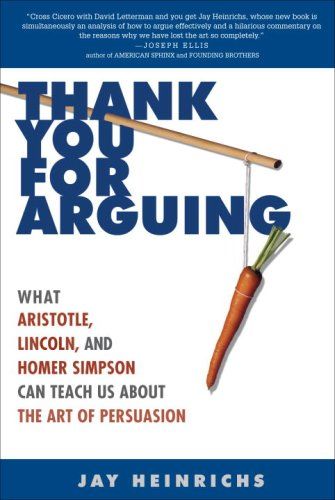
Nova: Ha! "Seriously" being the crucial fifth word there. And that's exactly what Jay Heinrichs delivers in "Thank You for Arguing: What Aristotle, Lincoln, and Homer Simpson Can Teach Us About the Art of Persuasion." This book is not just acclaimed for its wit, but for making classical rhetoric, which can feel incredibly intimidating, genuinely practical for anyone who wants to be more persuasive, whether in a courtroom, a boardroom, or just at the dinner table. Heinrichs, a seasoned editor, has this incredible knack for blending ancient wisdom with modern, relatable examples.
Atlas: Right? And for anyone who’s ever felt like their perfectly logical argument just bounced off someone else, this book is a revelation. It’s like, you think you’re speaking one language, and they’re hearing another.
Nova: Exactly. And that brings us to the foundational concepts Heinrichs unpacks, which are as old as democracy itself but as relevant as today's Twitter debate: Aristotle’s three appeals.
The Foundational Pillars of Persuasion: Logos, Pathos, Ethos Demystified
SECTION
Atlas: Ah, the Greek trio! Logos, Pathos, Ethos. We hear those terms thrown around, but what do they truly mean for someone trying to build a compelling case?
Nova: Well, let’s start with Logos. This is your logic, your facts, your data. It's the brain of your argument. If you're building a legal case, this is the evidence, the precedent, the statutes. It’s about making a point that is internally consistent and factually sound. Heinrichs shows us that Logos is the backbone; without it, your argument collapses.
Atlas: I can see that. But wait, I’ve definitely presented arguments that were airtight, factually bulletproof, and still lost. It’s infuriating! No one cares about my perfectly crafted pie charts.
Nova: And that’s where Pathos comes in, the emotional appeal. This isn’t about being manipulative; it’s about understanding your audience’s feelings and connecting with them. Heinrichs gives fantastic examples of how a skilled rhetorician can tap into an audience's values, fears, or aspirations. Think of a lawyer painting a vivid picture of a victim's suffering, not just rattling off injuries, but making the jury the injustice.
Atlas: Okay, but where’s the line? For an advocate driven by justice, it feels like it could easily slip into emotional blackmail. How do you use Pathos ethically without just tugging at heartstrings to get your way?
Nova: That’s a crucial question, and it's where Ethos, the appeal to character, becomes paramount. Ethos is about your credibility, your trustworthiness, your authority. Heinrichs argues that you can have all the facts and all the emotional resonance, but if your audience doesn't trust you, it's all for naught. An ethical advocate builds Ethos by demonstrating integrity, expertise, and genuine goodwill towards their audience. It’s about showing you’re not just trying to win, but that you genuinely care about the right outcome.
Atlas: So, if I'm an aspiring advocate, I need to be seen as knowledgeable and trustworthy, but also show I understand the human element of what I'm arguing. That makes sense. It’s like, you can have the best argument in the world, but if you’re a jerk, no one’s listening.
Nova: Precisely. Heinrichs even brings in Homer Simpson to illustrate these points, showing that even in the most mundane or absurd scenarios, these rhetorical principles are at play. It’s about building a reputation, a persona that resonates with fairness and competence.
Rhetoric in Action: The Ethical Edge of Influence
SECTION
Nova: Now, understanding Logos, Pathos, and Ethos is one thing, but putting them into practice, especially in complex situations, is where the art truly shines. Heinrichs moves beyond just identifying these appeals to showing how they're wielded.
Atlas: So you're saying it's not just about having the tools, but knowing how to assemble the whole machine? I imagine a lot of aspiring advocates struggle with taking theory and making it real.
Nova: Absolutely. One of the most powerful techniques Heinrichs discusses is "framing" an argument. It’s not about distorting facts, but about choosing the lens through which your audience views those facts. For instance, in a debate about climate change, one side might frame it as an "economic burden," while another frames it as an "investment in our future." Both use facts, but the frame shifts the emotional and ethical context.
Atlas: Framing sounds like spin. How does a truthful advocate use framing effectively without distorting reality or manipulating public opinion? That feels like a tightrope walk for someone driven by justice.
Nova: It is, and that's precisely the ethical edge Heinrichs explores. He shows that effective framing often involves finding common ground, identifying shared values, and then building your argument from there. Think of Abraham Lincoln, a master rhetorician. He didn't just present statistics about slavery; he framed it within the context of foundational American ideals of liberty and equality, appealing to a higher moral ground shared by many. It’s about understanding what resonates with your audience's deepest beliefs.
Atlas: That’s a powerful distinction. So, it's not just about winning an argument, but understanding why people believe what they believe, and then guiding them towards a different perspective through shared values. For our listeners who are aspiring advocates, what’s a tiny step they can take to start sharpening these skills?
Nova: Heinrichs would say, pick a recent news article or even a public debate you've witnessed. Analyze the arguments presented. What were the speaker's goals? Which appeals—Logos, Pathos, Ethos—did they lean on? How effective was their delivery? Just breaking down what others are doing is a fantastic way to start building your own rhetorical muscle. It’s about becoming a detective of persuasion.
Atlas: I love that. It turns passive consumption of information into an active learning experience. It takes what feels like a complex, abstract art and makes it a practical, analytical exercise. It’s almost like you’re not just trying to win, but you’re trying to build a better, more thoughtful argument, which ultimately serves justice.
Synthesis & Takeaways
SECTION
Nova: Precisely. What Heinrichs ultimately teaches us is that advocacy isn't just about being right; it's about being effective, and responsibly so. It's about understanding the human element in every interaction and using language not as a weapon, but as a bridge.
Atlas: It seems like mastering rhetoric, as Heinrichs lays it out, isn't just about winning cases. It's about shaping understanding, fostering dialogue, and ultimately, for an aspiring advocate, it's about having the tools to genuinely fight for fairness and make a tangible impact in the world. It’s a journey of continuous learning, but a profoundly impactful one.
Nova: Absolutely. Every step, every analysis of an argument, builds that foundation. It's about embracing the journey of becoming a more persuasive, and more ethical, voice. Now, go analyze those arguments!
Atlas: And let us know what you find!
Nova: This is Aibrary. Congratulations on your growth!