

Unseen Hands: How Technology Shapes Society's Deepest Structures
Golden Hook & Introduction
SECTION
Atlas: Oh man, Nova, I was just on my phone, and I typed 'truth' into a search engine. You know what I got? 3.7 billion results. Three. What does 'truth' even mean anymore when it's that abundant? It's like trying to find a single grain of sand on every beach at once.
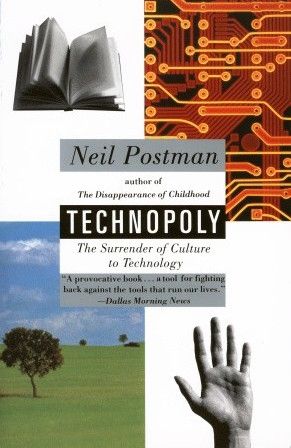
Nova: That's a perfect starting point, Atlas, because today we're delving into a profound question inspired by texts like Neil Postman's "Technopoly" and Fred Turner's "From Counterculture to Cyberculture." Postman, a brilliant cultural critic, started his career as an English teacher, but he became a media theorist who felt like a lone voice in the wilderness, warning us about the subtle, almost invisible ways technology rewires our entire civilization.
Atlas: A lone voice? That makes me curious already. What was he saying that was so ahead of its time?
Nova: He was saying that technology isn't just a neutral tool that we simply use; it's a transformative force that fundamentally redefines our understanding of reality and shapes our future narratives. It's not just what we do technology, but what technology does us. And we have a huge blind spot when it comes to seeing that.
Technology's Unseen Hand: The Blind Spot
SECTION
Nova: Our first core idea today is this "blind spot." We tend to see technology as this innocent, passive instrument, right? A hammer is just a hammer. A search engine just gives you answers. But that narrow perspective makes us miss how profoundly technology reshapes our thoughts, our values, and even the deepest structures of our society.
Atlas: But wait, I mean, isn't a hammer just a hammer? If I use it to build a house, that's my choice. If I use it to, well, less constructive things, that's also my choice. How can a tool something to us?
Nova: Think of it this way, Atlas. A road. A road isn't just a neutral path from point A to point B. A road changes the landscape, doesn't it? It dictates where towns grow, where commerce flows. It alters ecosystems, encourages certain types of travel, and discourages others. It creates entirely new ways of life around its existence.
Atlas: I see what you mean. It's not just the utility, it's the ripple effect.
Nova: Exactly. Take the printing press, for instance. It didn't just spread information faster. It fundamentally changed how we thought about knowledge, authority, and even the self. It fostered individualism, challenged religious hierarchies, and was a catalyst for the Reformation. It rewired entire societies, not just information delivery.
Atlas: Wow. So for someone who analyzes patterns and seeks clarity, someone who's driven by a quest for meaning, this 'unseen hand' could be subtly guiding their very analysis, their very search for meaning, without them even being aware of it?
Nova: Absolutely. Think about algorithms today. They don't just 'show' us content. They actively curate our reality. They reinforce existing biases, create echo chambers, and subtly nudge our perceptions of what's true or important. We think we're just consuming information, but we're being shaped by the very mechanisms delivering it. It's like having a conversation where someone else is constantly editing what you hear and see, and you don't even realize they're there.
Technopoly and the Diminishment of Wisdom
SECTION
Nova: This idea of technology subtly shaping our reality brings us directly to Neil Postman's powerful concept of "Technopoly." He argues that a Technopoly is a society that has surrendered to technological determinism. It believes that technology solves all problems, and in doing so, it loses its ability to question the ethical and social costs of new tools.
Atlas: Hold on. So is he saying we shouldn't innovate? That sounds a bit anti-progress to me, especially for someone who values foresight and seeks to understand future global shifts. Are we supposed to just stop developing new tech?
Nova: Not at all, Atlas. Postman isn't anti-technology; he's pro-awareness. He's not saying innovation is bad, but that innovation can be dangerous. His big concern was that in a Technopoly, information overload, a direct byproduct, actively diminishes wisdom.
Atlas: Information overload diminishing wisdom? That feels counterintuitive. More information should mean more wisdom, right?
Nova: That's the paradox. Postman pointed out that wisdom requires context, reflection, and the ability to discern what's truly meaningful amidst the noise. When we're bombarded by constant updates, fragmented news cycles, and an endless stream of data, we get a lot of information, but very little context. We feel informed, but we understand less.
Atlas: I get it. It's like having a library with every book ever written, but no index, no librarian, and everyone's just shouting titles at you. You have more information than ever before, but less actual knowledge, and certainly less wisdom. It's like we're drowning in data, but starving for insight.
Nova: Exactly! Postman was particularly critical of how media, especially television in his time, presented serious issues as entertainment, eroding the capacity for serious public discourse. Today, you can multiply that effect by a thousand with our digital feeds. We become passive consumers, less critical thinkers. The quantity of information doesn't guarantee quality of thought.
The Counterculture Roots of Cyberculture
SECTION
Atlas: It's fascinating how these ideas about technology's impact feel so modern, yet some of their roots go way back. Like, how did we even get here, to this point of unquestioned tech adoption? Fred Turner's work, "From Counterculture to Cyberculture," gives us a surprising answer.
Nova: Turner traces the origins of Silicon Valley's unique ethos, its belief in technological salvation and individual liberation, not to corporate boardrooms or military labs, but to the countercultural movements of the 1960s.
Atlas: So, the same 'turn on, tune in, drop out' generation also said 'let's build computers and networks to connect everyone'? That's a mind-bender. I always imagined Silicon Valley as this very corporate, buttoned-up world. Was it idealism or just plain naivete that birthed it?
Nova: It was a potent, often contradictory mix. Figures like Stewart Brand, who started the Whole Earth Catalog, and early cybernetics enthusiasts, blended psychedelic visions of expanded consciousness with technological utopianism. They genuinely believed that technology, especially computers and networks, could free humanity from oppressive structures, foster decentralized communities, and expand individual minds. They saw the computer as a tool for liberation.
Atlas: That's incredible. So the whole 'disruptive innovation' mantra, the idea that tech will inherently make things better and freer, that comes from the hippies?
Nova: In many ways, yes! The core belief that technology leads to progress, freedom, and a better world – that often goes unquestioned now – was deeply planted by that era's idealism. The irony, of course, is how that idealism has played out in the centralized, often isolating, tech giants of today, far from the decentralized utopia they envisioned. It's a powerful narrative, still shaping our expectations.
Synthesis & Takeaways
SECTION
Nova: So, we've explored this idea of technology's unseen hand, how it shapes our reality, Postman's warning about Technopoly diminishing wisdom, and the surprising countercultural roots of our current cyberculture. It all points to one crucial need: critical awareness.
Atlas: That's going to resonate with anyone who's trying to make sense of complex information, or trying to predict future global shifts with clarity. The initial deep question we posed was: 'How might an unquestioned embrace of a new technology be subtly altering your own perception of truth or progress?' It feels more urgent now. How do we, as individuals, even begin to question our own perception when technology is so deeply embedded in everything we do?
Nova: That's the million-dollar question, Atlas. A great starting point is to simply observe your own tech habits. Question the sources of your information. Actively seek out diverse perspectives that challenge your algorithms. Cultivate spaces for slow thinking and reflection, stepping away from the constant feed. Postman would argue for a renewed emphasis on media literacy, understanding not just is communicated, but it's communicated and that medium has on us.
Atlas: For someone driven by a quest for meaning, understanding these unseen forces isn't just academic; it's crucial to ensuring their impact is truly positive, not just technologically driven. It's about being the architect of your own understanding, rather than a passenger.
Nova: Exactly. The real progress isn't just in building faster tech, but in building a more conscious, more intentional relationship with it. It's about reclaiming our agency in a world increasingly shaped by unseen hands.
Atlas: That's actually really inspiring. It feels like a call to action, to be more intentional about our relationship with technology.
Nova: Absolutely. It's about remembering that the human element, our critical thought and our wisdom, remains paramount.
Nova: This is Aibrary. Congratulations on your growth!