

Beyond Command and Control: Empowering Your Team Through Psychological Safety
Golden Hook & Introduction
SECTION
Nova: Most leaders believe that building a high-performing team is about setting aggressive targets, optimizing processes, and fostering fierce competition. But what if I told you that the single most powerful lever for unlocking your team's true potential is something far more subtle, and often, completely overlooked?
Atlas: Oh man, are we about to get philosophical on team dynamics again? Because I've seen enough "trust falls" to last a lifetime, and the only thing they usually build is a trip to the chiropractor.
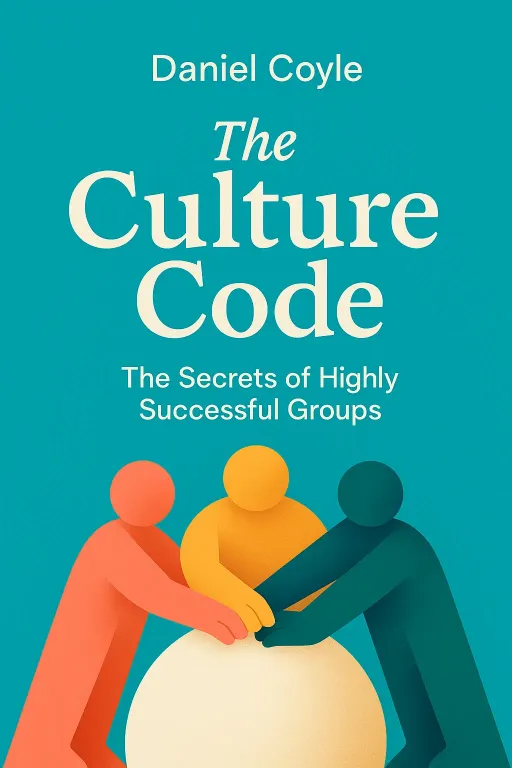
Nova: Not a trust fall in sight, Atlas, I promise. We're talking about something far more foundational, something that feels soft but delivers hard, measurable results. Today, we're diving into the bedrock of truly great teams: psychological safety. And we're drawing insights from two titans in the field: Daniel Coyle's widely acclaimed "The Culture Code" and Amy C. Edmondson's seminal work, "Teaming." Both books are celebrated for taking complex organizational behaviors and boiling them down into incredibly practical, actionable strategies for leaders.
Atlas: Okay, so these aren't just feel-good manifestos. These are serious, respected works. I can see how that would resonate with leaders who are driven by progress and lasting impact. But what exactly are we talking about when we say "psychological safety"? Because for a strategic builder, that phrase can sometimes sound a little… fluffy.
The Foundational Pillars of Psychological Safety
SECTION
Nova: That's a perfect question, Atlas, because it's precisely what Daniel Coyle unpacks in "The Culture Code." He observed some of the world's most successful teams – from Navy SEALs to Pixar – and found three consistent elements. It's not about being 'nice' or avoiding conflict. It's about building safety, sharing vulnerability, and establishing purpose.
Atlas: Hold on, so "safety" isn't just about not getting yelled at?
Nova: Exactly. Coyle argues that building safety starts with explicit signals of belonging. It’s about creating an environment where people feel connected, that they matter, and that their voice is valued. Think of it like a tribal signal, a primal sense of "we are safe here." He tells a story about a leader who, during a tense project review, admitted he had made a significant error early on that had impacted the team's progress. Instead of being seen as weak, his team saw it as an invitation.
Atlas: Wow. So, a leader admitting a mistake isn't a sign of weakness, but a signal of safety? That’s going to resonate with anyone who struggles with maintaining authority while also trying to be transparent. But isn't asking for vulnerability a big ask in a high-stakes environment, where everyone is trying to prove themselves?
Nova: It absolutely is. But Coyle shows it’s about vulnerability. When leaders admit mistakes, ask for help, or share a struggle, they create a space for others to do the same. It's not about oversharing, but about modeling the behavior you want to see. This, in turn, fosters trust and allows for honest feedback – the kind that truly drives improvement, not just compliance. He highlights how successful teams don't shy away from uncomfortable truths; they embrace them as opportunities to learn.
Atlas: I guess that makes sense. If you're an empathetic leader, you care about your team, but you also need them to perform. And if they're too scared to speak up or admit when something's not working, you're flying blind. So, safety, vulnerability… and what was the third pillar?
Nova: Purpose. It’s about clearly articulating the team exists, what shared mission they’re striving for. When individuals deeply understand and buy into that purpose, it provides a powerful motivator and a common ground, even when things get tough. It’s the north star that guides all the other interactions.
Psychological Safety in Action: Teaming for Rapid Innovation and Adaptation
SECTION
Atlas: Okay, so we've got the foundations: belonging, vulnerability, and purpose. That sounds like a great recipe for team cohesion. But how does this translate into? Especially for leaders who are future-focused innovators, trying to adapt constantly and build for tomorrow? How does psychological safety drive innovation and performance?
Nova: That's where Amy Edmondson's work in "Teaming" comes in with such power. She argues that in today's fast-paced, unpredictable world, 'teaming' – dynamic, flexible collaboration – is more critical than ever. And psychological safety isn't just a nice-to-have; it's the crucial ingredient for effective teaming, for rapid learning and adaptation. She found that teams with higher psychological safety actually reported errors, not fewer.
Atlas: Wait, more errors? That sounds a bit out there. Isn't the goal to errors? As a strategic builder, I'm trying to optimize, not create more problems.
Nova: Exactly! It's counterintuitive, right? But the insight is profound. These teams didn't more errors; they more errors. Because they felt safe enough to admit them, to discuss them openly, and to learn from them. In low psychological safety environments, mistakes are hidden, leading to repeated failures and a stagnation of innovation. In high-safety environments, every mistake becomes a data point, an opportunity for rapid adaptation. It’s like a pilot who reports every near-miss; that data saves lives in the long run.
Atlas: That’s a great way to put it. So, it's not about being flawless, it's about being. I can see how that would unlock innovation. If people aren't terrified of failure, they're more likely to try new things. So, if I'm a leader, how do I actually this? How do I encourage 'bad ideas' without chaos, or admit mistakes without losing credibility?
Nova: That's the million-dollar question, and it brings us to a tiny, actionable step that can make a huge difference. Edmondson’s research, and Coyle’s observations, both point to the power of leader modeling. At your next team meeting, explicitly ask for a 'bad idea' or a 'mistake' someone made this week.
Atlas: A bad idea? Like, "Hey team, anyone got a truly terrible idea they'd like to share?" That sounds risky. Someone might actually give me one!
Nova: Precisely! But here’s the key: celebrate the learning from it. Frame it as a discovery, not a failure. "Tell me about a mistake you made this week, and what you learned." Or "What's an idea you had that seemed crazy, but taught you something important?" The goal isn't to praise incompetence, but to praise the courage to share and the insight gained. This signals that learning from missteps is valued, not punished. It’s about shifting the narrative from blame to growth.
Atlas: I see. So the empathetic leader in me wants to create that space, and the future-focused innovator in me recognizes that learning from mistakes is how we actually get better and build for tomorrow. It’s a simple shift, but it feels like it could generate a ton of insight that might otherwise stay buried.
Synthesis & Takeaways
SECTION
Nova: Absolutely. What we're really talking about here is moving beyond a command-and-control mindset. It’s a profound shift for leaders. It's not about abandoning structure, but about building an invisible operating system of trust and openness. Psychological safety isn't just about making people feel comfortable; it's about making them feel courageous.
Atlas: It’s the hidden engine, isn't it? The thing that allows all the other strategic initiatives to actually take root and flourish. For any strategic builder, any empathetic leader, any future-focused innovator, this isn't just a soft skill to delegate. This is a core competency, a strategic imperative. It's the difference between a team that and a team that.
Nova: Exactly. Great teams don't just happen. They're intentionally built on this bedrock of psychological safety, where the fear of judgment is replaced by the freedom to innovate, to learn, and to truly thrive. So, for all our listeners out there, try that tiny step this week. Ask for a mistake, celebrate the learning, and watch what happens.
Atlas: And watch your team transform. It's about empowering your team to lead, to delegate more wisely, and to build for tomorrow, sustainably.
Nova: This is Aibrary. Congratulations on your growth!