

Building High-Performing Teams: Beyond Management to Motivation
Golden Hook & Introduction
SECTION
Nova: Atlas, I've got a challenge for you. Think about the last time you were truly, deeply engaged in your work. Not just productive, but in it. What was driving you?
Atlas: Oh, I like that. Honestly, it wasn't the looming deadline, surprisingly. It was that feeling of figuring out a complex problem, or seeing a project click into place that I genuinely cared about. Like, really cared about the outcome. Why?
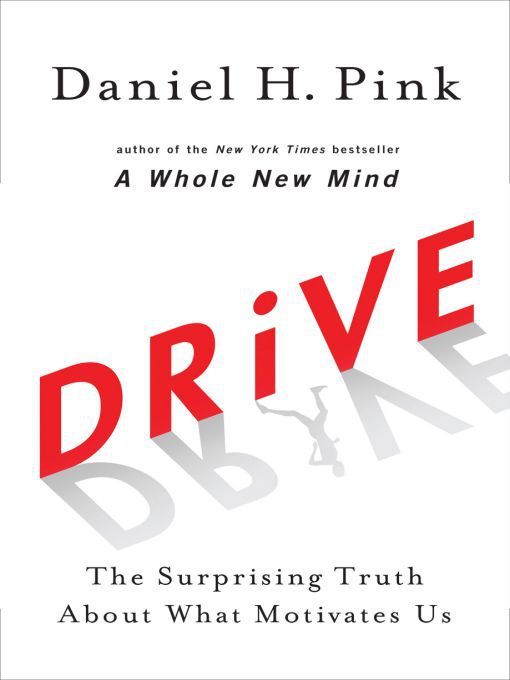
Nova: Well, that's exactly what Daniel Pink explores in his widely acclaimed book, "Drive: The Surprising Truth About What Motivates Us." It’s a book that fundamentally shifted how many leaders view employee engagement, drawing on decades of behavioral science to challenge our most ingrained assumptions about what truly makes us tick at work.
Atlas: So, it's not just about the paycheck? My boss is going to love this. Or maybe not, if it means they have to rethink everything.
Nova: Exactly! It’s a paradigm shift. Pink argues that our traditional 'carrot and stick' approach to motivation, while effective for routine, algorithmic tasks, actually performance for creative, conceptual work.
Atlas: Wait, are you saying that offering a bigger bonus could make someone motivated to do their best work? That sounds rough, but I can see how that would be... counterintuitive to a lot of strategic leaders out there.
Nova: Precisely. Pink identifies three intrinsic motivators: Autonomy, Mastery, and Purpose. These are the engines of engagement for the 21st-century workforce, far beyond what external rewards can achieve.
The Intrinsic Motivators: Autonomy, Mastery, and Purpose
SECTION
Nova: Let's break those down, starting with Autonomy. Pink's research, and a wealth of other behavioral science, shows that we crave self-direction. We want to be the directors of our own lives, not just pawns moved around a chessboard.
Atlas: So you’re saying, for our listeners who are managing high-pressure teams, giving people more freedom actually makes them productive? That feels risky in environments where control is often seen as key to consistency.
Nova: It's not about abandoning control, but about empowering it. Think about Atlassian, the software company, with their famous "ShipIt Days"—formerly known as "FedEx Days." Once a quarter, employees could work on, with, for 24 hours. The only rule was they had to ship something by the end of it.
Atlas: That sounds like a recipe for chaos, or at least a lot of cat videos.
Nova: What actually happened was phenomenal. Countless innovations, bug fixes, and new product ideas emerged from these self-directed projects. Why? Because people were given autonomy over their tasks, time, team, and technique. They weren't told to do, but given the freedom to pursue what they felt was most valuable.
Atlas: I can see that. That makes sense, but what about the second piece, Mastery? So it's not just about doing what you want, but getting really good at it? Like a craft, where you're always improving?
Nova: Exactly. Mastery is the urge to get better and better at something that matters. It’s why people dedicate years to learning a musical instrument, mastering a complex sport, or contributing to open-source software projects, often with no direct financial reward. The joy is in the pursuit of excellence itself.
Atlas: That’s a great way to put it. I know that feeling of finally nailing a skill you’ve been grinding at. It's incredibly satisfying. And the third piece, Purpose? How does that tie into the bigger picture, beyond just feeling good about your own work?
Nova: Purpose is the desire to do what we do in the service of something larger than ourselves. Simon Sinek, in "Start with Why," expands on this beautifully. He argues that great leaders and organizations don’t just communicate they do, or they do it, but they do it.
Atlas: So basically you’re saying, if your team members understand the greater impact of their work, they'll be more engaged? That makes me wonder, how does that actually play out in a business context?
Nova: Take, for example, two teams. One is told to process X number of transactions by Friday. The other is told they are empowering small businesses to grow and thrive, and processing transactions is a vital part of that mission. The second team isn't just performing a task; they're contributing to a meaningful cause. The transforms the.
The Power of Why: Vision-Driven Leadership and Shared Consciousness
SECTION
Nova: And speaking of purpose, that naturally brings us to "Start with Why" by Simon Sinek, and how it converges beautifully with General Stanley McChrystal's insights in "Team of Teams." Sinek’s 'Golden Circle' — Why, How, What — demonstrates that when you lead with 'Why,' you connect with people's deeper values and beliefs, inspiring loyalty and action far beyond mere compliance.
Atlas: So it's about inspiring, not just directing. But what happens when the 'Why' isn't clear, or it's just a corporate slogan plastered on a wall, rather than something genuinely felt? I imagine a lot of our listeners have seen that disconnect.
Nova: That's where McChrystal's work becomes critical. In "Team of Teams," he recounts how the US military, a highly hierarchical structure, had to fundamentally transform its approach to leadership to fight a decentralized, agile enemy in Iraq. They realized that traditional command-and-control simply wasn't working in a complex, rapidly changing environment.
Atlas: That sounds like a huge paradigm shift for an organization built on strict orders and chain of command. How did they manage that?
Nova: They shifted from a "command of teams" to a "team of teams" model, fostering what McChrystal calls 'Shared Consciousness.' This meant every team member, from the lowest ranks to the highest, needed to understand the of the mission, the constantly evolving context, and how their specific task fit into the larger strategic picture.
Atlas: That sounds intense. How do you cultivate that level of shared understanding and trust in a fast-paced, commercial environment? It feels like there's never enough time for 'shared consciousness.'
Nova: It required radical transparency and constant communication. McChrystal implemented daily "Ops & Intel" briefings attended by hundreds of people across different agencies and time zones. Everyone knew what everyone else was doing, and why. This built trust and a common understanding of the battlefield, enabling decentralized decision-making.
Atlas: Wow, that’s actually really inspiring. So it's not just about 'what' we're doing, but 'why' we're doing it, and 'how' our piece fits into the larger, constantly shifting puzzle. That’s a huge shift from traditional management where information was often siloed.
Nova: It’s about creating a common operating picture for everyone, fostering true collaboration, and empowering individuals to make informed decisions without waiting for orders from above. This adaptability is crucial for any team navigating complexity, from tech startups to established corporations. It moves beyond just managing tasks to truly inspiring and enabling people.
Synthesis & Takeaways
SECTION
Nova: So, bringing it all together, what we've learned from Pink, Sinek, and McChrystal is that building high-performing teams isn't about micromanagement or transactional rewards. It's about understanding the deep human need for meaning, connection, and growth.
Atlas: That makes sense. It’s about creating an environment where people feel trusted, challenged, and where their work genuinely matters. For our listeners who are leading teams, or even just part of one, what's one actionable step they can take this week to start building this kind of environment?
Nova: I'd encourage everyone to reflect on the deep question we started with: How can you redesign your team's processes or communication to grant more autonomy, facilitate mastery, and articulate a clearer sense of purpose for each member? It might start small, with a simple 'purpose statement' exercise or a team 'skill-share' session.
Atlas: That's a powerful challenge. It's about nurturing the human spirit at work, not just managing tasks. It makes you realize that the most effective teams aren't just well-managed, they're deeply cared for and deeply understood.
Nova: Absolutely. It's a reminder that true leadership isn't about having all the answers, but about creating the conditions for others to find their own purpose and excel.
Atlas: And that's a wrap for today's deep dive into building high-performing teams.
Nova: This is Aibrary. Congratulations on your growth!