

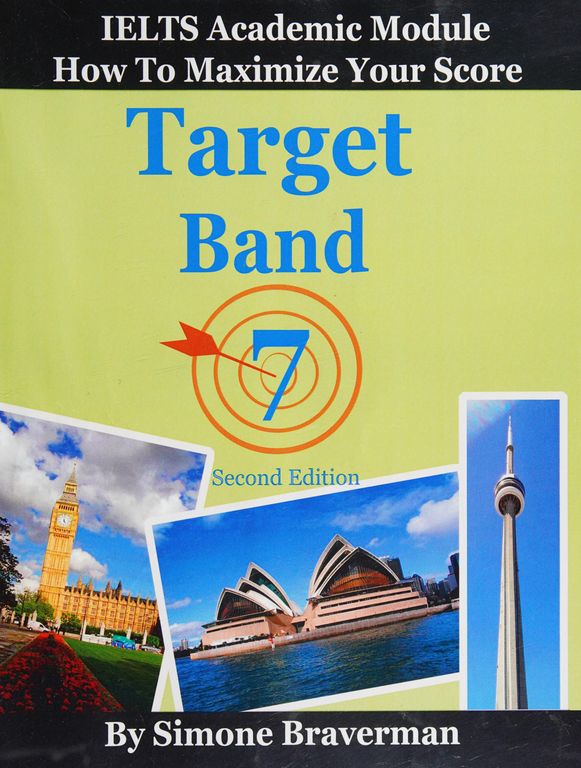
Target band 7
Introduction
Nova: Welcome back to Aibrary, the podcast where we crack open the books that shape how people learn, work, and chase their biggest goals. I'm Nova.
Atlas: And I'm Atlas. Today we're diving into a book that's a quiet phenomenon in the world of high-stakes English testing. It's called Target Band 7 by Simone Braverman.
Nova: Here's a number to kick us off: the latest global data shows that test takers from the top 40 countries average below Band 6 on the IELTS Academic exam. Yet most universities demand a 7 or above. Immigration pathways often require at least a 6.5. So there's this massive gap between what people actually score and what they need.
Atlas: That's a brutal gap. And Target Band 7 is essentially a bridge across it, right?
Nova: Exactly. And what makes this bridge so interesting is who built it. Simone Braverman is not a native English speaker. She took the IELTS herself, struggled through the same confusion most test takers face, and then decided to reverse-engineer the entire exam. She founded IELTS-Blog. com in 2005, which now reaches millions, and wrote this slim 92-page guide that has been downloaded over 350,000 times.
Atlas: Ninety-two pages? That's surprisingly thin for an exam prep book. Most of them are these massive doorstops.
Nova: That's actually one of its biggest selling points. Braverman's pitch is blunt: this book doesn't teach you English. It teaches you the test. It's for people who are time-poor, who might have jobs, families, other exams. She promises you can get through the entire book in one day and be exam-ready within a month.
Atlas: So today we're going to unpack what makes this book tick. The strategies, the philosophy, what reviewers love, what they question, and whether a 92-page book can really deliver on a promise as big as Band 7.
Nova: Let's get into it.
Why Simone Braverman's Story Matters
The Author Who's Been There
Nova: So Atlas, before we get into the nitty-gritty of listening strategies and writing templates, I want to spend a moment on the author herself, because her story shapes the entire DNA of this book.
Atlas: Right, you mentioned she's not a native speaker. That's unusual for an IELTS prep author, isn't it?
Nova: It really is. Most IELTS materials are written by native English speakers, often British or Australian, who have teaching backgrounds. Nothing wrong with that, but Braverman points out something sharp: those authors don't always understand the specific difficulties of someone who wasn't born into English. She says on her website that when she was preparing for IELTS, the books and websites looked scary and full of words she only partially understood.
Atlas: That resonates. It's like when a math professor writes a textbook that only makes sense to other math professors.
Nova: Exactly. So Braverman took the test herself, achieved a high score, and then essentially said: I'm going to write the book I wish I'd had. She founded IELTS-Blog. com in 2005, and over time it's grown to over 15 million visitors, nearly 500,000 social media followers, and partnerships with former IELTS examiners.
Atlas: And Target Band 7 is now in its fourth edition, published in 2021. That's staying power.
Nova: The fourth edition covers both paper-based and computer-delivered IELTS, which is a meaningful update. But the core philosophy hasn't changed: this is not an English textbook. It's a tactical manual. Her exact words from the introduction are: this book might not make your English perfect, but it will certainly help you get in shape and get your target band score.
Atlas: That's a really honest framing. It's almost saying: look, don't expect miracles. But if you follow these techniques, you'll squeeze every possible point out of the English you already have.
Nova: And that's what makes it feel less intimidating. There's no pretense that you need to be fluent. A reviewer on Goodreads captured this perfectly when they said: at first the techniques seemed basic and simple, but that was their fault for expecting mysterious, marvelous methods. The simple stuff actually works when you apply it.
Atlas: So let's talk about those techniques. What does the book actually tell you to do?
Key Insight 2
Listening and Reading: Speed, Traps, and Pattern Recognition
Nova: The book is organized into four independent chapters: Listening, Reading, Writing, and Speaking. You can read them in any order, which is smart for people who want to target their weakest area first. Let's start with Listening.
Atlas: Listening is one of those sections where people panic because the recording only plays once. Miss an answer and you can spiral.
Nova: Braverman tackles exactly that fear head-on. She identifies nine different task types you might encounter, from multiple choice to form completion, and gives specific strategies for each. But the standout advice is about recovery. She says that if you miss an answer, you need a mental reset button. Her technique is to immediately move your attention to the next question, because if you linger on the lost answer, you'll miss the next three.
Atlas: That's psychological more than linguistic. It's almost a mindfulness technique for test-taking.
Nova: Exactly. She also trains readers to recognize traps: when the speaker says something, then takes it back, or when synonyms and generalizations are used to confuse you. And there's a clever tip about using the answer sheet transfer time at the end as an opportunity to catch spelling errors that could cost you marks.
Atlas: What about Reading? That's where a lot of people hit the time wall.
Nova: The Reading chapter is probably where the book shines brightest. Braverman covers all eight task types, but the core of her method is time management and keyword scanning. She teaches you to stop trying to understand every word of a passage and instead hunt for keywords that connect questions to answers.
Atlas: This is the classic skimming and scanning approach, but I imagine she adds her own spin?
Nova: She does. She reveals what she calls the unwritten rules of answer location. There's actually a pattern to where answers appear relative to the paragraph structure. And for the dreaded True False Not Given questions, she gives a crystal-clear decision framework. One reviewer on Goodreads said their reading score jumped from below 7.5 to 8.0 after applying just these techniques.
Atlas: So it's not about becoming a faster reader. It's about reading smarter.
Nova: That's the thesis of the entire book, really. She also warns against overthinking and making assumptions, which is the trap that kills scores on True False Not Given. Her rule is: if the passage doesn't explicitly say it, you cannot infer it. Stick only to what's on the page.
Atlas: That seems obvious, but in the pressure of an exam, your brain wants to fill in gaps.
Nova: And that's exactly why having a disciplined, almost mechanical approach to each question type helps. It overrides the brain's natural tendency to elaborate.
Key Insight 3
Writing: The Baby Steps Method and the Task Order Trick
Nova: Now, the Writing section is where things get interesting because it's also where the book has drawn some criticism.
Atlas: From whom?
Nova: David Wills, who runs the popular site TED IELTS, reviewed both Target Band 7 and its sister book Ace the IELTS. He gave them generally positive marks but took issue with certain writing recommendations. For example, Braverman advises starting body paragraphs with linking words like However, Therefore, or Moreover to boost your score. Wills argues this is reductive. A well-structured essay shouldn't need that crutch.
Atlas: I can see both sides. For a test taker who's struggling to organize their thoughts, those linking words might be genuinely helpful scaffolding.
Nova: That's fair. But here's what Wills and many readers do agree on: Braverman's Baby Steps method for essay writing is genuinely useful. She breaks the writing process down into tiny, sequential actions: read the question, underline keywords, brainstorm ideas for two minutes, plan your paragraphs, write the introduction, write body paragraphs, write the conclusion, and then leave time to check for errors.
Atlas: So it's a recipe. Do this, then this, then this.
Nova: For people who stare at a blank page in panic, having a recipe is everything. There's also a fascinating psychological trick she recommends: always do Writing Task 2 before Task 1.
Atlas: Wait, really? That goes against the order of the test.
Nova: Her logic is that Task 2 is worth twice as many marks as Task 1. If you start with Task 2, you guarantee you give your best energy to the high-value task. If you run out of time on Task 1, you lose fewer points. She calls it the magic trick most people never think about.
Atlas: That's a bold strategic move. But what about when you actually get to Task 1, the graphs and charts?
Nova: She covers line graphs, bar charts, maps, process diagrams, all the common formats. She repeatedly hammers home one rule: never include your own opinion. That's a cardinal sin in Academic Task 1. And she provides sample phrases and vocabulary you can deploy. One reviewer on Goodreads noted that before reading the book, they had no idea how to even start describing a graph. The book gave them a clear template.
Atlas: Though I gather not everyone agrees with her recommended paragraph structure?
Nova: Right. Braverman suggests writing a separate introduction paragraph and a separate overview paragraph. David Wills argues that combining them into one paragraph is more effective for coherence and cohesion. He also noted that she omits the present perfect tense when discussing verb tenses for Task 1, which is crucial when describing data that spans past to present.
Atlas: So the Writing chapter is useful but not flawless.
Nova: That seems to be the consensus. It'll get you started and structured. But to push from a 6.5 to an 8, you might need to supplement with other resources.
Key Insight 4
Speaking Alone and the Pocket Tips Philosophy
Nova: The Speaking chapter tackles one of the most common complaints from IELTS candidates: I don't have anyone to practice with.
Atlas: That's the classic problem. You can practice reading and listening alone, but speaking feels like you need a partner or a teacher.
Nova: Braverman's response is essentially: no, you don't. She provides a step-by-step technique for improving your speaking entirely on your own. Record yourself answering sample questions, listen back, identify where you hesitated or used the wrong word, and re-record until you're satisfied. It's iterative and a bit uncomfortable, but it works.
Atlas: It's like watching game tape as an athlete. Painful but effective.
Nova: Perfect analogy. She also provides an exhaustive list of topics and questions that have appeared in past exams, which is incredibly valuable because IELTS speaking topics repeat frequently. If you've prepared answers for fifty common topics, the odds of getting something unfamiliar on test day drop dramatically.
Atlas: And what about the nightmare scenarios? When your mind goes blank in the middle of the Cue Card?
Nova: She addresses those directly. If you don't understand a question, she gives you phrases to ask for clarification without sounding lost. If you have nothing to say on a topic, she gives you strategies to pivot or buy time. The chapter also covers the three parts of the Speaking test: the Interview, the Cue Card, and the Discussion, with clear guidance on how long your answers should be in each.
Atlas: One thing that keeps coming up across all four chapters is this focus on managing the test experience, not just the content.
Nova: Yes! And that leads to one of the book's most beloved features: the Pocket Tips section at the end. It's a short summary of the most important hints from each chapter, distilled into a few pages you can review right before walking into the exam center.
Atlas: So it's like a cheat sheet for your last five minutes of nerves.
Nova: Exactly. Teachers who use the book, like Gillian Hunt, an IELTS tutor in the UK, have specifically praised the Pocket Tips as a go-to reference for quick revision. Stephen Slater from the University of South Australia called the book a welcome resource for busy test takers, emphasizing how the personal writing style makes it accessible for non-native speakers.
Atlas: And let's not forget the full practice test included in the book. That's a crucial feature. You can read all the strategies in the world, but if you haven't simulated the actual exam experience, you'll be caught off guard.
Nova: One thing to note: some earlier editions didn't include audio for the listening test. You had to go to the website. A few reviewers complained the website links didn't always work. The fourth edition has addressed some of this by including more integrated material, but it's worth knowing.
Atlas: So it sounds like the book's real strength is its efficiency. It doesn't try to be everything. It tries to be the most useful 92 pages possible.
Nova: That's exactly right. And for someone who's working full-time, raising a family, or cramming in the final weeks before an exam date, that focused efficiency might be exactly what they need.
Conclusion
Nova: So Atlas, after digging into Target Band 7 from every angle, what's your takeaway?
Atlas: I think the book's core insight is almost philosophical. It says: stop trying to become a perfect English speaker in four weeks. That's not going to happen. Instead, become a perfect test-taker. Learn where the traps are, learn how the scoring works, learn what the examiners actually want to see. Your English might be at a Band 6 level, but with the right strategies, you can score like a Band 7.
Nova: That's beautifully put. And the data backs up the need. With global averages hovering around Band 6, and universities demanding Band 7, there's a real hunger for exactly this kind of tactical edge.
Atlas: What should listeners know about the book's limitations?
Nova: Fair question. It's not a comprehensive English course. If your grammar foundation is shaky or your vocabulary is limited, you'll need to supplement with other resources. The Writing chapter, while helpful, has drawn some specific critiques about paragraph structure and tense usage. And the book is deliberately concise. Some test takers might want more depth, more practice tests, more sample answers.
Atlas: So it's a starting point, not the whole journey.
Nova: Exactly. Think of it as a GPS for the IELTS exam. It won't build the car or teach you to drive, but it will give you the fastest route to your destination.
Atlas: And for the right person, that's priceless. Especially when you consider that Simone Braverman's book has been downloaded over 350,000 times and has helped students from every corner of the world achieve scores they didn't think were possible with their current English level.
Nova: The testimonials tell a compelling story. A reader from Japan said the book gave them the confidence to approach the test systematically. A candidate from the UAE credited it with pushing their score to Band 8. And time and again, reviewers mention the same thing: the tips seem simple at first, but they work when you actually apply them.
Atlas: That might be the highest compliment you can pay a how-to book. Not that it dazzles you with complexity, but that it changes your results.
Nova: And here's a final thought to leave with our listeners. The IELTS is not just a test of English. It's a test of preparation, strategy, and mental discipline. Target Band 7 acknowledges that truth and gives you a battle plan. Whether you're aiming for university admission, a visa, or professional registration, the book's message is clear: your English might not be perfect, but your approach can be.
Atlas: This is Aibrary. Congratulations on your growth.