

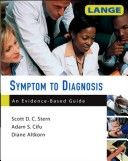
Symptom to diagnosis
An Evidence-Based Guide
Introduction
Nova: Imagine you are a detective. You walk into a room, and there is a mystery to solve. But instead of a crime scene, you are in a clinic, and instead of a witness, you have a patient. They do not tell you their diagnosis. They do not say, I have pneumonia. They say, I have a cough and a fever. This is where the real work of medicine begins, and it is exactly what we are diving into today.
Nova: Exactly. We are talking about Symptom to Diagnosis: An Evidence-Based Guide by Scott D. C. Stern, Adam Cifu, and Diane Altkorn. It is a legendary text in medical education, specifically because it flips the script on how medicine is usually taught. Instead of starting with the disease and listing the symptoms, it starts with the symptoms and builds the path to the diagnosis.
Nova: It really is. We are going to break down their unique three-step process, look at why they emphasize must-not-miss diagnoses, and explore how they use actual data to decide which tests are worth running. It is a masterclass in clinical reasoning.
Key Insight 1
The Paradigm Shift
Nova: To understand why this book is such a big deal, Leo, you have to understand how medical students usually learn. Traditionally, you get a textbook with a chapter titled Pneumonia. It tells you the cause, the symptoms, the treatment. It is very organized, but it is backwards.
Nova: Exactly. Stern and his colleagues argue that the traditional way of teaching creates a gap. Students know everything about a disease but struggle when a patient presents with a vague symptom. Symptom to Diagnosis bridges that gap by organizing everything around the clinical encounter.
Nova: Precisely. It covers about thirty of the most common symptoms clinicians see in internal medicine. Everything from abdominal pain and joint pain to more complex things like acid-base abnormalities or anemia. It forces the reader to think like a practitioner from page one.
Nova: That is where their structured framework comes in. They use a very specific three-step process. Step one is the Differential Diagnosis. You start by casting a wide net and listing the potential causes for that specific symptom.
Nova: Not at all. And that leads to step two, which is where the book really shines: Probability. They use something called the Diagnostic Matrix to organize that list. They categorize diseases into three buckets: Common, Less Common, and the most important one, Must-Not-Miss.
Nova: Exactly. Even if a condition is rare, if it is life-threatening and treatable, it has to stay at the top of your mind. A great example they use is chest pain. Sure, muscle strain is common, but a pulmonary embolism or an aortic dissection is a must-not-miss. You cannot ignore the deadly stuff just because it is less likely.
Nova: That is a perfect analogy. The book teaches you to balance the statistical likelihood of a disease with the clinical urgency of it. It is a very pragmatic way of thinking that moves away from just memorizing facts and toward making safe, effective decisions.
Key Insight 2
The Diagnostic Matrix
Nova: The Matrix is essentially a table that appears in every chapter. It cross-references the symptoms with the potential diagnoses. But it does not just list them; it gives you the key features that point toward or away from each one. It is like a cheat sheet for your brain.
Nova: Exactly. But it goes deeper. It will tell you that if the patient also has something called rebound tenderness, the likelihood increases even more. The book is obsessed with what they call clinical pearls—these specific bits of information from the history or physical exam that have the most diagnostic power.
Nova: That is the best part, Leo. It is all backed by data. This is where the evidence-based part of the title comes in. Stern and his team do not just say a symptom is important; they provide Evidence-Based Medicine boxes, or EBM boxes, that show you the actual numbers.
Nova: They focus heavily on sensitivity, specificity, and especially likelihood ratios. For example, if you are checking for a heart failure diagnosis, they might show you that a specific finding on a physical exam, like a third heart sound or an S3 gallop, has a very high likelihood ratio. That means if you hear it, the probability that the patient has heart failure just skyrocketed.
Nova: Think of it as a multiplier. Every piece of information you get—a symptom the patient describes, a sound you hear through the stethoscope, a lab result—is a multiplier. A likelihood ratio of 1 means the information changed nothing. A ratio of 10 is a huge multiplier, making the diagnosis much more likely. A ratio of 0.1 is a divider, making the diagnosis much less likely.
Nova: Exactly! It is Bayesian reasoning in action. You start with a pre-test probability—basically, how likely is this disease in this specific patient before I do anything? Then you apply the likelihood ratios from your exam to get a post-test probability. The book teaches you which questions and which physical exam moves have the biggest multipliers.
Nova: And it saves time and money. If you know that a certain physical exam finding is just as good as an expensive scan, you can make decisions faster. The book really pushes for high-value care—using the best evidence to get the right answer with the least amount of unnecessary testing.
Key Insight 3
The Math of Medicine
Nova: That is step three: Testing and Treatment. The book is very clear that tests should only be ordered if the results will actually change your management. They talk about the threshold for testing.
Nova: Exactly. There is a testing threshold and a treatment threshold. If the probability of a disease is very low, below the testing threshold, you do not need to do anything. You can reassure the patient. If the probability is very high, above the treatment threshold, you might just start treatment immediately because a test wouldn't change your mind anyway.
Nova: Spot on. And the book uses real-world cases to show how this works. Every chapter starts with a patient case. You follow this patient through the entire process. You see the initial list of possibilities, you see how the doctor uses the history and physical to shift those probabilities, and you see the final decision-making process.
Nova: It does touch on the art of medicine. While it is very data-driven, the authors emphasize that the patient's story is the most important piece of evidence. They talk about how to elicit a good history because if you do not get the right symptoms from the start, your whole matrix will be wrong.
Nova: Precisely. One of the examples I love from the book is about dizziness. Dizziness is a notoriously vague symptom. Patients use that word for everything from feeling faint to feeling like the room is spinning. Stern breaks it down into four distinct categories: vertigo, presyncope, disequilibrium, and lightheadedness. If you do not distinguish between those first, you are going to order the wrong tests.
Nova: It is a translation layer. You are taking the raw data of human experience and structuring it so that science can be applied to it. It is a beautiful blend of the humanities and hard data.
Key Insight 4
Clinical Pearls and the Art of the Case
Nova: Sure! Let's look at the chapter on Anemia. One of the pearls they mention is about the conjunctiva—that is the inner lining of your eyelids. If the conjunctiva is pale, it has a very high likelihood ratio for severe anemia. It is a simple, five-second check that can tell you a lot before you even get the blood work back.
Nova: Definitely. For a sore throat, they use the Centor Criteria. It is a set of four signs: fever, tonsillar exudate, swollen lymph nodes, and the absence of a cough. If a patient has all four, the probability of it being strep throat is high enough that you might just treat it. If they have none, the probability is so low you do not even need to test.
Nova: It really does. And it also helps with the psychological side of being a doctor. One of the hardest things for a new clinician is the fear of missing something. By explicitly listing the must-not-miss diagnoses in every chapter, the book gives you a safety checklist. You can sleep better knowing you systematically ruled out the dangerous stuff.
Nova: Exactly. The book also tackles the issue of over-testing. In modern medicine, there is a temptation to just order every test available—the shotgun approach. But Stern and his co-authors argue that this can actually lead to more harm because of false positives and unnecessary procedures. By following their evidence-based approach, you only order what you need.
Nova: I love that! Yes, the horses are the common diagnoses, the zebras are the rare ones, and the rhinos are the must-not-miss ones. The book teaches you to keep an eye out for all three in a logical way.
Nova: You are absolutely right. It is a masterclass in applied logic. Whether you are a doctor, a lawyer, or a software engineer, the process of gathering data, assigning probabilities, and acting on the most critical risks is a universal skill.
Conclusion
Nova: We have covered a lot of ground today, from the paradigm shift of symptom-based learning to the mathematical precision of likelihood ratios. Scott Stern's Symptom to Diagnosis is more than just a textbook; it is a roadmap for clinical excellence.
Nova: The key takeaway is that medicine is both an art and a science. The art is in the listening and the history-taking, and the science is in the evidence-based application of data to those symptoms. By combining the two, clinicians can provide care that is both compassionate and incredibly accurate.
Nova: And it reminds us that in a world of complex technology, sometimes the most powerful tool a doctor has is a structured way of thinking and a keen eye for detail. Thank you for joining us on this deep dive into the clinician's mind.
Nova: This is Aibrary. Congratulations on your growth!