Mastering Your Career Pivot: Strategies for Success
Golden Hook & Introduction
SECTION
Nova: Alright, Atlas, quick game for you. Give me your five-word review of 'career pivots.' Go!
Atlas: Oh, I love this! Hmm… Scary. Necessary. Confusing. Liberating. Worth it.
Nova: Ooh, I really like 'worth it.' That's a journey right there, encapsulated. And honestly, it perfectly sets the stage for what we’re diving into today. Because for many, that journey from 'scary' to 'worth it' can feel like navigating a dense fog.
Atlas: Absolutely. It’s not just a job change anymore, is it? It feels like a complete re-evaluation of your professional identity.
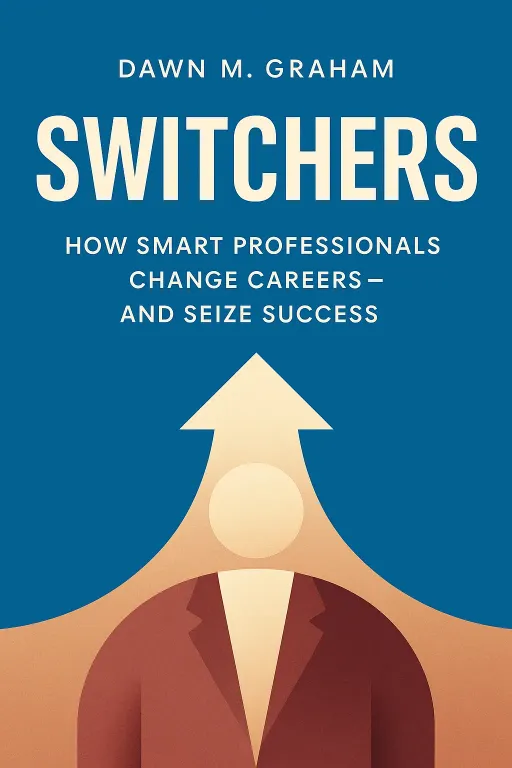
Nova: Exactly. And to help us cut through that fog, we're looking at two incredibly insightful books. First, Dawn M. Graham’s, a roadmap from an author who, as a former executive recruiter, has seen countless career transformations up close. She’s all about the practical how-to.
Atlas: And that perspective, coming from someone who actually makes the hiring decisions, is invaluable. It’s like getting the cheat code from the game developer.
Nova: Precisely. And then we pair that with Bruce Feiler's, a book born from Feiler’s extensive interviews with hundreds of people navigating major life and career transitions. He challenges this outdated notion of a linear path and instead offers a much more dynamic, purpose-driven approach to finding meaning in each new chapter.
Atlas: So, one is tactical, and the other is more philosophical, but both are pointing towards the same north star: successful and fulfilling career evolution. I'm curious how they intertwine.
Nova: They intertwine beautifully because gives you the practical tools to articulate your journey, and gives you the mindset to embrace that journey, even when it’s winding. Today, we’re exploring how to master that career pivot, not just as a job change, but as a profound personal and professional evolution.
Reframing Your Narrative for Career Pivots
SECTION
Nova: So, let's start with the practical. One of the biggest hurdles people face when pivoting is feeling like their past experience is irrelevant to their desired future. Dawn Graham, in, says that’s where most people get it wrong. Your past isn't a liability; it's a unique asset, but you have to learn how to reframe your narrative.
Atlas: Wait, but what if your past is different? Like, you’ve spent a decade in, say, customer service, and now you want to move into data analysis. On the surface, those look like two completely different universes. How do you even begin to bridge that gap?
Nova: That’s the magic. Graham emphasizes that it’s not about finding a direct one-to-one mapping of job titles. It’s about dissecting your experiences into fundamental, transferable skills. Think about that customer service role. What did you do? You probably managed difficult situations, analyzed customer needs, communicated complex information clearly, and found solutions under pressure.
Atlas: I see. So, you’re saying those aren't just 'customer service skills'; they're 'problem-solving,' 'stakeholder management,' 'communication,' and 'critical thinking' skills, which are valuable everywhere.
Nova: Exactly. Graham gives a fantastic example of a kindergarten teacher who wanted to transition into corporate training. On paper, it seems like a leap. But when she reframed her experience, she realized her daily tasks involved designing engaging curriculum, managing diverse groups of learners, assessing progress, and adapting her approach based on individual needs.
Atlas: That’s fascinating. So, a kindergarten classroom becomes a high-stakes learning environment, and the teacher becomes a curriculum developer, a facilitator, and a performance evaluator.
Nova: Precisely! She learned to articulate how her ability to manage a classroom of 25 energetic five-year-olds was actually proof of exceptional project management, crisis intervention, and motivational skills. She didn't just teach ABCs; she fostered engagement, managed expectations, and delivered measurable outcomes.
Atlas: That makes me wonder, how does someone even begin to identify those transferable skills? It feels like magic to some people, especially when they’re so entrenched in their current role.
Nova: Graham offers a clear method. She suggests starting by listing your key accomplishments, not just your job duties. Then, for each accomplishment, ask yourself: "What skills did I use to achieve this?" Break it down. Did you coordinate resources? Manage a budget? Influence a team? Troubleshoot a system?
Atlas: That’s a good way to deconstruct it. And then, once you have that list of skills, how do you translate them into the language of the new industry? Because 'managed a classroom' might not resonate with a tech company, but 'managed cross-functional project teams' certainly would.
Nova: That’s the critical next step. You research the language of your target role and industry. Look at job descriptions. What keywords do they use? What challenges are they trying to solve? Then, you connect your identified skills to those needs. So, instead of saying, "I handled parent complaints," you say, "I successfully de-escalated high-stress situations and negotiated mutually beneficial outcomes with key stakeholders." It’s the same experience, but the framing adds unique value.
Atlas: It’s like being a translator for your own resume. You’re not making things up; you’re just speaking the right dialect.
Nova: Exactly. And Graham stresses that this reframing isn’t just for your resume or interviews. It’s for your own mindset. When you truly understand the unique value your past brings, it builds confidence and helps you target new roles effectively, knowing you’re not starting from scratch.
Embracing the Dynamic, Non-Linear Career Path
SECTION
Nova: And that idea of not starting from scratch, but rather building on your past, leads us beautifully into Bruce Feiler's. He fundamentally challenges the outdated notion of a linear career path, the idea that you climb one ladder, rung by rung, until retirement.
Atlas: So, the traditional career ladder is a myth? That’s a pretty bold claim in a world that still values stability and clear progression. What does that even look like in practice, this dynamic, non-linear approach?
Nova: Feiler argues that life, and by extension, careers, are not linear. He introduces the concept of "life quakes"—major disruptions or transitions that are inevitable. These aren't necessarily negative; they're simply shifts, and how we navigate them determines our trajectory. He says instead of a ladder, think of a "life quilt," where each experience, each pivot, adds a new patch, making the whole richer and more unique.
Atlas: That sounds incredibly liberating, but also terrifying for someone who values stability and wants to plan their moves. How do you find purpose in that kind of chaos, and not just feel like you're constantly starting over with every new patch?
Nova: That's where Feiler's insights truly shine. He doesn't say chaos is good; he says it's inevitable, and our response to it can be purpose-driven. He found that people who thrived through these "life quakes" didn't just react; they actively "edited" their life story. They found meaning in the disruption, learned from it, and consciously integrated it into their evolving narrative.
Atlas: So, it's not about ignoring the upheaval, but about consciously choosing how you interpret and use it?
Nova: Precisely. He interviewed a woman who was a successful lawyer, then took a break to raise her children, and later pivoted into becoming a tech entrepreneur. For years, she felt her "break" was a gap on her resume. But when she reframed it through Feiler's lens, she realized that time was crucial for developing leadership, problem-solving, and negotiation skills in a completely different context. She didn't just to work; she into a new professional, bringing a unique perspective to her entrepreneurial ventures.
Atlas: That’s a powerful reframe. So, what about those moments when a pivot feels forced – maybe a layoff, or an industry shift that leaves you behind? How do you edit that story to find purpose?
Nova: Feiler emphasizes that purpose isn't always about grand passion. Sometimes, it's about finding meaning in the immediate steps, the small acts of learning and connection. It’s about building a "personal board of directors"—a diverse network of mentors and peers—who can offer perspective and support during these transitions. And this directly connects to the idea of networking as a resilience technique.
Atlas: So, it’s not just about what you, but who you becoming through the process, and who you connect with along the way. That's a much more holistic view of a career.
Nova: Absolutely. He talks about how these transitions, while challenging, often lead to a deeper understanding of oneself and what truly matters. It's about finding the "through-line" of your values and purpose, even as the specific roles and industries change. The purpose isn't static; it evolves with you.
Atlas: That's a massive shift from the old mindset of finding "the one" perfect job and sticking to it. It sounds like a continuous journey of self-discovery, rather than a destination.
Nova: It really is. And the beauty is that every twist and turn, every "life quake," adds depth and resilience. It makes your narrative richer and more compelling, not just to potential employers, but to yourself.
Synthesis & Takeaways
SECTION
Nova: So, bringing these two powerful ideas together, arms you with the tactical prowess to articulate your unique journey, while provides the mindset to embrace that journey, no matter how winding it gets.
Atlas: It’s about seeing your career not as a straight line you either succeed or fail on, but as a rich, evolving tapestry where every thread, even the seemingly misplaced or unusual ones, adds to the overall design.
Nova: Exactly. And for anyone feeling stuck, or contemplating a pivot, the core takeaway is this: your past experiences are assets. They are not liabilities. Embrace your unique journey. Don't underestimate the skills you've developed, even in roles that seem unrelated to your next destination.
Atlas: So, that "tiny step" we talked about earlier, identifying transferable skills from one seemingly disparate background to another, like hospitality to supply chain, isn't just a clever trick. It's the practical application of this reframing philosophy.
Nova: It is. It’s about articulating how your ability to manage complex logistics in a busy restaurant, or anticipate customer needs in a hotel, directly translates into unique value for optimizing a supply chain or managing a project team. Those are critical skills that often get overlooked.
Atlas: And it sounds like building your network, connecting with people in your desired field, becomes even more crucial in this dynamic career landscape. It's not just about finding a job; it's about building your "personal board of directors" as Feiler suggests, people who can help you navigate those inevitable "life quakes."
Nova: Absolutely. Your network becomes your compass and your support system. And as you embrace this non-linear path, resilience techniques become your anchor. It’s about understanding that change is constant, and your ability to adapt, learn, and grow through it is your greatest strength.
Atlas: So, for our listeners, what’s one concrete action they can take today, right after this episode, to start mastering their own career pivot?
Nova: Alright, here’s your tiny step: Think of your most "unrelated" past experience—the one you think doesn't fit on your resume. Now, identify three transferable skills from that experience and articulate how they would add unique, distinct value to the role or industry you're aiming for next. Write it down. Practice saying it out loud.
Atlas: That’s a powerful exercise. It forces you to connect the dots in a way you might not have considered before. It's about embracing every part of your story.
Nova: Indeed. And remembering that every chapter, every pivot, every "quake," is just another opportunity to deepen your purpose and enrich that beautiful, evolving life quilt you're creating.
Atlas: What a powerful way to look at it. Thank you, Nova.
Nova: My pleasure, Atlas. And thank you to all our listeners for joining us on this exploration of career pivots.
Nova: This is Aibrary. Congratulations on your growth!