

Mastering Critical Thinking for Clinical Excellence
Golden Hook & Introduction
SECTION
Nova: You know, Atlas, I was thinking about how often we make snap judgments, especially when the stakes are high. And then we double down on them, even when new information suggests we might be wrong. It’s like our brains are hardwired for a quick, dirty answer, rather than the right one.
Atlas: Oh, I know that feeling. It’s like when I’m trying to decide what to have for dinner, and I just pick the first thing that comes to mind, even though I know there’s a much better option if I just thought about it for another minute. But in clinical decisions, that quick answer can have serious consequences.
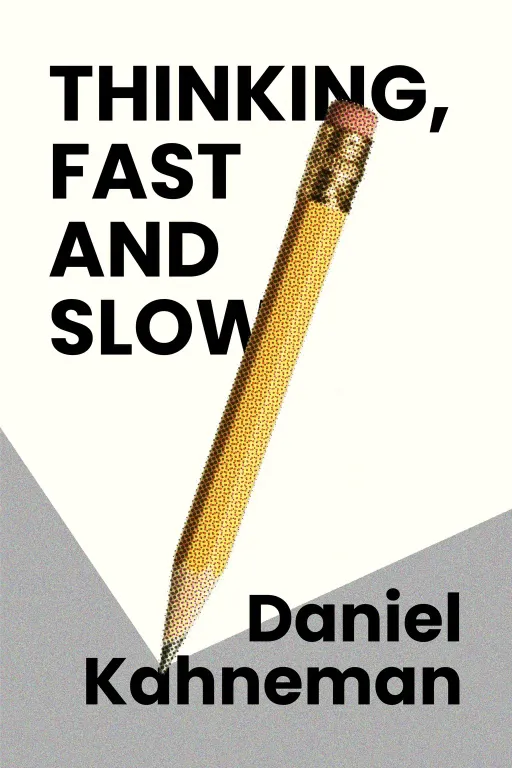
Nova: Exactly! And that’s why today we’re diving into a fascinating area that directly addresses this: mastering critical thinking for clinical excellence, heavily inspired by two seminal works: Daniel Kahneman’s "Thinking, Fast and Slow" and Philip Tetlock and Dan Gardner’s "Superforecasting: The Art and Science of Prediction." What’s particularly compelling about Kahneman is his background—he’s a Nobel laureate in Economic Sciences, despite being a psychologist. He brought a whole new lens to understanding human judgment and decision-making, showing us just how irrational we can be.
Atlas: That’s amazing! A psychologist winning an economics Nobel. It really highlights how deeply intertwined our cognitive processes are with seemingly objective fields. So, how do these two books, focusing on thinking and prediction, come together to sharpen clinical judgment?
The Mind's Edge: Sharpening Clinical Judgment
SECTION
Nova: Well, it starts with Kahneman's revolutionary work on System 1 and System 2 thinking. Think of System 1 as our intuitive, fast, emotional brain—the one that gives you that gut feeling. System 2 is the slower, more deliberate, logical brain. In a clinical setting, System 1 is fantastic for rapid assessments, like recognizing a common emergency. You see a patient, you instantly recognize the pattern, and you act.
Atlas: So, System 1 is like the seasoned clinician who walks into a room and just something’s off, without consciously articulating why. It’s experience distilled into intuition.
Nova: Precisely. But here's the rub: System 1 is also prone to biases. Confirmation bias, for instance, where you seek out information that confirms your initial hunches and ignore anything that contradicts them. Or anchoring bias, where your first piece of information heavily influences subsequent judgments. Imagine a doctor seeing a patient with vague symptoms, and their mind immediately anchors on a rare diagnosis they recently read about.
Atlas: Hold on, so you’re saying that the very intuition that makes an experienced clinician efficient can also be their downfall? That’s a bit out there. How do you even begin to mitigate something so ingrained?
Nova: That’s where Kahneman’s work becomes a powerful tool. He doesn't say System 1 is bad; he says we need to understand its limitations and know when to engage System 2—the slower, more analytical process. For example, before making a critical clinical decision, pausing to consciously consider potential cognitive biases. It sounds simple, but it’s a deliberate act of engaging System 2. It's about building "thinking infrastructure" into our practice.
Atlas: So, it’s not about eliminating intuition, but about having a mental checklist, almost, to challenge that initial gut feeling. Like, "Is my current diagnosis being swayed by the first thing I saw, or am I truly evaluating all the evidence?"
Nova: Exactly. And this leads us beautifully into "Superforecasting." Tetlock and Gardner studied "superforecasters"—ordinary people who consistently make uncannily accurate predictions about world events. What they found wasn't magic, but a methodical approach to thinking. These superforecasters are masters of what Tetlock calls "probabilistic thinking." They don't just say "it will happen" or "it won't happen." They assign probabilities, constantly update their beliefs with new information, and actively seek out diverse perspectives.
Atlas: That’s fascinating. So, for a clinician, it’s not just about diagnosing what, but also predicting what —how a disease will progress, how a patient will respond to treatment, potential complications. It's about moving from a binary "sick/not sick" to a nuanced "there's a 70% chance of this outcome, and a 30% chance of that."
Nova: You've hit the nail on the head. Superforecasters are also incredibly good at breaking down complex problems into smaller, manageable parts. They use a technique called "Fermi estimation," where they make a series of educated guesses to arrive at a reasonable approximation. In a clinical context, this could mean breaking down a complex case into individual symptoms, potential pathophysiologies, and treatment responses, and then estimating the likelihood of each.
Atlas: So, if Kahneman gives us the framework for understanding we think, Tetlock and Gardner provide the toolkit for thinking and making more accurate predictions. This isn't just theory; it’s about tangible improvements in outcomes.
Applying Rationality in Complex Systems
SECTION
Nova: Absolutely. The "Tiny Step" from our content is a perfect example: before making a critical clinical decision, pause and consciously consider potential cognitive biases. Use a checklist if necessary. This isn't about being slow; it's about being. It's a System 2 intervention to check our System 1.
Atlas: That sounds like a powerful habit to cultivate. But how do you scale that? How do you move from an individual clinician doing this to an entire system? Because healthcare is a complex system, and individual brilliance often gets lost in systemic inertia.
Nova: That's the "Deep Question" we need to tackle: How can we systematically integrate critical thinking frameworks into daily clinical practice and mentorship programs to elevate collective decision-making? Tetlock’s research showed that even brief training in probabilistic thinking and bias awareness significantly improved forecasting accuracy. Imagine that applied across a hospital system.
Atlas: So, we're talking about embedding these principles into medical education, grand rounds, even daily ward rounds. It’s about creating a culture where challenging assumptions and consciously debiasing decisions isn't just encouraged, but expected.
Nova: Exactly. Think about mentorship. Instead of just teaching junior doctors "what to do," we teach them "how to think." We model the process of explicitly identifying biases, breaking down complex problems, and assigning probabilities. It’s about making the invisible process of expert judgment visible and teachable.
Atlas: That’s actually really inspiring. It means that clinical excellence isn't just about accumulating knowledge; it's about refining the very of thought. It's about giving clinicians the tools to navigate uncertainty with greater precision, which ultimately leads to better patient care. And for our listeners who are clinical innovators, who are always looking for that edge, this is paramount. It enables more precise diagnoses and effective interventions.
Synthesis & Takeaways
SECTION
Nova: The core of our podcast today is really an exploration of how understanding the architecture of our own minds, through the lens of Kahneman, and then systematically improving our predictive abilities, as shown by Tetlock and Gardner, can revolutionize clinical practice. It's about moving from relying solely on intuition to augmenting it with deliberate, bias-aware, probabilistic thinking.
Atlas: It’s a powerful call to action for anyone in a high-stakes field. It’s about embracing the unknown, as our user profile suggests, and seeing our expertise not as a limit, but as a foundation for continuous refinement. The tools are there; it's about integrating them.
Nova: And that integration starts with a single, conscious pause before a critical decision. It’s about asking yourself, "What biases might be at play here?" or "What's the actual probability of this outcome?" This shift in mindset, from certainty to informed probability, can be the most impactful intervention we can make.
Atlas: So, remember, the next time you're faced with a complex situation, whether it's a diagnosis or a life decision, take that tiny step. Pause. Engage your System 2. Ask the tough questions. It’s not just about being smart; it’s about thinking smarter.
Nova: This is Aibrary. Congratulations on your growth!