

The Art of Anticipation: Mastering Market Structure with Wyckoff & VSA
Golden Hook & Introduction
SECTION
Nova: Atlas, if you had to review "The Art of Anticipation: Mastering Market Structure with Wyckoff & VSA" in just five words, what would they be?
Atlas: Hmm… "Market decoded, profits encoded, finally!" Your turn!
Nova: "Beyond indicators, market's true rhythm."
Nova: That’s it, isn’t it? Today, we’re dissecting the market's deepest secrets, guided by two titans: Richard D. Wyckoff, a true pioneer of market analysis from the early 20th century, and John F. Carter, a wildly successful modern trader who brilliantly bridges classic theory with today's volatile markets.
Atlas: Oh, I like that. "Market's true rhythm." Because so many of us are just dancing to the wrong beat, right? We’re looking at the surface, the squiggly lines, the news headlines, and missing the actual conductor. Wyckoff, I imagine, is like the original score.
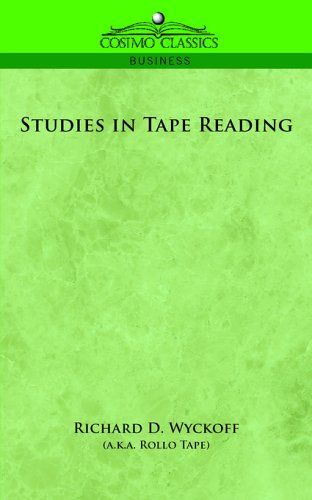
Nova: Exactly! Wyckoff's seminal work, "Studies in Tape Reading," wasn't just a book; it was a revelation. Back when trading floors buzzed with energy, he was meticulously observing the interplay of supply and demand, long before complex algorithms. He was essentially mapping the invisible footprint of institutional money. He saw patterns that everyone else dismissed as noise.
Atlas: That makes me wonder, how does someone even to "read the tape" in an era dominated by screens and algorithms? I mean, for a lot of our listeners who are deep into technical analysis, they’re looking for that next edge, that refinement of their process, but it often feels like we’re just reacting to price, not understanding what’s truly driving it.
Unmasking the Market's Hidden Cycles: Wyckoff's Footprint
SECTION
Nova: That’s precisely where Wyckoff comes in. He identified four fundamental market phases: accumulation, markup, distribution, and markdown. Think of it like a theatrical play with four acts, and the institutions are the lead actors, quietly setting the stage before the drama unfolds.
Atlas: So you're saying there's a script, and we just need to learn how to read it? That sounds a bit out there for someone who’s used to just glancing at an RSI or a moving average. What exactly is "accumulation," for example? How does that even look?
Nova: Well, accumulation is Act One. It’s when the 'smart money' – the big institutions – quietly begin buying up shares of an asset, often after a significant decline. The price might be moving sideways, maybe even dropping slightly, but beneath the surface, there's heavy buying. Imagine a giant sponge soaking up all the selling pressure. The key here is that they don't want to drive the price up too fast, they want to acquire as much as possible at low prices.
Atlas: So basically, that period that feels like death to a lot of traders—that long, boring consolidation where everyone gets frustrated and sells out—that’s actually where the big players are getting in? That’s kind of heartbreaking, but also really insightful.
Nova: It is! And Wyckoff identified specific patterns within this sideways movement, like the "spring" or "shakeout." This is a quick, sharp dip below the accumulation range, designed to trick remaining weak holders into selling, allowing institutions to scoop up even more shares at bargain prices. It’s a classic move to flush out the last of the retail sellers before the real move begins.
Atlas: Wow, that’s actually really inspiring. So, if you understand this, you wouldn't just be for a breakout; you’d be recognizing the groundwork being laid. You’d be looking for these specific tricks, these shakeouts, as confirmation that institutional buying is actually happening. It’s like knowing the secret handshake.
Nova: Precisely. Once accumulation is complete, we enter Act Two: markup. This is when the price begins its sustained upward trend, often with increasing volume and strong demand. The smart money has done its buying, and now the market is moving in their favor. It’s the easiest phase to make money, but it only happens accumulation.
Atlas: So it’s not about chasing the rocket; it’s about being on the launchpad. That fundamentally changes how you approach entry points for long trades. Instead of just jumping in when something starts to run, you’re looking for those quiet, deliberate phases where the foundation is being built.
From Theory to Edge: Applying Wyckoff & VSA for Strategic Trading
SECTION
Nova: And this is where John F. Carter, in "Mastering the Trade," really shines. He takes Wyckoff's foundational insights and integrates them with modern technical analysis – things like Volume Spread Analysis and specific candlestick patterns – to give traders practical, high-probability setups. He essentially gives you the tools to Wyckoff's acts playing out in real-time on your charts.
Atlas: Okay, so Wyckoff gives us the "what," and Carter gives us the "how." For someone who’s looking to refine their entry and exit points, especially in volatile markets, this sounds like gold. But how does this apply to the opposite end of the spectrum – distribution and markdown? Because that’s where the psychological battle between buyers and sellers really gets intense, where fear and greed often take over.
Nova: It absolutely does. Distribution, Act Three, is accumulation in reverse. This is when institutions, having ridden the markup phase, begin to offload their shares. The price might still be moving sideways or even trying to push higher, but underneath, there’s heavy selling pressure. They’re selling into strength, into the optimism of retail traders who are now excitedly buying.
Atlas: In other words, the party looks like it’s still going strong, but the big players are already quietly slipping out the back door, leaving the latecomers to pick up the tab. That’s a powerful visual. So, the question from our user profile was, "How might recognizing phases of accumulation or distribution change your approach to holding trades through consolidation periods?" This sounds like the answer.
Nova: It is the answer. If you can identify a distribution phase, you’ll understand that the sideways movement, the failed attempts to rally, the increasing volume on down-bars – these aren't just "pauses" before another leg up. They are warning signs that institutions are selling. This insight fundamentally changes your strategy from "holding through" to "exiting strategically" or even "preparing to short."
Atlas: So, instead of being trapped in that psychological battle, hoping for a turnaround, you’re actually seeing the mechanics of what’s happening. You’re seeing the underlying power dynamics. That’s a huge shift from just reacting to what the price is doing. It’s about being proactive, not reactive.
Nova: Precisely. Carter provides detailed setups, combining Wyckoff’s understanding of the context with specific VSA signals – like high volume on a narrow spread candle at the top of a range – to confirm that distribution is underway. He gives you actionable ways to spot the institutional selling pressure before the markdown, Act Four, begins.
Atlas: That’s a great way to put it. It sounds like this approach transforms trading from a game of chance into more of a strategic chess match, where you're anticipating moves rather than just reacting to them. It’s about mastering the mechanics, as our listeners often seek, and gaining that deep understanding.
Synthesis & Takeaways
SECTION
Nova: Ultimately, what Wyckoff and Carter teach us is that the market isn't random. It’s a deliberate process driven by supply and demand, orchestrated by powerful players. By learning to read their footprints, we move beyond simple indicators and truly understand the market’s underlying intent.
Atlas: And that understanding, that insight into accumulation and distribution, is what allows you to trust your process more. It helps you navigate those frustrating consolidation periods not with anxiety, but with clarity. You know whether to hold, to exit, or even to flip your bias. It really is about seeing the game before it's played out.
Nova: It’s the ultimate edge for the disciplined trader and insightful analyst. It’s about cultivating a deep relationship with price action and volume, rather than just chasing headlines. It’s about mastery.
Atlas: So, for all our listeners who are driven by challenge and care about understanding the market at its deepest level, this isn't just about making more money; it's about becoming a better, more insightful market participant. It’s about transforming your perspective from a passive observer to an active interpreter of the market's true intent.
Nova: Absolutely. What if, instead of being swept away by market noise, you could consistently anticipate its true direction? Now that’s a question worth exploring.
Atlas: This is Aibrary. Congratulations on your growth!