

Built to Bend: Engineering Resilience from Earthquakes to Deep Tech Startups
Golden Hook & Introduction
SECTION
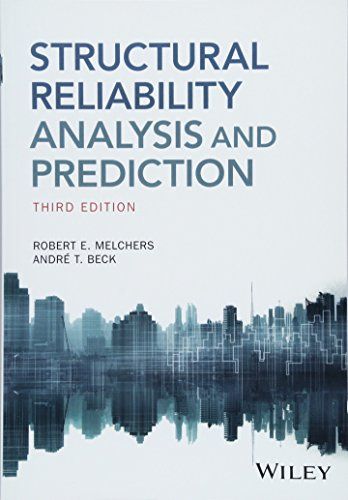
Nova: Imagine standing on the eightieth floor of a skyscraper during an eight point one magnitude earthquake. The floor beneath you is rolling, the glass is groaning, and the entire building is swaying several feet side to side. It feels terrifying, right? But here is the magic: the building isn't breaking. It is swaying like a tree in the wind because it was designed not to be perfectly rigid, but to bend and survive under extreme uncertainty. Welcome to another episode of the show! I am Nova, and today we are diving into a masterpiece of engineering literature: Structural Reliability Analysis and Prediction by Robert E. Melchers. Joining me is Nike, a brilliant tech innovator who wants to build deep tech startups that literally change the world. Nike, welcome!
Nike: Thanks, Nova! I am so excited to be here. You know, when people think of deep tech or startups, they usually think of software, AI, or quantum computing. But reading Melchers' work made me realize that the fundamental physics of how we design heavy, physical structures to survive earthquakes is incredibly relevant to how we build resilient tech companies and physical-digital systems.
Nova: Oh, absolutely! We love making those cross-disciplinary connections. Today, we are going to tackle this book from two fascinating angles. First, we will explore the shift from old-school, deterministic safety factors to modern probabilistic reliability analysis—basically, how engineers mathematically model the unknown. And second, we will look at the dynamic forces of earthquakes and how heavy structures are engineered to dance with chaotic energy rather than fight it. Ready to dive in, Nike?
Nike: Let's do it. I want to understand how we can apply these heavy-duty structural principles to any complex system we build.
Deep Dive into Core Topic 1
SECTION
Nova: Wonderful! Let's start with the basics of structural analysis. Historically, if you wanted to build a bridge or a building, you used what engineers call a deterministic factor of safety. You would calculate the maximum load you expected the bridge to carry—say, a hundred tons—and then you would build it to withstand three hundred tons. You just multiply by a safety factor of three. It sounds simple and safe, right?
Nike: It does sound safe on paper. But as an analytical thinker, my immediate question is: how do you know that one hundred tons is truly the absolute maximum load? What if a freak storm, a massive traffic jam, and an unexpected degradation of the concrete all happen at the exact same time?
Nova: Exactly! You hit the nail right on the head. That is precisely what Melchers addresses. He argues that both the load a structure experiences—which we call S—and the actual strength or resistance of the structure—which we call R—are not fixed, single numbers. They are random variables. They follow probability distributions.
Nike: Ah, so we are talking about bell curves!
Nova: Yes, exactly! Bell curves, or probability density functions. Think of it this way: the strength of the steel used in a beam isn't perfectly uniform. There are tiny manufacturing variations, micro-defects, and environmental wear. So, the resistance, R, is a curve. Similarly, the load, S, is also a curve because wind speeds, traffic, and snow accumulation fluctuate constantly.
Nike: So, if both resistance and load are curves, then failure isn't just a yes-or-no question. It is about where those two curves overlap!
Nova: Spot on, Nike! That is the core of Melchers' limit state design. We define a limit state function, let's call it Z, which is equal to Resistance minus Load, or Z equals R minus S. If Z is greater than zero, the structure is safe because its strength is greater than the load. But if Z is less than zero, the load exceeds the strength, and we have a structural failure. The probability of failure, which Melchers denotes as P-sub-f, is mathematically the probability that Z is less than zero. It is that tiny, overlapping area where the high-load tail of the load curve meets the low-strength tail of the resistance curve.
Nike: This is a massive paradigm shift. Instead of pretending we can build something that is one hundred percent safe, we are acknowledging that uncertainty is baked into reality. We are designing for an acceptable, calculated probability of failure. In deep tech, we face this all the time. If you are launching a rocket or building an autonomous vehicle system, you can't test for every single edge case in the universe. You have to model the probability of system failure and design for graceful degradation.
Nova: Yes! We love that term, graceful degradation. And Melchers gives us a tool to measure this, called the Reliability Index, represented by the Greek letter beta. Beta is essentially a measure of how many standard deviations our average safety margin is away from the failure boundary. A higher beta means the curves are farther apart, and the probability of failure is incredibly low. For a standard building, engineers might design for a beta of three point seven, which translates to a failure probability of about one in ten thousand over the lifetime of the structure.
Nike: That makes so much sense. But how do engineers actually calculate this beta when they are dealing with dozens of different variables? You have wind, temperature, material fatigue, soil settlement... how do you combine all of those curves?
Nova: It gets incredibly complex, which is why Melchers dedicates a huge portion of the book to methods like the First-Order Reliability Method, or FORM, and Monte Carlo simulations. With Monte Carlo, we use computers to run millions of virtual stress tests, randomly selecting values from our load and resistance distributions to see how often the system fails. It is like playing a massive game of digital 'what-if' to map out the boundaries of safety.
Nike: That is incredibly cool. In the startup world, we do something similar with financial modeling and stress-testing our business models, but doing it with physical structures where lives are on the line takes it to a whole new level. It shows that whether you are building a bridge or a deep tech company, you have to embrace probabilistic thinking. You can't just rely on a static safety factor. You have to understand the shape of your risk curves.
Deep Dive into Core Topic 2
SECTION
Nova: That transition is perfect, Nike, because it leads us right into our second core topic: heavy structures and their dynamics, specifically when they are hit by earthquakes. Up until now, we have been talking about static loads—things like snow sitting on a roof, which doesn't move much. But an earthquake is a dynamic load. It is a chaotic, time-dependent acceleration of the ground itself.
Nike: Right, and when the ground starts moving back and forth, a heavy structure doesn't just sit there. It has mass, which means it has inertia. According to Newton's second law, force equals mass times acceleration. So, the heavier the structure, the more inertial force it experiences during an earthquake. It is a bit of a paradox, isn't it? We build heavy structures to be strong, but their very weight makes them targets for seismic forces.
Nova: It is a huge paradox! And it gets even wilder when you introduce the concept of natural frequency and resonance. Every structure has a natural frequency—a specific rate at which it wants to vibrate if you pluck it like a guitar string. If the seismic waves of an earthquake happen to match the natural frequency of the building, you get resonance. The vibrations amplify, the building sways violently, and the internal stresses skyrocket. It is like pushing a child on a swing at just the right moment to make them go higher and higher.
Nike: I remember learning about the Tacoma Narrows Bridge collapse. That was a classic case of aerodynamic resonance, where the wind matched the bridge's natural frequency and literally twisted it apart. So, how do structural engineers prevent this from happening during an earthquake? How do you stop a heavy structure from resonating to death?
Nova: We have some incredibly clever engineering tricks for that, and they fall into two main categories: base isolation and damping. Let's start with base isolation. Imagine you are holding a tray with a glass of water. If you shake your hand violently, the water spills. But if you place the glass on a smooth, slippery plate on top of the tray, and then shake the tray, the plate slides, and the glass barely moves.
Nike: Ah! You are decoupling the glass from the shaking tray!
Nova: Exactly! That is base isolation. Engineers place massive elastomeric bearings—which are layers of rubber and steel—or sliding lead-rubber bearings under the foundation of a building. When the earthquake hits, the ground shakes violently, but the bearings deform and slide, absorbing the ground motion. The building itself gently glides above the chaos.
Nike: That is brilliant. You are essentially creating a physical low-pass filter for seismic energy. What about damping? How does that work?
Nova: Damping is all about dissipating energy. Think of the shock absorbers in your car. When you hit a bump, the springs compress, but the dampers—which are hydraulic cylinders filled with oil—slow down that motion and turn the kinetic energy into heat. In heavy structures, we use massive dampers. One of the most famous examples is in the Taipei 101 skyscraper in Taiwan. They suspended a giant, six hundred and sixty metric ton steel ball near the top of the tower. It is a Tuned Mass Damper. When wind or earthquakes push the building to the left, the giant ball sways to the right, counteracting the movement and stabilizing the structure.
Nike: Wow. A six hundred and sixty ton pendulum just hanging inside a skyscraper. That is mind-blowing! It is like a physical feedback loop that actively cancels out the destructive energy.
Nova: It really is! It is a beautiful dance between physics and engineering.
Nike: You know, listening to this, I can't help but draw a parallel to deep tech startups. When you are launching a startup in a highly volatile market, that market volatility is like an earthquake. If your startup is too rigid—if you have a fixed, unyielding business plan and massive overhead—the dynamic forces of the market will tear you apart. You will experience a business version of resonance, where your internal processes clash with external market shocks and cause a collapse.
Nova: Oh, that is a fantastic metaphor! So, how would a startup implement base isolation or damping?
Nike: Well, base isolation for a startup might mean decoupling your core technology from a single, volatile market application. You build a platform technology that can pivot to different industries if one market experiences a downturn. And damping? That is your cash runway and your organizational agility. When a shock hits—like a sudden shift in regulation or a competitor launching a major product—your team doesn't panic or break. You have 'dampers' in place, like flexible work structures and adaptive product development cycles, that absorb the shock, dissipate the stress, and keep the core structure stable.
Nova: Nike, that is an incredibly profound connection! We love how you took a highly technical civil engineering concept and mapped it perfectly onto organizational design. It shows that resilience isn't just about being strong; it is about how you manage energy and uncertainty.
Synthesis & Takeaways
SECTION
Nike: Absolutely. Reading Melchers' book really opened my eyes to the fact that engineering is never about achieving absolute certainty. It is about managing risk intelligently. Whether you are designing a bridge to withstand a one-in-a-thousand-year earthquake, or building a deep tech startup to revolutionize clean energy, you have to start by defining your limit states. You have to ask: 'What are the loads our system will face, what is our actual resistance, and how do we design the system to fail gracefully if those limits are exceeded?'
Nova: Yes! And we must remember that the goal isn't to build something indestructible—because nothing is truly indestructible. The goal is to build something reliable. By using tools like probabilistic analysis, base isolation, and dynamic damping, we can create systems that are robust, adaptable, and built to bend.
Nike: Exactly. For anyone out there who wants to be a job provider, an innovator, or a builder in the deep tech space, my challenge to you is this: stop designing for static, perfect conditions. Start designing for the dynamic, chaotic reality. Embrace the curves, calculate your reliability index, and build damping systems into your technology and your teams. That is how we build a future that can withstand any earthquake.
Nova: What a powerful call to action, Nike! Thank you so much for sharing your analytical insights and your passion for deep tech with us today. This has been an absolutely inspiring conversation.
Nike: Thank you, Nova! It was a blast.
Nova: And to all our listeners out there, thank you for tuning in. Remember to keep learning, keep connecting the dots, and we will see you in the next episode!