Adapting Your Career in a Shifting World
Golden Hook & Introduction
SECTION
Nova: What if everything you thought about climbing the career ladder – all that talk about sheer hard work and just being good at your job – was actually missing a huge, often unspoken, piece of the puzzle? The one that truly unlocks impact and influence?
Atlas: Whoa, that's a bold claim, Nova. I imagine a lot of our listeners, especially those who pride themselves on being diligent and competent, might be feeling a little challenged by that right now. Are you saying dedication isn't enough anymore?
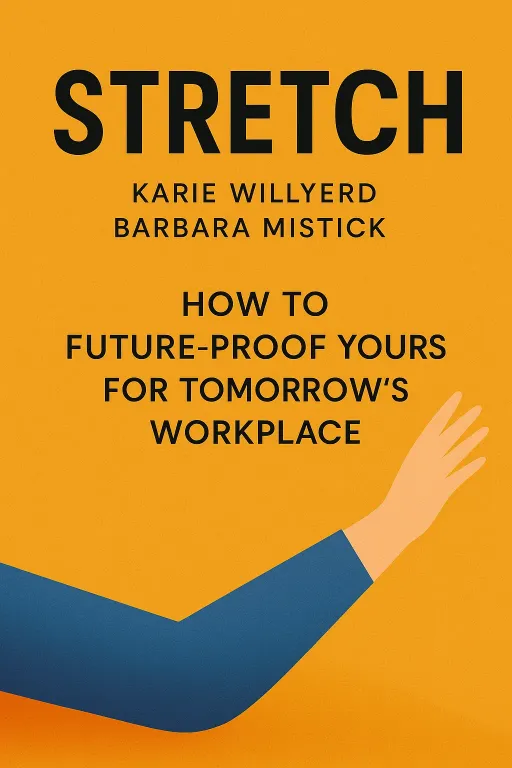
Nova: Absolutely, dedication is fundamental, Atlas. But it's not the thing. Today, we're diving into how to truly thrive and lead in a world that’s constantly shifting beneath our feet. We're pulling insights from two incredibly powerful books. First, we have Karie Willyerd and Barbara Mistick's "Stretch: How to Future-Proof Your Career in an Age of Disruption." Willyerd and Mistick are both seasoned experts in HR and talent management, bringing decades of practical corporate experience to their work, which gives "Stretch" a really grounded, actionable feel.
Atlas: That sounds incredibly relevant, especially for anyone who feels like they’re constantly trying to keep up. I mean, the pace of change is just relentless. For listeners who crave worthwhile knowledge and making impactful choices, that practical angle is key.
Nova: Exactly. And then, we're pairing that with a truly provocative work: Jeffrey Pfeffer's "Power: Why Some People Have It and Others Don't." Pfeffer is a highly respected professor at Stanford's Graduate School of Business, known for his incisive and often contrarian views on organizational behavior. His work is influential precisely because he's not afraid to challenge conventional wisdom, forcing us to look at the world as it actually is, not as we wish it were.
Atlas: Okay, 'power' – that word can feel a bit... uncomfortable for some, right? Like it implies something Machiavellian, or that success is less about merit and more about manipulation. I can see why it might be considered controversial.
Nova: It can, but Pfeffer's genius is in reframing it. He argues that understanding power isn't about being manipulative; it's about being effective, especially when you want to make a real impact. And that brings us perfectly to our first core idea: the transformative power of 'stretch' experiences.
The Power of 'Stretch' and Continuous Adaptation
SECTION
Nova: So, Willyerd and Mistick introduce this concept of 'stretch experiences.' Think of them as those assignments or projects that push you significantly beyond your current skill set or comfort zone. They're not just about doing more of what you already do well; they're about tackling something new, something challenging, something that forces you to adapt and grow.
Atlas: I'm curious, what does a 'stretch experience' actually look like in practice? For someone who values self-growth, this sounds appealing, but I imagine it could also feel incredibly daunting. Is it always about taking on a massive leadership role, or could it be something smaller?
Nova: It's a fantastic question, and it's definitely not always about the massive, intimidating leap. A stretch experience could be volunteering to lead a small cross-functional project where you have to collaborate with departments you've never worked with before. It could be taking on a client in an industry you know nothing about, forcing you to learn a new market quickly. Or even something like presenting your team's work to senior leadership when public speaking isn't your strong suit. The common thread is that it requires you to acquire new knowledge, develop new skills, or operate in an unfamiliar context.
Atlas: So it's about actively seeking that learning edge, not just waiting for opportunities to land in your lap. That makes sense, especially in today's environment where job descriptions change almost as fast as technology does. It's like building new muscles by lifting heavier weights, even when it’s uncomfortable.
Nova: Precisely. Willyerd and Mistick emphasize that this isn't just about personal development; it's paramount for career longevity. In an era of rapid technological advancement and shifting global economies, continuous learning and adaptation aren't optional extras; they're survival skills. The world is moving too fast for anyone to rely solely on what they learned five or ten years ago. These stretch experiences are your personal future-proofing strategy.
Atlas: I can see how that would help you evolve. But what if you take on a stretch experience and... you fall flat? You don't perform perfectly? For someone driven by a need for clarity and making impactful choices, the idea of failing publicly could be a huge deterrent.
Nova: That's a completely valid concern, Atlas. And it’s why the mindset around stretch is crucial. It’s not about perfection; it’s about learning. The authors would argue that even a "failed" stretch experience provides invaluable lessons. You learn about your limits, about what resources you need, about how to ask for help, or how to pivot. The growth comes from the and the, not solely from the outcome. It’s an investment in your adaptability, which is arguably more valuable than any single successful project.
Atlas: That reframes it beautifully. It’s a journey of discovery, as you say, where the process matters as much as the destination. But even with all that personal growth, there's another piece of the puzzle Jeffrey Pfeffer masterfully dissects that can determine whether those skills translate into actual impact.
Navigating Organizational Power Dynamics for Impact
SECTION
Nova: Exactly. This is where Pfeffer's "Power" comes in, and it's a profound counterpoint to the idea that hard work and good performance alone guarantee success. Pfeffer challenges the conventional wisdom that organizations are pure meritocracies. Instead, he argues that understanding and strategically utilizing power dynamics within organizations is absolutely essential for career progression and making a real impact.
Atlas: Okay, 'power dynamics.' For our listeners who are strategic thinkers, this might resonate, but for others, it might feel a little... cynical. It implies that being good at your job isn't enough, and you have to play some sort of political game. What does Pfeffer mean by "power," and why is it so essential, especially in times of change?
Nova: Pfeffer doesn't define power as manipulation or backstabbing. He defines it as the ability to get things done, to influence outcomes, and to overcome resistance. He points out that organizations are inherently political systems, and if you ignore that reality, you're essentially operating with one hand tied behind your back. Think about it: who gets the best resources? Who gets assigned to the most visible projects? Who gets promoted? It’s not always the person with the best ideas or the hardest worker; it's often the person who understands how to build and wield influence.
Atlas: So it's not about being Machiavellian, but rather understanding the rules of the game? That's a crucial distinction. For someone who wants to connect and persuade effectively, as many of our listeners do, this sounds like a foundational skill. Can you give an example of how this plays out?
Nova: Certainly. Pfeffer might describe a scenario where two equally competent project managers are vying for a critical new initiative. One manager, let's call her Sarah, focuses solely on delivering excellent results on her current projects, believing her work will speak for itself. The other, Mark, also delivers great work, but he also proactively builds relationships with key stakeholders, understands the political landscape of the organization, offers insights in strategic meetings, and makes sure his successes are visible to the right people. When the new initiative comes up, Mark, despite being no more "competent" than Sarah, is often the one who gets the assignment because he's cultivated the power to influence that decision.
Atlas: That's a bit of a tough pill to swallow for anyone who believes in a purely merit-based system. It challenges the very idea that if you just keep your head down and work hard, you'll be recognized. It's like working out at the gym, but not understanding the nutrition aspect – you're doing the work, but missing a key component for optimal results.
Nova: Exactly! Pfeffer argues that this "meritocracy myth" can actually be detrimental because it leads people to ignore crucial aspects of organizational life. In times of significant professional change or technological disruption, understanding power becomes even more critical. When resources are scarce, or new strategies are being formed, those who understand how to navigate power dynamics are better positioned to champion new ideas, secure resources, and lead the organization through uncertainty. They don't just react to change; they proactively shape it.
Atlas: So, it's about being intentional, not just about being good at your job. It's about understanding the network, the decision-makers, the unspoken priorities. It sounds like a blend of strategic thinking and interpersonal awareness, all aimed at having a greater impact.
Synthesis & Takeaways
SECTION
Nova: And this is where the magic happens, Atlas, when we bring "Stretch" and "Power" together. The deep question we posed was: how can you strategically leverage both adaptive learning and an understanding of organizational power to not just survive, but thrive and lead through periods of significant professional change and technological disruption?
Atlas: This is where it gets really strategic. For our listeners who are discerning about worthwhile knowledge and care about making impactful choices, how do these two concepts dance together in a way that feels empowering, not overwhelming?
Nova: Think of it like this: stretch experiences build your personal capabilities and expand your network. Every time you step outside your comfort zone, you're learning new skills, meeting new people, and often gaining visibility. Those are all inputs into building your power base – whether it's expert power, network power, or reputational power. And conversely, as you gain more power and influence, you're better positioned to and those challenging stretch opportunities. You can advocate for yourself to lead that big project, or get the resources for that innovative idea. The two concepts create a virtuous cycle.
Atlas: So, the 'stretch' makes you more capable and visible, which then helps you build 'power,' and that 'power' allows you to pursue even greater 'stretch' opportunities. It’s a feedback loop for growth and influence. That's a profound insight. For someone looking to build a strong foundation in their career, this is incredibly valuable. What's one tiny step someone could take this week to start integrating these ideas?
Nova: Here's a tiny step for everyone listening: This week, identify just 'stretch' opportunity in your current learning or work environment. It could be a small task, a new skill to learn, or a conversation you need to have. As you engage with it, consciously observe the existing power structures within that context. Who are the key decision-makers? Who influences them? How can you proactively adapt your approach and subtly influence the outcomes, not just through your hard work, but by understanding the dynamics at play?
Atlas: I love that. It’s about taking action, but with informed awareness. It transforms the idea of "just doing your job" into an active, strategic pursuit of growth and impact. It’s not about perfection, it’s about that journey of discovery.
Nova: Exactly. By intentionally seeking out stretch experiences and simultaneously sharpening your awareness of organizational power, you're not just reacting to a shifting world; you're actively shaping your place within it. You're moving from surviving to truly thriving and leading. It's about being both adaptable and influential.
Atlas: That gives me chills. What a powerful synthesis of ideas. It really highlights how much agency we actually have in our careers, even amidst all the disruption.
Nova: Absolutely. This is Aibrary. Congratulations on your growth!