

Unlocking Hidden Patterns: Why Data is Your New Superpower.
Golden Hook & Introduction
SECTION
Nova: What if the biggest obstacle to your next breakthrough isn't a lack of information, but a fundamental misunderstanding of the information you already have?
Atlas: Oh man, that hits home. I feel like I'm constantly swimming in data, drowning in spreadsheets, and still somehow missing the point. It's like I have all the ingredients, but no recipe.
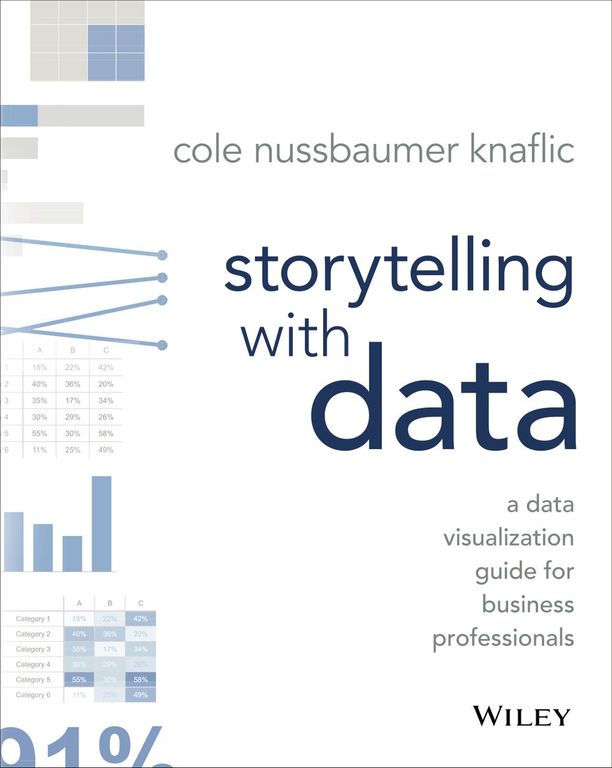
Nova: Exactly! It’s that exact feeling we’re tackling today. We're diving into how to transform that sea of numbers into your absolute superpower. And we're doing it through the lens of two incredibly insightful books: "Storytelling with Data" by Cole Nussbaumer Knaflic, and the monumental "Thinking, Fast and Slow" by Daniel Kahneman.
Atlas: Kahneman, right? The Nobel Prize winner? His work with Amos Tversky basically blew open our understanding of how our brains actually make decisions. That's a serious pedigree.
Nova: Absolutely. His groundbreaking research on human judgment and decision-making fundamentally reshaped behavioral economics. Today, we're really exploring how his insights, paired with Knaflic's practical guidance, can shift your perspective from seeing data as a daunting task to wielding it as a tool for clear communication and informed decision-making. First, we'll explore the crucial shift from seeing data as just numbers to understanding its power as a narrative tool. Then, we'll discuss how to overcome inherent human biases to present data that genuinely drives action and understanding.
Deep Dive into Core Topic 1: The Blind Spot: Data as Narrative, Not Just Numbers
SECTION
Atlas: So, how does Knaflic's work help us overcome this "spreadsheet blind spot" you mentioned? Because honestly, for a lot of our listeners who are trying to make an impact, data often feels like a barrier, not a bridge.
Nova: It’s a fantastic question, Atlas, because Knaflic's core premise is revolutionary in its simplicity: compelling data isn't just about accuracy; it's about clarity and narrative. Most people, especially aspiring innovators, view data as this raw, unpolished collection of figures. They think their job is just to present the numbers and let the data "speak for itself."
Atlas: Which it rarely does. It usually just mumbles.
Nova: Precisely! Imagine a sales team, for instance. They have their quarterly results. They build this incredibly dense, multi-colored chart showing sales growth across ten different regions, product lines, and customer segments. It's technically accurate, full of numbers, but it's a visual labyrinth. The executives stare at it, nodding politely, but they walk away with no real understanding of things are happening or they should do next.
Atlas: Oh, I know that feeling. You present all this hard work, and it just… falls flat. It’s like throwing a dictionary at someone and expecting them to write a novel.
Nova: Exactly! Knaflic teaches us to start not with the data, but with the and the. Instead of that chaotic chart, she’d suggest simplifying. Maybe you highlight just one crucial insight: "Our new product line A saw an unexpected 20% dip in sales in one specific region, despite overall growth." Then, you visualize dip clearly, perhaps with a simple bar chart comparing it to other regions, or showing its trend over time.
Atlas: So, you're saying it's about pruning the information, not just presenting all of it?
Nova: It’s about focusing attention. Knaflic talks about using "pre-attentive attributes"—things like color, size, and position—to immediately draw the eye to what matters. So, that dipping product line? You color it red, or make it stand out. You add a clear, concise headline that states the insight, not just "Quarterly Sales Report." The transformation from confusion to clarity is almost instantaneous. The executive now sees the problem, understands its magnitude, and is primed to ask, "What are we doing about it?"
Atlas: But wait, isn't that almost like… manipulating the data? Are we just "dumbing it down" or cherry-picking?
Nova: That’s a really important distinction. It’s not about manipulating or simplifying to the point of inaccuracy. It’s about making the accessible. It's about designing your data presentation to guide your audience's attention to the most critical information, the information that drives action, rather than overwhelming them with raw figures and hoping they find the needle in the haystack. The intent isn't to mislead but to illuminate.
Deep Dive into Core Topic 2: Overcoming Bias: Presenting Data for Action and Understanding
SECTION
Nova: And yet, even with a perfectly clear, narrative-driven data presentation, our human minds have a fascinating way of misinterpreting things. This is where Daniel Kahneman’s work in "Thinking, Fast and Slow" becomes absolutely indispensable.
Atlas: Oh, I'm already intrigued. So, we've got the clear story, but our brains are still playing tricks on us? How does that work?
Nova: Kahneman introduces us to two systems of thinking: System 1, which is fast, intuitive, and emotional, and System 2, which is slower, more deliberate, and logical. System 1 is brilliant for quick decisions, but it's also prone to biases. These biases can completely derail how we interpret even the clearest data.
Atlas: Like what kind of biases? Because I imagine a lot of our listeners are trying to present data to teams who might already have their minds made up about something.
Nova: Exactly! Take confirmation bias, for instance. Let's say a marketing team launches a new campaign on a social media platform they're really excited about. The initial data comes in, showing a slight uptick in engagement. System 1 kicks in, it's fast, it's intuitive. They this new platform to succeed, so they immediately attribute the uptick to the platform's success, feeling a rush of "I told you so."
Atlas: Even if that uptick is just random noise, or maybe it's just the early adopters who are always engaged?
Nova: Precisely. They're looking for evidence that their existing belief, ignoring other variables or the small sample size. Kahneman's work would compel that team to slow down, engage System 2. It would push them to question their assumptions, look for disconfirming evidence, or consider alternative explanations. Was the uptick statistically significant? Were there other factors at play, like a seasonal trend? What if we compare it to a control group?
Atlas: So, how do you present data to that ingrained bias? How do you gently, but firmly, steer a team that's already convinced of an outcome towards a more objective view?
Nova: It's about nudging System 2 awake. You might present the data in multiple formats, maybe a trend line alongside a bar chart, forcing a different perspective. You could use comparative benchmarks, showing how that "uptick" compares to industry averages or previous campaigns, which might reveal it's not as impressive as System 1 initially thought. Or, crucially, you explicitly state the limitations of the data. For example, "While we see a 2% increase, the sample size is small, and further testing is needed to confirm causality."
Atlas: That makes sense. It's like Knaflic gives us the tools to tell a clear story, and Kahneman gives us the wisdom to ensure that story is actually heard and processed without our brains getting in the way. So, combining narrative clarity with bias awareness, that's the real superpower, isn't it?
Nova: Absolutely. It's the ability to not just collect numbers, but to transform them into insights that cut through the noise, bypass our inherent mental shortcuts, and genuinely drive action. It's moving beyond mere collection to clear communication and truly informed decision-making.
Synthesis & Takeaways
SECTION
Nova: So, bringing it all together, the real superpower isn't just having data; it's the ability to translate it into undeniable, actionable truth for anyone. Knaflic gives us the practical tools to tell the right story with our numbers, making it clear and compelling. Kahneman, on the other hand, gives us the profound wisdom to understand how our minds work, allowing us to present that story in a way that bypasses our inherent mental traps and ensures it's truly understood and acted upon. It's the synergy of clear communication and psychological insight.
Atlas: That's actually really inspiring. It redefines what "data-driven" means. It's not just about crunching numbers; it's about being a master communicator and a student of human nature. So, for our listeners, how could presenting data differently change a recent decision they or their team made? Think about that for a moment.
Nova: And for anyone looking to make a bigger impact, to lead change, or simply to understand their world better, my challenge for you is this: find one piece of data you need to communicate this week. Apply just one principle from Knaflic – simplify, focus attention, tell a story. Then, apply one insight from Kahneman – anticipate a bias, present a counter-argument, or explicitly state limitations. See the immediate results.
Atlas: This is Aibrary. Congratulations on your growth!