

Unlocking AI's Secret Weapon: The Power of Storytelling
Golden Hook & Introduction
SECTION
Nova: Here's a thought: Your groundbreaking AI solution, the one that could change everything, might be completely ignored. Not because it’s bad, but because you're failing to tell its story. The best AI isn't about algorithms; it's about articulation.
Atlas: Whoa, Nova. That's a bold claim right out of the gate. I mean, I can relate to the frustration—you pour your heart and soul into building something brilliant, and then it just… sits there. But isn't the data supposed to speak for itself, especially in AI? It's all about the numbers, the models, the efficiency gains, right?
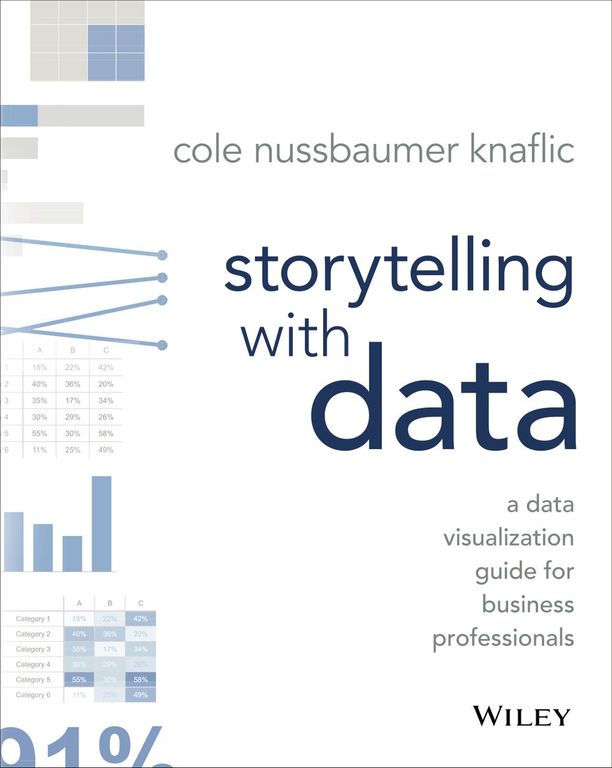
Nova: You'd think so, wouldn't you? That's the cold hard fact that so many brilliant AI minds struggle with. Raw data, in its purest form, is rarely persuasive. People connect with stories. And that's exactly what we're diving into today. We're cracking open two foundational texts that tackle this problem head-on: Cole Nussbaumer Knaflic's "Storytelling with Data," a book that became an instant classic for its practical, actionable approach, and Chip and Dan Heath's "Made to Stick," which has been widely acclaimed for revealing the psychological secrets behind why some ideas thrive and others die.
Atlas: Okay, so this isn't about just making pretty charts. This is about making AI adoption happen, communicating value, and building connections. That's a huge shift. How do these books help bridge that gap between complex AI and actual impact?
Nova: Exactly! Today we'll dive deep into this from two perspectives. First, we'll explore the 'why' and 'how' of data storytelling for AI, really getting into Knaflic's framework. Then, we'll discuss how to make those AI ideas truly 'sticky' and unforgettable using the Heath brothers' principles.
Deep Dive into Core Topic 1: The 'Why' and 'How' of Data Storytelling for AI
SECTION
Nova: So, let's start with the fundamental problem: the "cold fact." You can have the most sophisticated AI model, a neural network that predicts market trends with 99% accuracy, or an algorithm that optimizes supply chains like magic. But if you just present a spreadsheet full of accuracy metrics or a Gantt chart of efficiency gains, you'll likely get blank stares. It's like handing someone a bag of raw flour, sugar, and eggs and saying, "Here's your delicious cake!"
Atlas: That's a perfect analogy. I've definitely been on the receiving end of those blank stares. But wait, I thought the whole point of AI was its ability to process and present vast amounts of data. Why can't the numbers just speak for themselves? Isn't that the objective truth?
Nova: It's the objective truth, yes, but not the objective. Knaflic, who spent years as a data analyst at Google and brings incredible real-world credibility to her work, argues that data needs a narrator. She emphasizes that you have to understand your audience, what they care about, and what action you want them to take. Her book, "Storytelling with Data," isn't just about visualization; it’s a practical framework for designing and delivering compelling data stories.
Atlas: So, it's about empathy, almost? Understanding the human on the other side of the data? Give me an example. How does this play out in the real world?
Nova: Imagine a mid-sized manufacturing company struggling with unexpected equipment breakdowns, costing them millions in downtime. Their engineering team develops an AI predictive maintenance system. Initially, they present a dense report: "Our model achieves 92.5% accuracy in predicting component failure 72 hours in advance, reducing unplanned downtime by 30% month-over-month." The executives yawn.
Atlas: I can practically hear the yawns. What do they do differently with Knaflic's approach?
Nova: They reframe it. Instead of an accuracy metric, they start with a story. "Last month, our AI system detected a subtle anomaly in the XYZ machine's vibration patterns. It flagged a bearing failure 68 hours before it would have catastrophically failed, forcing a week of shutdown. Because of this early warning, we scheduled a proactive, 4-hour maintenance window, saving us an estimated two million dollars in lost production and preventing 20 layoffs that would have been necessary to offset the losses."
Atlas: Wow, that's a completely different picture. You went from a number to a narrative of averted disaster, direct financial impact, and even job security. That's powerful. So, how does Knaflic say we actually this? What's the first thing an AI developer should do differently, beyond just making a nicer chart?
Nova: The first step is always understanding your audience. Who are you talking to? What do they care about? Then, it's about clarity and focus. Knaflic says to eliminate clutter, literally stripping away anything that doesn't serve your message. Then, you direct attention to the most important parts of your data story, using visual cues. And finally, you tell the story. It sounds simple, but it's a discipline. It’s about moving from presenting information to crafting a narrative that resonates and persuades.
Deep Dive into Core Topic 2: Making AI Ideas 'Sticky': The Heath Brothers' SUCCESs Principles
SECTION
Nova: While Knaflic teaches us to tell the story with data, the Heath brothers, Chip and Dan, in their widely acclaimed book "Made to Stick," teach us in people's minds. Their work has had widespread impact across industries, focusing on the psychology of why some ideas thrive and others just fade away.
Atlas: "Sticky ideas"... so we're talking about more than just presenting the data nicely? How do you make something as abstract as, say, a new deep learning architecture or the concept of federated learning "sticky"? That sounds like a magic trick.
Nova: It's not magic, it's psychology! The Heath brothers reveal six principles that make ideas 'sticky' – they use the acronym SUCCESs: Simple, Unexpected, Concrete, Credible, Emotional, Stories. It's about inoculating your AI concepts against forgettability. Their research-backed approach draws heavily from cognitive psychology, showing us how to make abstract technical jargon into messages that are not just understood, but remembered and acted upon.
Atlas: Simple, Unexpected, Concrete, Credible, Emotional, Stories. That's a lot to unpack. Give me an example of how one of these principles could transform an abstract AI concept. Let's take 'federated learning,' which is a pretty complex idea about decentralized machine learning.
Nova: Perfect. Federated learning is highly technical: training algorithms on decentralized datasets without exchanging the raw data. How do you make that sticky? You make it and. Instead of explaining the distributed gradient descent, you say, "It's like baking a cake. We all share the recipe, but we never share our individual ingredients. Everyone bakes their own cake, and then we share feedback on how to improve the recipe. No one ever sees your flour or eggs."
Atlas: That's brilliant! "Sharing recipes, not ingredients." I can immediately grasp the core concept without needing a doctorate in distributed systems. That's incredibly effective. The 'unexpected' one is interesting. How do you surprise people with an AI solution without making it sound like sci-fi?
Nova: The 'Unexpected' principle is about breaking patterns and creating curiosity gaps. Instead of starting with what your AI, start with what it, or what it that no one thought possible. For instance, with federated learning, you could start with, "What if I told you we could train a powerful AI model on sensitive patient data from hundreds of hospitals, without a single hospital ever having to share their patient records with anyone?" That creates a curiosity gap. People think, "How is that even possible?!"
Atlas: That immediately grabs attention. And then you hit them with the "sharing recipes" analogy. Okay, I'm tracking. So if I'm trying to sell an AI solution, I'm not just showing them the numbers, I'm making them something about it, and making it so clear and surprising they can't forget it?
Nova: Precisely. And the 'Emotional' aspect is key there. Connect your AI solution to values, to identity, to what truly matters to your audience. If your AI is about efficiency, link it to reducing stress for employees, or freeing up time for innovation. If it's about security, link it to peace of mind and protecting what's valuable. It transforms the conversation from features to feelings, from algorithms to aspirations.
Synthesis & Takeaways
SECTION
Nova: So, bringing these two powerful ideas together: Knaflic gives us the blueprint for in presenting our data, ensuring our message is understood. The Heath brothers give us the psychological tools for, ensuring our message isn't just understood, but remembered, believed, and acted upon.
Atlas: This isn't just about pretty slides or clever taglines anymore. This is about actually getting AI adopted, demonstrating real ROI, and building those crucial connections that drive innovation. It's about moving from a purely technical mindset to a truly strategic communication one.
Nova: Absolutely. And the beauty of it is, you can start small. Our "Tiny Step" for listeners today is this: Take one recent AI project you've worked on. Identify the core problem it solves, the journey to the solution, and the measurable impact. Then, draft a 3-sentence story around these elements.
Atlas: And don't just tell me the features; tell me the of that AI, and how it saved the day for someone. Make it simple, make it concrete, make it emotional. That's how you really start to unlock the power of your AI.
Nova: It's a transformative approach for anyone in the AI space, from developers to product managers to leadership. Mastering this art of narrative isn’t just a soft skill; it's the secret weapon for AI adoption and success.
Atlas: This is the kind of actionable insight that truly makes a difference. It’s about making your work resonate beyond the technical specifications.
Nova: This is Aibrary. Congratulations on your growth!