

The 'Unseen Script': How to Craft Stories That Influence and Connect.
Golden Hook & Introduction
SECTION
Nova: Atlas, quick, tell me the exact average rainfall in Seattle last year.
Atlas: Nova, come on. Is this a pop quiz? I'm going to guess... enough to make a lot of coffee, but not enough to deter a tech bro. Why?
Nova: Because that number, while technically correct, means nothing to most people. But if I told you a story about a Seattle resident whose entire basement flooded last spring, and they lost everything, suddenly that rainfall statistic takes on a whole new weight. That's the core insight of what we're talking about today, drawing heavily from the principles found in, informed by works like and. Heath, a distinguished Stanford Business School professor, has dedicated years to researching what makes ideas memorable, and his work, alongside Knaflic's incredibly practical guide, offers exceptionally actionable frameworks for anyone looking to truly connect and inspire.
Atlas: Oh, I like that. So we're moving beyond the numbers game and into the human experience. That’s going to resonate with anyone who’s ever faced a wall of blank stares during a presentation.
The Persuasive Power of Narrative
SECTION
Nova: Exactly. We often assume that if we just present enough data, enough facts, people will naturally come to the same logical conclusion we have. But the cold fact is, data and facts alone rarely persuade. Stories do. To genuinely influence and connect, you need to transcend mere information and craft narratives that resonate emotionally and stick in people's minds. It's how leaders inspire, how movements gain traction.
Atlas: So, you're saying our brains are wired for stories, not spreadsheets? But what about logical arguments? Don't they have a place?
Nova: They absolutely do, but stories are the delivery mechanism for those logical arguments. Think about it: a well-told story activates multiple parts of the brain, not just the language processing centers. It evokes empathy, it creates a shared experience, and it makes the information far more memorable. It's the difference between hearing about a problem and it.
Atlas: I can see that. For someone trying to get buy-in on a new project, how do they bridge that gap between the data they have and the story they need?
Nova: Let's consider a classic example in the charity world. There was a campaign that aimed to raise funds for clean water. One approach presented overwhelming statistics: "Five million people lack access to clean water worldwide." It was accurate, it was dire, but it was also abstract. The donations were modest.
Atlas: Right, it's almost too big to grasp. You kind of shut down.
Nova: Precisely. Then, another campaign came along. They focused on a single individual: a young girl named Aisha, living in a small village. They told her story: how every morning, she walked for two hours to a contaminated well, the fear her family had of her getting sick, her dreams of going to school but being too exhausted from carrying water. They showed her face, her village.
Atlas: Wow. That gives me chills.
Nova: That campaign, focusing on Aisha's personal narrative, raised significantly more funds. The data about five million people became real and urgent through one child's experience. You weren't just donating to a statistic; you were helping Aisha. The cause, the process, the outcome were all encapsulated in her struggle, making the listener feel they were experiencing it firsthand. That's the emotional pull of narrative. It moves beyond information to inspiration.
Crafting 'Sticky' Stories: The SUCCESs Framework
SECTION
Nova: Okay, so we know stories work. But how do you a story work? How do you make it 'sticky,' so it doesn't just fade away after a day? This is where Chip Heath's work, particularly from "Made to Stick," becomes invaluable. He and his brother Dan identified six principles that make ideas stick, forming the acronym SUCCESs: Simple, Unexpected, Concrete, Credible, Emotional, and Stories.
Atlas: Isn't that just common sense, though? Like, 'be clear, be interesting'?
Nova: It sounds like common sense, but it’s remarkably difficult to execute consistently. The power of SUCCESs is in giving us a framework to stickiness. Take "Simple" – it's about finding the core, essential idea. "Unexpected" means breaking a pattern, surprising your audience. "Concrete" means using tangible details, not abstractions.
Atlas: Okay, so, like, instead of saying, "Our company provides excellent customer service," you tell a story about a specific customer service interaction?
Nova: Exactly! Let's take a classic urban legend that perfectly illustrates SUCCESs: the Nordstrom tire story. The tale goes that a customer walked into a Nordstrom department store, wanting to return a set of tires. Now, Nordstrom doesn't sell tires. Never has.
Atlas: Hold on. They don't sell tires? So what happened?
Nova: The sales associate, without batting an eye, took the tires, processed a full refund, and the customer left happy.
Atlas: That’s incredible! But wait, that sounds a bit out there. Did it actually happen?
Nova: The truth of its veracity is secondary to its power as a story. It's Simple: Nordstrom provides amazing service, even if it hurts their bottom line. It's Unexpected: a tire return at a clothing store! It's Concrete: you can picture the scene. It's Credible: it like the legendary customer service Nordstrom is known for. It's Emotional: it evokes delight and trust in the brand. And it a Story. Even if it's apocryphal, it perfectly encapsulates the brand's message.
Atlas: That’s a great way to put it. So, for our listeners, how do you make company's quarterly report 'unexpected' or 'emotional' without being manipulative?
Nova: That’s the art. "Unexpected" might mean starting with a counter-intuitive finding before revealing the context. "Emotional" isn't about forced sentimentality, but connecting to the deeper human consequences or aspirations. For a quarterly report, instead of just numbers, tell the story of a customer whose life was genuinely improved by your product, or a team that overcame a significant challenge to hit a target. That gives the numbers meaning.
From Data to Drama: Visualizing Insights with Storytelling
SECTION
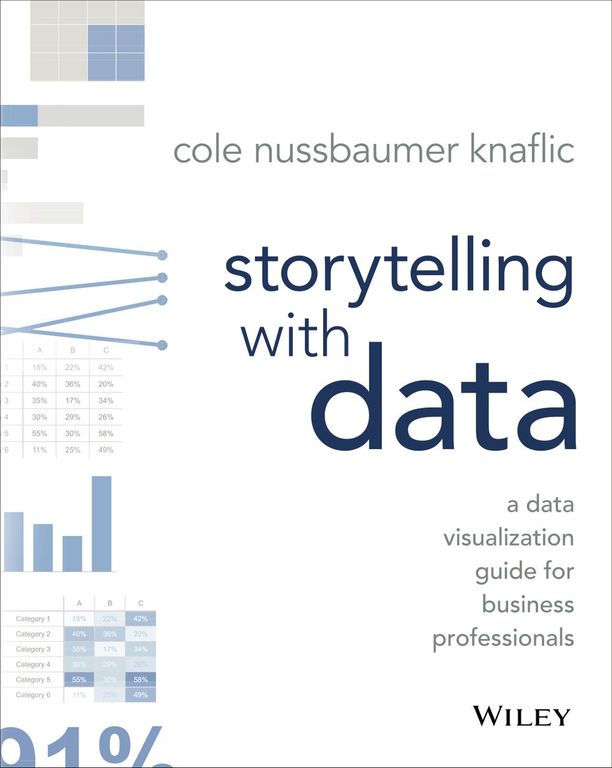
Nova: And speaking of dry reports, let's tackle data. Cole Nussbaumer Knaflic, in "Storytelling with Data," shows us how to turn a bar chart into a bestseller. Her core message is to treat data visualization not as an end in itself, but as a narrative. It's about identifying the "what," the "so what," and the "now what."
Atlas: So it's like, don't just dump the ingredients on the table, actually cook a meal?
Nova: Exactly! Imagine a sales team presenting complex spreadsheets. Pages of numbers, endless rows and columns. Most people's eyes glaze over. Knaflic's method would involve, first, removing all the clutter – anything that doesn't directly serve your message. Then, you highlight one key trend with a simple, annotated line graph. You tell the story of that trend matters, what its implications are, and crucially, propose.
Atlas: I can see how that would be... way more effective. But how do you avoid just making pretty pictures? Doesn't the data still need to speak for itself?
Nova: The data always speaks for itself, but your job as the storyteller is to give it a microphone and a stage. It's not about distorting the data; it's about guiding the audience's eye, drawing their attention to what's most important, and explaining the significance. Use text strategically, not just as labels, but as narrative cues. What's the headline? What's the key takeaway? Don't make your audience hunt for it.
Atlas: That makes me wonder, what’s a tiny step a leader could take to start applying this? If they're presenting to a team tomorrow, what's one immediate change?
Nova: The tiny step is to identify one anecdote or personal story that could make your point more memorable. Whether you're presenting data, a new strategy, or just giving feedback, find that one relatable human element. It could be a customer success story, a personal learning experience, or even a brief, relevant historical example. That's your entry point into the unseen script.
Synthesis & Takeaways
SECTION
Nova: So, bringing it all together, we've explored why stories inherently persuade more than facts, how the SUCCESs framework helps craft unforgettable messages, and finally, how to transform even the driest data into a compelling narrative. The overarching principle is that true influence and connection come from engaging people's hearts and minds, not just their logical faculties.
Atlas: So, for our listeners who are trying to lead with quiet confidence, who are striving for executive presence, is the takeaway simply 'tell more stories'?
Nova: It’s more nuanced than that. It's about storytelling. It's about understanding that every piece of communication has an 'unseen script' – the narrative it's truly conveying. The goal is to consciously write that script. It’s about identifying your core message, finding an authentic anecdote or example, and structuring it with purpose, using those SUCCESs principles. It's not about fabricating; it's about revealing the human truth within your message.
Atlas: That’s actually really inspiring. It means that whether you're presenting a quarterly report or resolving a conflict, you have the power to connect on a deeper level. It’s about being authentic and finding the human element in everything.
Nova: Absolutely. Your experiences are valuable, your perspective matters. Trust your voice and share the stories that only you can tell.
Atlas: This is Aibrary. Congratulations on your growth!