

The Unseen Advantage: Rethinking Data Analytics for Strategic Impact.
Golden Hook & Introduction
SECTION
Nova: Atlas, quick, word association: "data presentation."
Atlas: Oh man, "sleep-inducing spreadsheet apocalypse"?
Nova: Exactly! But what if your data could be the most compelling story in the room? Not a sedative, but a strategic weapon?
Atlas: That sounds rough, but I like where you're going with this. You're talking about rescuing data from the dungeon of boredom.
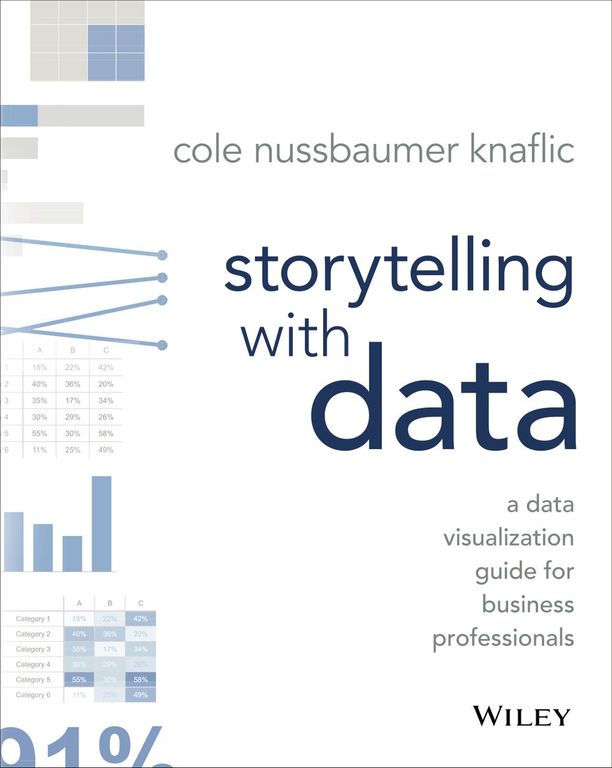
Nova: Precisely. Today, we're diving into how to turn that "spreadsheet apocalypse" into strategic impact, guided by two cornerstone books: "Storytelling with Data" by Cole Nussbaumer Knaflic and "Made to Stick" by Chip Heath and Dan Heath. Knaflic, with her background leading analytics at Google, really grounded this idea in real-world application, showing us how to make complex data accessible.
Atlas: And the Heath brothers, from their academic posts at Stanford and Duke, brought the research-backed principles for making any idea unforgettable. That's a powerful combination!
Nova: It absolutely is. Because Atlas, for a lot of people, data boring. They see numbers, charts, graphs, and their eyes just glaze over. Where's the story in a pivot table?
Atlas: Oh, I totally know that feeling. I imagine a lot of our listeners, especially those navigating complex strategic decisions, have been in that exact meeting, either presenting or being presented to, and felt that disconnect.
The Data-Narrative Gap: Turning Noise into Insight
SECTION
Nova: That's exactly "The Blind Spot" we need to talk about. Raw data, in its purest form, is just noise without a narrative. Many brilliant strategic innovators might uncover groundbreaking insights, but if they can't communicate them effectively, those insights remain unheard.
Atlas: Hold on, so someone could do everything right, crunch all the numbers, find the golden nugget, but if they don't tell a story, it's all for nothing? That sounds incredibly frustrating.
Nova: It is! Imagine Dr. Anya Sharma, a brilliant data scientist. She spent months analyzing user behavior, uncovered a critical flaw in a product's retention, buried deep in complex churn metrics. Her presentation was a masterpiece of statistical rigor: dense slide decks, intricate charts, all technically impeccable.
Atlas: I can see it now. Rows and rows of numbers, every data point accounted for.
Nova: Exactly. But the executive team? They were glazed over. They heard about p-values and regression models, but they didn't understand the "so what." No one grasped the urgency, no action was taken. Her profound insights died on the vine, and the product continued to hemorrhage users.
Atlas: Wow, that’s heartbreaking. So it's not about the quality of the insight itself, but the of it. I imagine a lot of our listeners who are managing high-pressure teams, or trying to drive meaningful outcomes, have experienced this firsthand.
Nova: Absolutely. Her data screaming, but the executives heard static. Knaflic argues that the most effective data presentations have a beginning, middle, and end, just like any good story. It's about guiding your audience to a specific insight or action, not just dumping information.
Atlas: Right, like building a bridge from the data silo to the decision-making table. But how do you even begin to find that story? Is it just about making pretty charts?
Nova: Well, pretty charts help, but it's much deeper. It's about identifying the protagonist—the user, the trend, the market—the conflict, and the resolution. It's about understanding your audience and what need to hear to be moved, not just what data you.
Crafting Unforgettable Data Stories: Simplicity, Emotion, and Action
SECTION
Nova: And that naturally leads us to our second core idea: how to actually those unforgettable data stories. This is where the Heath brothers' "Made to Stick" principles beautifully complement Knaflic's "Storytelling with Data."
Atlas: Okay, so once we know we need a story, how do we make it stick? Because there are a lot of stories out there.
Nova: The Heath brothers give us a powerful framework: SUCCESs – Simplicity, Unexpectedness, Concreteness, Credibility, Emotional appeal, and Stories. Think back to Dr. Sharma. Her presentation lacked all of these. Now, imagine Mr. Leo Chen, facing a similar user retention problem.
Nova: Leo started his presentation not with a spreadsheet, but with a vivid, relatable anecdote about a single user's frustrating journey trying to use their product. He then showed just one simple, concrete chart illustrating a clear downward trend, not a dozen complex ones.
Atlas: So he started with the human element, the "story" part of SUCCESs.
Nova: Exactly. Then, his proposed solution was framed not as "implementing a new algorithm," but as "rescuing our loyal customers." He used emotional language, built credibility by focusing on a small, verifiable data point that clearly illustrated the larger trend, and kept his message incredibly simple.
Atlas: Wow, that’s a perfect example. The executive team wasn't just informed; they were immediately galvanized into action, allocating resources to fix the issue. So it's not about data, necessarily, but data presentation.
Nova: Precisely. The Heath brothers talk about "the curse of knowledge"—we know so much, we forget what it's like not to know. Simplicity means stripping away jargon. Concreteness means using examples a five-year-old can understand.
Atlas: I imagine a lot of our listeners who are trying to balance innovation with empathetic team scaling would really benefit from thinking about the emotional appeal here. It's not just about cold facts, it's about connecting on a human level.
Nova: Absolutely. And emotional appeal? That's what makes people. You could have the most robust data, but if it doesn't tap into something human—fear of loss, hope for gain, a desire to help—it often falls flat.
Atlas: But what about credibility? If you're simplifying, are you losing the rigor? I mean, for a strategic innovator, accuracy is everything.
Nova: Excellent point. Credibility isn't about data; it's about. It can come from a credible source, a small, verifiable detail that anchors the larger trend, or even anti-authority—someone who know but does. You don't dumb down the data; you clarify the of the data. You simplify the message, not the truth.
Synthesis & Takeaways
SECTION
Nova: So, what we're really talking about today is that the true power of data isn't in its volume or its complexity, but in its voice. It’s about transforming raw analysis into undeniable strategic impact.
Atlas: So you’re saying that for anyone out there, especially those who navigate complexity and strive for meaningful outcomes, the challenge is clear: make your data a hero, not a footnote. Find the narrative, inject the emotion, and guide your audience to that crucial next step.
Nova: Precisely. Because great insights deserve to be heard. And when they are, that's when real strategic impact happens. This isn't just about making better presentations; it's about making better decisions and fostering better outcomes.
Atlas: That makes me wonder, what's the most compelling data story you've ever encountered, or perhaps even told yourself? Share your insights with us!
Nova: We'd love to hear from you.