

The Power of Story: Unlocking Empathy in Patient Education
Golden Hook & Introduction
SECTION
Nova: What if the very tools we rely on to communicate health—the facts, the figures, the cold, hard data—are actually making us effective? What if they're creating a chasm rather than a connection between care providers and patients?
Atlas: Whoa. That's a bold claim, Nova. Most of us are taught to prioritize accuracy, precision, the undeniable truth of the numbers. Are you really suggesting that our dedication to data could be a blind spot?
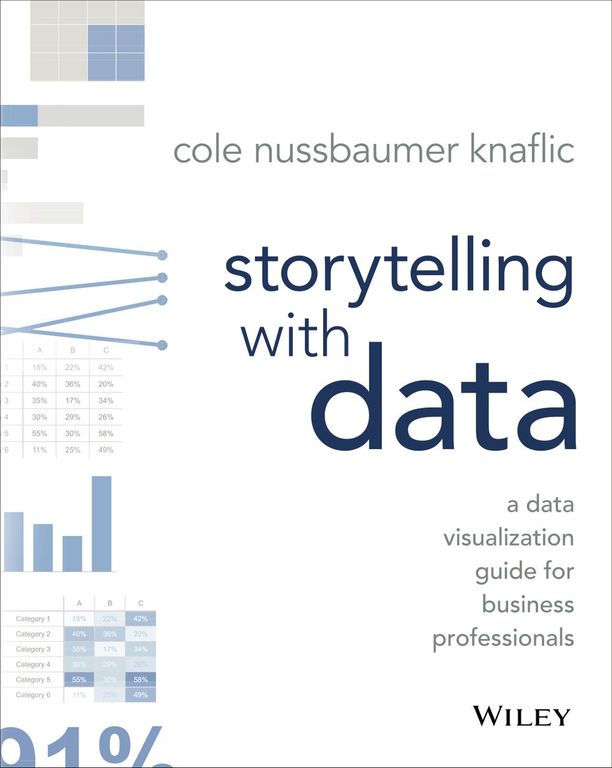
Nova: Absolutely, Atlas. And it's a blind spot we explore deeply today, drawing insights from a powerful synthesis we're calling "The Power of Story: Unlocking Empathy in Patient Education." It's an idea built on the shoulders of giants like Cole Nussbaumer Knaflic, author of "Storytelling with Data," and the brilliant Chip and Dan Heath, who gave us "Made to Stick."
Atlas: Oh, I like that. So we're talking about more than just making things sound pretty? We're talking about fundamental communication architecture?
Nova: Precisely. Knaflic, with her background in data visualization for tech giants, taught us how to humanize information, transforming dry spreadsheets into compelling narratives that drive action. And the Heath brothers, with their academic rigor and uncanny ability to distill complex psychology, showed us why some ideas endure and others just... fade away. Their combined wisdom offers a blueprint for patient communication that's not just informative, but truly transformative.
Atlas: For anyone who's ever tried to explain a complex medical diagnosis or a public health initiative, that promise of "transformative communication" sounds like a holy grail. It makes me wonder, though, where do we even begin to bridge that gap?
The Empathy Gap: Why Facts Fall Flat in Healthcare Communication
SECTION
Nova: Well, let's start with the problem itself, which is what we call "The Empathy Gap." Imagine trying to learn a new language by only reading a dictionary. You'd have all the words, all the definitions, but you'd miss the grammar, the culture, the that brings it all to life. That's often what healthcare communication feels like for patients. A deluge of facts—diagnosis codes, lab results, medication side effects—without the narrative thread to connect them.
Atlas: That's a great analogy. It feels like we're often speaking patients, not them. But how does simply adding a 'story' fundamentally change that dynamic? Is it just about making things 'nicer,' or is there a deeper cognitive shift at play when we move from facts to narrative?
Nova: It's absolutely a deeper cognitive shift. Stories are how our brains are wired to process and retain information. They provide context, purpose, and emotional resonance. Knaflic, even when she's talking about bar charts and pie graphs, is really advocating for humanizing information. She shows how a well-constructed narrative, even around data, helps people understand they're seeing, it matters, and about it. Think about it: instead of just a statistic about a disease's prevalence, you hear a patient's journey through diagnosis, the confusion, the fear, and then the path to understanding and management. That's far more impactful.
Atlas: So it's not just about softening the blow, it's about altering the of understanding. For someone trying to make sense of complex medical ethics, this idea of 'narrative architecture' seems incredibly powerful. But where do we even begin to find these stories, especially when the stakes are so high? It’s not like we can just make things up.
Nova: You're right, we're not talking about fabricating fiction. The stories are often already there, Atlas. They're embedded in every patient's experience, every clinical journey, every public health challenge. The doctor who sees a pattern in seemingly unrelated symptoms? That's a detective story. The patient who overcomes a chronic illness through lifestyle changes? That's a hero's journey. The challenge is in these inherent narratives and then them effectively, making them accessible and relatable. It's about seeing the human drama within the medical facts, not inventing it.
Atlas: That makes sense. It's about extraction and amplification, rather than creation from scratch. And that naturally leads me to my next question: once we've identified these stories, how do we make sure they land? How do we ensure they don't just wash over a patient like so much other information, but actually stick and lead to action?
Crafting 'Sticky' Health Narratives: Lessons from Data and Durability
SECTION
Nova: And that naturally leads us to the second key idea: how do we actually these stories so they don't just inform, but truly? Here, the Heath brothers' work in "Made to Stick" becomes invaluable. They identified six principles for making ideas "sticky": Simplicity, Unexpectedness, Concreteness, Credibility, Emotions, and Stories themselves—they call it SUCCESs.
Atlas: Simplicity makes sense, of course. Remove the jargon, get to the point. But 'Unexpectedness' in a health message? Isn't that risky? You don't want to surprise someone into misunderstanding crucial medical advice. How do we balance that 'surprise' factor with absolute clarity and credibility, especially for a communicator dealing with sensitive patient information?
Nova: That's a brilliant question, and it's a crucial distinction. Unexpectedness isn't about misleading; it's about breaking patterns of expectation to grab attention and foster curiosity. Think of it like this: instead of just saying "Eat your vegetables," which is simple but often ignored, an unexpected story might be about a patient who they were eating healthy but was missing a crucial micronutrient, leading to debilitating fatigue. Then, a simple dietary change, a surprising addition of a specific vegetable, led to a dramatic turnaround. The or the becomes unexpected, and therefore, memorable. It leverages 'Concreteness'—the specific vegetable, the specific fatigue—and 'Emotional' impact—the relief of recovery.
Atlas: That's a powerful reframing. It's about finding the human drama within the medical facts, not fabricating it. It’s about surprising people with truth, not trickery. But how do we ensure these stories are not just memorable, but? My concern, for anyone advocating for better health outcomes, is always the 'so what' for the individual patient or for systemic change. How do these principles translate into actual behavioral shifts?
Nova: That's where the 'Story' principle from SUCCESs really shines. The Heath brothers emphasize that stories provide a mental simulation. When we hear a compelling narrative, we implicitly put ourselves in the shoes of the protagonist. If the story is about someone successfully navigating a new treatment plan or adopting a healthier lifestyle, the listener mentally rehearses that process. Knaflic's work, which is all about guiding the audience's eye through data, applies here too: we're guiding the patient's imagination towards positive health behaviors and outcomes. It gives them a roadmap, not just a list of instructions.
Atlas: So, it's not just about conveying information, it's about creating a vicarious experience that prepares the patient for their own journey. It sounds like we're moving from informing to through narrative. That’s a profound shift in how we approach care.
Synthesis & Takeaways
SECTION
Nova: Precisely. The blend of Knaflic's data-driven narrative construction and the Heath brothers' stickiness principles offers a robust framework. It's about more than just presenting data or eliciting emotion; it’s about structure, clarity, and resonance. It's about understanding that the most effective communication isn't just logical; it's deeply human.
Atlas: So, what you're really saying is that empathy isn't just about feeling for someone; it's about designing communication that allows someone to truly and their own health journey. It’s a profound shift from mere information dissemination to shared experience. This isn't just a communication technique; it's almost an ethical imperative in healthcare, especially when we're talking about empowering patients to make informed decisions.
Nova: Absolutely. It's about empowering understanding, fostering genuine connection, and ultimately, improving health outcomes. It brings us back to that deep question: how might you reframe a common health message into a compelling story that resonates deeply with patients' experiences and concerns? Think about the ripple effect if every health message, from a doctor's office to a public health campaign, embraced this narrative power.
Atlas: And imagine the ripple effect if every health message, from a doctor's office to a public health campaign, embraced this narrative power. It could fundamentally change patient engagement and health outcomes, moving us towards a more compassionate and effective healthcare system. It’s about making care truly caring.
Nova: It really is. This is Aibrary. Congratulations on your growth!