

The Power of Story: Crafting Your Narrative for Lasting Impact
Golden Hook & Introduction
SECTION
Nova: Here's a thought: The truth, the cold, hard, undeniable truth, often fails. It falls flat. It gets ignored. What if the very facts you present are actually building walls, not bridges?
Atlas: Wow. That’s a bold statement, Nova. I think a lot of us, especially those of us who value data and concrete solutions, operate under the assumption that if the facts are strong enough, they’ll speak for themselves. That logic and evidence are inherently persuasive.
Nova: And that's precisely where we often stumble. We dump data, expecting it to magically transform into insight and action. But humans aren't wired for spreadsheets; we're wired for stories. And today, we're diving into how to bridge that gap with two brilliant guides.
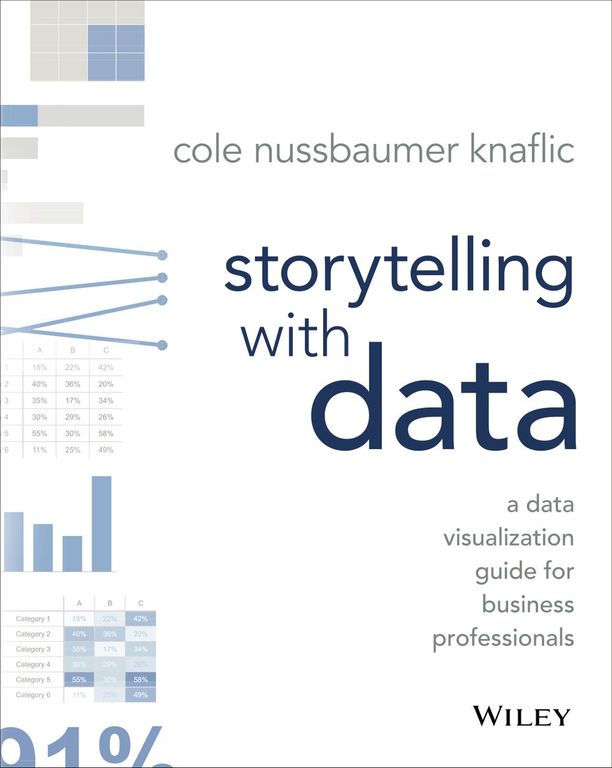
Atlas: Absolutely. We're talking about the incredible power of narrative. Specifically, we'll be looking at Cole Nussbaumer Knaflic's "Storytelling with Data," and then we’ll jump into "Made to Stick" by Chip and Dan Heath.
Nova: Knaflic, in particular, has a fascinating background that shaped her entire approach. She started in banking, then moved to Google, where she was essentially tasked with teaching data analysts how to communicate their complex findings to non-technical executives. This wasn't about making pretty charts; it was about making those charts. Her book distills that high-stakes, real-world experience into a pragmatic blueprint for impact.
Atlas: That's a critical distinction. It’s not just about visualization, but about transformation – turning raw information into something actionable. For anyone building robust systems or cultivating communities, getting your message across clearly is foundational.
Nova: Exactly. So, let's unpack how to do that, starting with Knaflic's insights into data storytelling.
The Art of Data Storytelling: Crafting Persuasive Narratives from Facts
SECTION
Nova: So, the first big idea from Knaflic is understanding the difference between exploratory and explanatory analysis. Most of us spend our time in the exploratory phase – digging through data, finding patterns, understanding what’s. But when it’s time to communicate, we often just dump the whole exploration onto our audience.
Atlas: I can definitely relate to that. You’ve done all this hard work, you’ve wrestled with the numbers, and you want to show your process, your rigor. But then people's eyes glaze over.
Nova: Precisely. Knaflic argues that for communication, you need to shift to analysis. This means you've already found the story, the key insight, and now your job is to tell it in a way that guides your audience directly to desired conclusion. It’s about being ruthless with your message.
Atlas: Ruthless. Okay, so how do you even begin to find that single, compelling narrative in a mountain of data? For someone who’s constantly analyzing complex metrics for, say, organizational health or community engagement, it can feel like trying to find a needle in a haystack, and then trying to make that needle sing.
Nova: That’s a great way to put it. It starts with clarity on three things: who is your audience, what do you want them to know, and what do you want them to? Once you have that, you can start building your narrative arc. Let me give you a quick, vivid scenario. Imagine a product manager, let’s call her Sarah, presenting quarterly sales figures to the executive team.
Atlas: Okay, I’m with you. High stakes.
Nova: Exactly. Sarah starts with a dense slide deck: twenty charts, all different colors, showing sales by region, by product, by quarter, year-over-year comparisons… The executives are nodding, but you can see them mentally checking out. They’re overwhelmed. They don't know what to focus on.
Atlas: That sounds rough, but it's a common scene. They're seeing data, not understanding.
Nova: Now, rewind. Sarah goes back to Knaflic’s principles. She realizes her key insight is this: "While overall sales are up 5%, 80% of that growth came from one new product line, masking stagnation and even decline in our core offerings." That's the story. It's concise. It has a challenge.
Atlas: That's a huge difference. It immediately frames the problem.
Nova: So, instead of twenty charts, she creates three. The first shows the overall 5% growth, but with a subtle, almost misleading positive framing. The second immediately breaks down that 5%, visually highlighting the disproportionate contribution of the new product, and the flatlining or dip in the others. The third slide then proposes a clear action: "We need to reallocate marketing spend and focus on revitalizing our core products, starting with a deep dive into customer feedback next quarter."
Atlas: That’s powerful. The cause was the single product line, the process was the misleading overall growth, and the outcome is a clear call to action and a shift in strategy. It’s a complete arc. You’ve got the problem, the challenge, and the proposed resolution.
Nova: Precisely. She’s not just presenting data; she’s guiding them on a journey to insight. Her visuals are clean, her words are precise, and her narrative is undeniable. The executives don't just see numbers; they the critical business challenge and the path forward.
Atlas: But wait, isn't there a risk of manipulating the data when you start "storytelling" it? For someone who values integrity and robust systems, that could feel like a slippery slope.
Nova: That's a crucial question, Atlas, and Knaflic addresses it head-on. The goal is never to manipulate or mislead. It’s about and. It’s about stripping away the noise to reveal the truth, not obscure it. It’s about choosing the most ethical and effective way to ensure your audience grasps the true implications of the data, so they can make informed decisions. Good data storytelling is about, not.
Atlas: I see. So it's about being a guide, not a magician. You're curating the experience for understanding.
Nova: Exactly. You’re making the data accessible and compelling.
Why Stories Stick: The Six Principles of Memorable Communication
SECTION
Nova: Now, once you have that clear, ethical data story, how do you make sure it actually? That it doesn't just evaporate the moment the meeting ends, or get lost in the deluge of other information we all face daily? This is where Chip and Dan Heath’s "Made to Stick" comes in.
Atlas: Oh, I love that book. The idea of "stickiness" is so powerful. For someone trying to build lasting value and sustainable growth, having ideas that resonate and endure is paramount. Our values, our mission – we want those to stick.
Nova: Absolutely. The Heath brothers identified six principles that make ideas "sticky," which they cleverly acronymized as SUCCESs: Simplicity, Unexpectedness, Concreteness, Credibility, Emotions, and Stories. We just talked about the narrative structure of stories, but it’s these other elements that elevate a good story to an unforgettable one.
Atlas: So, how do these principles ensure something truly resonates? What makes one message become an urban legend while another, perhaps even more important, just fades away?
Nova: Let’s focus on two: Concreteness and Unexpectedness. Concreteness is about making your ideas tangible. Instead of abstract concepts, use sensory details, specific names, and vivid imagery. The more concrete an idea, the easier it is for our brains to grasp and remember.
Atlas: That makes sense. It's like trying to remember a complex theory versus remembering a specific example of that theory in action. The example always wins.
Nova: Right? And then there's Unexpectedness. This is about breaking patterns, violating expectations, and creating a "knowledge gap" that your audience wants to fill. It's what grabs attention and holds curiosity.
Atlas: So you're saying it's about surprise, but surprise with a purpose. It's not just shock value.
Nova: Precisely. Let me give you a classic example that perfectly illustrates how Unexpectedness and Concreteness combine to make a story incredibly sticky, even if it’s completely untrue: the urban legend about Pop Rocks and Coca-Cola.
Atlas: Oh, I know this one! That if you mix them, your stomach explodes, right?
Nova: Exactly! Now, think about it. Is it true? No. But why did it spread like wildfire and persist for decades? It’s incredibly – candy and soda causing an explosion? That violates our expectations. And it’s incredibly – you can visualize the Pop Rocks fizzing, the soda bubbling, the stomach… well, you get the picture.
Atlas: That’s a perfect example. It's got that vivid, almost visceral quality. It’s memorable because it’s so specific and so surprising.
Nova: Now, contrast that with a well-meaning but ultimately forgettable corporate mission statement. Something like, "Our mission is to foster synergistic client-centric solutions for optimal stakeholder value."
Atlas: Oh, I've heard variations of that a hundred times. And I couldn't tell you a single word of it five minutes later.
Nova: See? It’s abstract, it’s generic, it’s not unexpected, and it certainly doesn’t evoke emotion or tell a story. It lacks nearly all the SUCCESs principles. For someone focused on building sustainable communities, how can these principles ensure our values aren't just words, but truly embedded and remembered by everyone?
Atlas: That's a critical question. It’s about translating those abstract values into something tangible. Instead of saying "we value innovation," maybe it's telling the story of an employee who took a risk on a new idea and how it transformed a process. Or for 'trust,' detailing a specific instance where the company prioritized integrity over short-term gain, even if it was difficult.
Nova: Exactly! You just made "innovation" and "trust" concrete and unexpected. You gave them a narrative. The Heath brothers also talk about the "curse of knowledge"—how once you know something, it's incredibly hard to imagine not knowing it. This is why we often struggle to make our ideas simple or concrete for others. We assume they have our context.
Atlas: That makes perfect sense. So, the trick is to constantly fight that curse, to break down our complex, nuanced strategies into simple, concrete narratives that defy expectations and connect emotionally. It's about designing our communication, not just delivering information.
Synthesis & Takeaways
SECTION
Nova: Absolutely, Atlas. What we’ve really explored today is that storytelling isn't just a communication trick; it's a fundamental human operating system for understanding, connection, and action. Whether you're presenting data, sharing a vision, or trying to make an idea stick, the narrative is the foundational architecture for influence.
Atlas: And it’s not about dumbing things down. It’s about building up understanding through clarity and resonance. It's about transforming information into an experience that inspires action and creates lasting impact, which is what anyone cultivating robust systems or vibrant communities truly strives for.
Nova: Think of it this way: even the most rigorous scientific papers are increasingly being asked for "story abstracts" or graphical summaries to convey their findings more effectively. The demand for narrative isn't going away; it's becoming essential. By consciously weaving narratives into your communication, you elevate your message from mere information to an unforgettable experience, driving deeper understanding and action.
Atlas: That’s a powerful insight. So, for our listeners, here’s a tiny step you can take this week, directly inspired by these ideas: think of one key insight you need to communicate. It could be for your team, your family, or a client. Now, outline a simple story structure for it – a beginning, a challenge, and a resolution. Try telling it that way, and see the difference.
Nova: And remember, whether you're an architect of systems or a cultivator of communities, your story is your most potent tool.
Atlas: This is Aibrary. Congratulations on your growth!