

The Narrative Advantage: Crafting Compelling Learning Experiences
Golden Hook & Introduction
SECTION
Nova: Atlas, if I told you that the secret to truly impactful learning wasn't more facts, but more fiction, what would you say?
Atlas: Oh man, I'd say you've either lost your mind or found the holy grail of education. Fiction over facts? That sounds a bit out there for someone always seeking advanced strategies.
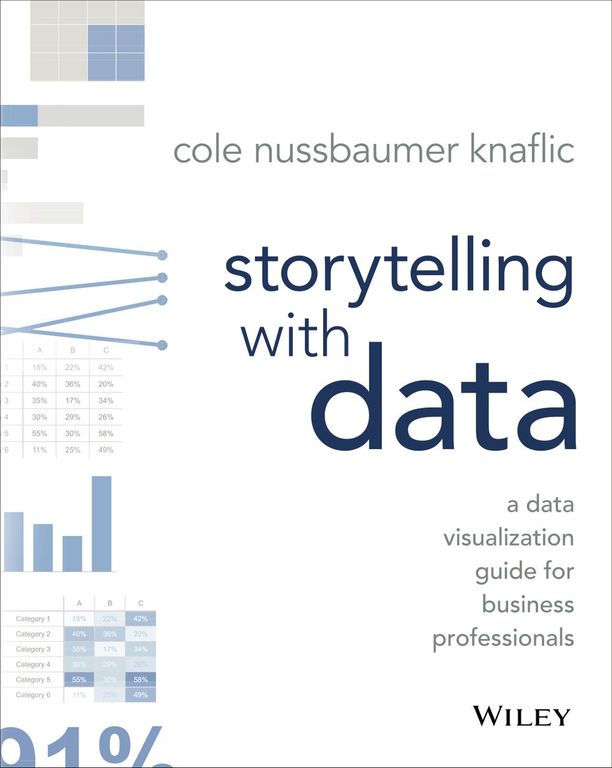
Nova: Well, prepare to have your mind both lost and found, because today we’re diving into the profound insights of what we’re calling "The Narrative Advantage: Crafting Compelling Learning Experiences." We’re drawing heavily from foundational works like Cole Nussbaumer Knaflic’s "Storytelling with Data" and Jonathan Gottschall’s "The Storytelling Animal."
Atlas: Gottschall! I've heard of him. Isn't he the literary scholar who argues we're all just walking bundles of stories?
Nova: Exactly! What’s so fascinating is that Gottschall, coming from a background in literature, brings this incredible interdisciplinary perspective. He argues that our brains are essentially 'storytelling animals,' constantly seeking and creating narratives to make sense of the chaos of the world. It's a concept he explores with both academic rigor and an engaging, accessible style that really makes you rethink how you process information.
Atlas: That's a great way to put it. So, we're talking about the deep evolutionary roots of our narrative hunger, and how it shapes our learning, rather than just presenting bullet points.
The Inherent Human Need for Narrative
SECTION
Nova: Precisely. The core idea is that facts alone rarely inspire. Our brains aren't just data banks. They're narrative processors. Think about it: a dry list of historical dates versus a dramatic account of a pivotal battle, complete with characters, motivations, and stakes. Which one do you remember? Which one do you?
Atlas: Oh, I love that. So you're saying our brains prefer a good yarn over hard truth? But wait, isn't learning about hard truths, about data and verifiable information? How does a story help me truly grasp, say, the complexities of quantum physics?
Nova: That’s the magic! Gottschall helps us understand that stories aren't just entertainment; they're our primary cognitive tool for understanding cause and effect. They provide context, emotional resonance, and a framework for memory. When information is embedded in a story, it bypasses the analytical brain and engages the emotional core, making it incredibly sticky. For example, think about trying to explain a complex scientific concept. You could list out all the properties of a cell, or you could tell the story of how a single cell divides, becoming a living organism, facing challenges, adapting. The latter creates a journey, a connection.
Atlas: I can definitely relate to that. I imagine a lot of our listeners who are leaders trying to cultivate growth are thinking, "This means our vision needs a compelling story, not just bullet points." It's about inspiring action and fostering continuous improvement through connection.
Nova: Absolutely. It’s about leveraging that innate human curiosity. When learning feels like an adventure, like a problem that unfolds like a narrative, it sparks engagement. It's the difference between memorizing a map and actually experiencing the journey.
Transforming Data into Engaging Narratives for Learning
SECTION
Nova: And that naturally leads us to the second key idea: how do we consciously integrate narrative structures to transform dry subjects into vibrant, memorable experiences? This is where Cole Nussbaumer Knaflic’s work in "Storytelling with Data" becomes indispensable. Her book isn't about fabricating tales; it's about finding the inherent narrative arc within existing information and presenting it in a way that resonates and persuades.
Atlas: Okay, so how do you even begin to find a story in a spreadsheet or a complex concept? Give me an example of turning something truly dry into a narrative. I've been thinking about how to personalize learning experiences in AI for literacy, and sometimes the data can feel so clinical.
Nova: That's a perfect example. Let's say you're looking at literacy rates in a specific community over time. The raw data might just be numbers on a graph. To storytell with that data, you identify the 'characters' – perhaps the children whose literacy is improving, or the educators working tirelessly. The 'plot' is the trend – the rise or fall in rates, the interventions made. The 'stakes' are the real-world impact: a child's future, a community's potential. You might visualize it not just as a line graph, but as a journey of a cohort of students, showing their struggles and triumphs. You emphasize the behind the numbers.
Atlas: That’s a great way to put it. So it’s like giving the data a voice, a heartbeat. It’s making it human. But what about for those of us designing learning experiences? How does this translate to making, say, a math lesson feel like an adventure?
Nova: Exactly. Instead of just presenting a formula, you frame it as a challenge. "Here's a problem, and this formula is the tool our protagonist needs to solve it." Or you create a scenario where the learner, perhaps through an AI-guided journey, has to make decisions based on mathematical principles to save a fictional kingdom. It's about designing problem-solving scenarios that capture attention, where the learning content is woven into an engaging story.
Designing Human-Centered AI Literacy Tools
SECTION
Nova: This brings us to the cutting edge: how do we infuse AI literacy tools with humanity? It's not just about AI delivering content; it’s about AI with the content. We can personalize learning experiences with AI, but narrative makes those experiences genuinely human-centered and effective.
Atlas: That's fascinating! So it's about moving beyond just algorithms and making AI-powered learning feel less like a machine and more like a wise, engaging mentor. How does this foster a deeper connection, especially for continuous improvement and equitable outcomes, which resonate with our 'Strategic Cultivator' listeners?
Nova: It's all about empathy and context. Imagine an AI tutor not just correcting a grammar mistake, but explaining that mistake matters in the context of a story the learner is writing, perhaps even offering a small narrative about how language structure creates clarity. Or for a leader, an AI tool could present data on team performance not as a dashboard, but as a narrative of collective growth, highlighting individual contributions as character arcs. This approach builds a deeper 'why' for learning, making the abstract processes of AI feel less alien and more like a collaborative journey.
Atlas: I can see how that would be a game-changer. I imagine a lot of our listeners who are leaders focused on impact are thinking, "How can I apply this to my team's growth?" It's not just about the metrics, but the story behind them.
Nova: Precisely. It’s about transforming a core concept you want learners to grasp—whether it's a new skill, a company value, or a complex scientific idea—into a simple, engaging story or a problem that unfolds like a narrative. That's the healing moment, the transformative power of narrative. It moves learning from instruction to inspiration.
Synthesis & Takeaways
SECTION
Nova: So, in essence, stories are not just decorations; they are the very architecture of understanding. Our innate human wiring for narrative isn't a weakness to overcome in learning; it's our greatest strength, waiting to be leveraged. When we consciously integrate narrative into our learning design, especially with advanced tools like AI, we don't just impart facts; we build meaning, foster connection, and create truly unforgettable experiences.
Atlas: I guess that makes sense. It's about embracing our humanity in the learning process. My takeaway is to always ask: What's the story here? How can I turn this information into a compelling journey for my audience, whether they're students or my team? It's about cultivating growth through connection.
Nova: Absolutely. And when you do that, you'll find that learning stops being a chore and starts being the adventure it was always meant to be.
Nova: This is Aibrary. Congratulations on your growth!