

The Data Whisperer: Crafting Stories That Drive Action.
Golden Hook & Introduction
SECTION
Nova: Everyone talks about being "data-driven" these days, right? It's the buzzword, the holy grail. But what if I told you most data, in its raw, unadorned form, is actually… incredibly boring? And worse, often ineffective at inspiring any real action?
Atlas: Whoa, Nova. That's a bold claim. I mean, we're constantly bombarded with charts and graphs, the promise is always that they will lead to clarity and better decisions. Are you saying all my meticulously gathered numbers might be falling flat? That's going to hit home for a lot of our listeners who pride themselves on being deeply analytical.
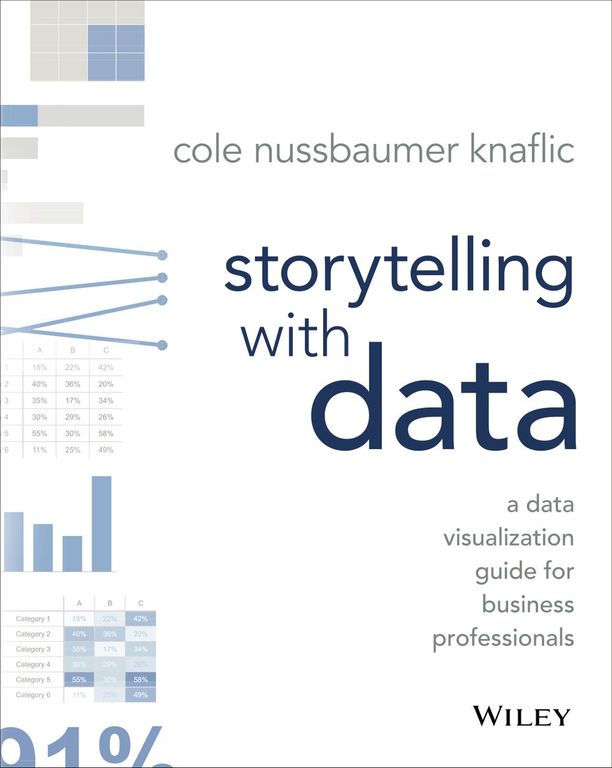
Nova: Absolutely, Atlas. And that's precisely the core insight of what we're terming "The Data Whisperer: Crafting Stories That Drive Action." It’s a powerful concept, brilliantly articulated by experts like Cole Nussbaumer Knaflic in "Storytelling with Data" and Nancy Duarte in "Resonate."
Atlas: Oh, I like that. "The Data Whisperer." It sounds almost magical.
Nova: It truly is! What's fascinating is how these authors, coming from backgrounds as diverse as Google's data analytics and presidential speechwriting, converged on the same fundamental truth: the human brain is wired for narrative, not spreadsheets. They’re essentially teaching us how to hack that primal wiring to move from analysis to impact. It’s about transforming passive understanding into active engagement.
Atlas: That makes perfect sense for anyone trying to craft compelling campaigns or optimize digital performance. You can have all the insights in the world, but if you can't translate them into something that resonates, what's the point?
Deep Dive into Core Topic 1: The Power of Narrative Over Raw Data
SECTION
Nova: Exactly. Let's delve into "The Cold Fact" that starts it all: raw data alone rarely inspires action. Think of it this way: you could give someone a dense, technical manual for a complex machine, filled with every specification and diagram. Or you could tell them a captivating story about how that machine was invented, the problem it solved, and the lives it changed. Which one do you think is more likely to stick? Which one makes them?
Atlas: The story, hands down. Nobody curled up with a good instruction manual. But wait, isn't "data-driven" supposed to be the gold standard? Are you saying we should just make things up? That sounds a bit out there for the analytical minds listening.
Nova: Not at all! This isn't about fabricating information; it's about the truth. Our brains are wired for cause and effect, for characters and conflict, for resolution. Data, in its raw form, is often just a collection of facts. It’s like having all the pieces of a puzzle scattered on a table. You know they belong together, but you don't see the picture until someone helps you assemble them into a narrative.
Atlas: That's a great analogy. So, how does this play out in a real-world scenario? Give me an example where raw data just… failed.
Nova: Consider a company that's sitting on groundbreaking sales data. They've identified a massive untapped market, a clear demographic shift, and a product that's perfectly positioned. Their analysts spend months compiling beautiful dashboards, intricate charts, and detailed reports. They present it to leadership: slide after slide of rising lines, falling bars, and pie segments. The data is irrefutable.
Atlas: Sounds like a dream for an analyst.
Nova: On paper, yes. But in the boardroom, the reaction is… a polite nod. Maybe a few questions about methodology. But no one is jumping out of their seat, saying, "We to act on this!" The data is there, but the of opportunity, the of inaction, and the that transforms their future is completely missing. The outcome isn't decisive action, it's paralysis, or worse, just another item on the agenda.
Atlas: I can totally see that. It's like you're showing them all the ingredients for a five-star meal, but no one's telling them what the meal actually tastes like, or how easy it is to cook, or how much their guests will love it. They just see flour and eggs.
Nova: Exactly! The data is the flour and eggs. The story is the Michelin-star chef explaining the vision, the process, and the delightful experience. It’s the difference between merely informing and truly persuading. This is where Nova’s Take comes in: by applying storytelling principles to your data, you create campaigns that not only inform but also deeply persuade and motivate action.
Deep Dive into Core Topic 2: Crafting Data Stories: Clarity, Impact, and Resonance
SECTION
Atlas: Okay, so if data needs a story to move people, how do we actually it? What are the tactical insights? Because for those of us who are deeply analytical, the idea of "storytelling" can sometimes feel a little… squishy.
Nova: Not squishy at all! It's a discipline, a craft. Let's start with Cole Nussbaumer Knaflic's "Storytelling with Data." Her work is a practical guide to designing effective data visualizations and crafting narratives that engage your audience. Knaflic emphasizes clarity and impact. She's all about making your data accessible, removing clutter, and focusing your audience's attention on the single most important message. It's about designing your visual information so that the story leaps off the page, or screen, instantly.
Atlas: So, less is more? Simplify the charts? Because I've seen some dashboards that look like a Christmas tree threw up on a spreadsheet.
Nova: Less is absolutely more, especially when you're trying to drive action. Knaflic teaches you to strip away everything that doesn't serve your message. And then, we layer on Nancy Duarte's insights from "Resonate." Duarte explores how great communicators structure their messages like stories, moving audiences from 'what is' to 'what could be.' Think of it as the classic narrative arc—the hero's journey, but for your data presentation. You start with the current reality, the 'what is,' then introduce the challenge or conflict, present your analysis as the turning point, and finally, lead to the 'what could be'—your recommended action, the resolution.
Atlas: That's fascinating. So, it's like we're not just presenting data, we're giving people a role in the story, making them the hero who can achieve the 'what could be'? That really resonates with the innovator's drive to understand human behavior and influence effectively.
Nova: Precisely! Let me give you another vivid example. Imagine a non-profit organization trying to raise funds for a literacy program. Their data shows a stark decline in reading proficiency among local children—a clear 'what is.' Instead of just showing a bar graph of declining scores, they apply these principles. They use Knaflic's methods to create a single, powerful visual that highlights the proficiency gap, making it undeniably clear.
Atlas: And then Duarte's principles come in?
Nova: Exactly. They structure their presentation like a story. They introduce a fictional 'hero' child, perhaps named Maya, struggling to read a simple storybook. That's the problem, the emotional 'what is.' Their analysis—the turning point—shows how their specific literacy program, with its proven methodology, can bridge that gap. The 'what could be' is Maya confidently reading aloud, her future bright, thanks to their program. The data isn't just numbers; it's Maya's struggle, her potential, and the impact of their solution. This approach led to a massive increase in donations for that program. The data moved from analysis to empathy, and then to action.
Atlas: Wow. That's actually really inspiring. It frames the data in a way that makes the listener, or the donor, feel like they're part of the solution. It's not just about understanding a problem; it's about being empowered to fix it.
Synthesis & Takeaways
SECTION
Nova: And that's the profound insight, isn't it? Data storytelling isn't just a 'nice to have' skill; it's the fundamental lever for impact in our data-saturated world. It transforms analysts from mere reporters of facts into powerful persuaders.
Atlas: Absolutely. It turns the strategist into a visionary, showing not just what, but what. For anyone who optimizes digital performance or uncovers market trends, this ability to translate complex data into persuasive narratives is crucial. It’s what differentiates merely knowing from truly influencing.
Nova: Indeed. Our tiny step for today, the one thing you can do immediately: choose one recent data report you've worked on. Re-imagine its key finding as a three-act story. What's the problem it highlights? How does your analysis serve as the turning point? And what's the recommended action as the resolution?
Atlas: And when you're doing that, don't just think about the numbers. Think about the people those numbers represent. What's their struggle, their hope, their potential? That's where the true story lies.
Nova: Beautifully put, Atlas. It's about finding the beating heart within the spreadsheet.
Atlas: This is Aibrary. Congratulations on your growth!