

The 'Data Deluge' Trap: Moving from Information Overload to Insightful Action
Golden Hook & Introduction
SECTION
Nova: What if the biggest problem with data isn't a lack of it, but rather, an overwhelming abundance? The very thing we chase for clarity can become a digital quicksand, trapping us in analysis paralysis.
Atlas: Oh, I know that feeling. It's like you're drowning in a sea of numbers, and everyone's shouting "more data!" but nobody's giving you a life raft of actual insight. You just keep collecting, hoping clarity will magically emerge.
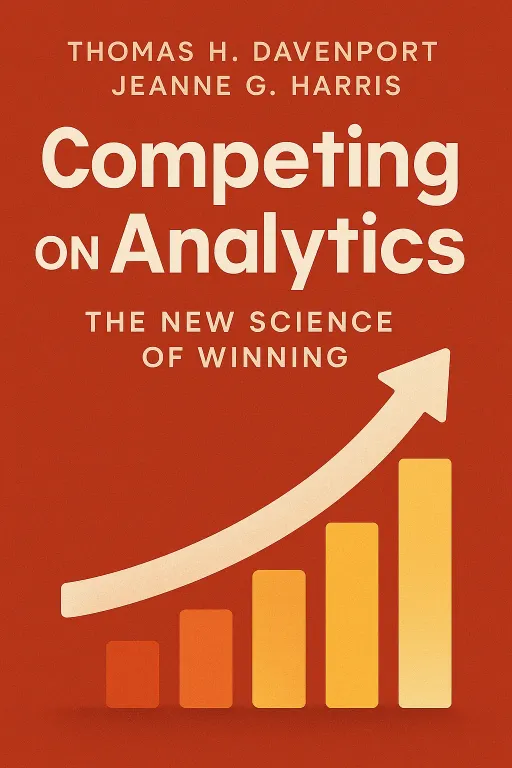
Nova: Exactly! And that's precisely what we're tackling today: how to escape that 'Data Deluge Trap' and convert an ocean of information into a powerful current of strategic action. We're going to dive into two foundational texts that really illuminate this path. First, "Competing on Analytics: The New Science of Winning" by Thomas H. Davenport and Jeanne G. Harris, a book that fundamentally shifted how businesses view data.
Atlas: Oh, I like that. "The new science of winning." That sounds like a strategist's dream. What made their work so groundbreaking?
Nova: Well, their work truly pioneered the idea that analytical capability isn't just a back-office function; it's a strategic differentiator. They essentially laid the groundwork for understanding how data could be a competitive asset, moving it from a support role to a boardroom imperative. And then, we'll connect that to "Storytelling with Data" by Cole Nussbaumer Knaflic, which is all about making those insights resonate.
Atlas: So you're saying, it's not enough to just have the data, or even analyze it brilliantly. There's a whole other layer to winning with it?
Nova: Precisely. It's about a holistic transformation.
The Strategic Imperative of Data: Beyond Just Collecting
SECTION
Nova: Davenport and Harris argued that companies gain a competitive edge not by simply collecting data, but by building a robust. This isn't just about hiring a few data scientists; it's about integrating data, technology, skilled people, and an analytics-driven culture into the very fabric of an organization.
Atlas: That sounds like a massive undertaking. For our listeners who are building and optimizing systems, where do you even begin? Is it just about throwing more money at software, or is there a cultural shift involved?
Nova: It's definitely not just about software. Think of two well-known retail giants. One, let's call them "Retailer A," had mountains of sales data, customer demographics, inventory logs – everything. But their departments operated in silos. Marketing didn't talk to supply chain, and sales didn't fully integrate with product development. They were constantly overstocked on some items and out-of-stock on popular ones, all while their internal reports showed "growth."
Atlas: Oh man, that's a familiar story. All the ingredients are there, but the chef can't make a meal because they're all in separate kitchens.
Nova: Exactly! Now, "Retailer B," on the other hand, invested in connecting those dots. They didn't just buy new software; they restructured teams, incentivized cross-functional collaboration around shared data dashboards, and created a culture where every decision, from pricing to promotions, was challenged with data. They built a system where insights from customer behavior immediately informed inventory forecasting and even product design.
Atlas: So, the cause was siloed data and lack of integrated thought in Retailer A, leading to inefficiencies and missed opportunities. And the cause for Retailer B was a conscious, holistic effort to build that analytical capability, leading to optimized inventory, better customer satisfaction, and ultimately, higher profits. That makes sense. It's about designing the system, not just gathering the inputs.
Nova: You got it. The outcome for Retailer B was a clear competitive advantage. They could anticipate market shifts, personalize customer experiences, and react to supply chain disruptions far more effectively than Retailer A, who continued to drown in their own data. It's about moving from simply having information to strategically it.
Atlas: So, it's not just about the data itself, but the entire organizational muscle built around it. That's a profound distinction. It shifts the focus from "what data do we have?" to "how do we on the data we have?"
From Raw Numbers to Resonant Stories: The Art of Data Communication
SECTION
Nova: And that naturally leads us to the second crucial idea, which often acts as the bridge between that analytical muscle and actual strategic action. Because even with the most sophisticated analytical capability, if you can't communicate those insights effectively, they just sit there, gathering digital dust. This is where Cole Nussbaumer Knaflic's "Storytelling with Data" becomes indispensable.
Atlas: Ah, the communication piece. I imagine a lot of our listeners, the strategists and visionaries, are constantly presenting numbers to stakeholders. It’s one thing to get the insight, but another to get buy-in.
Nova: Absolutely. Knaflic emphasizes that effective data visualization and communication aren't about making pretty graphs; they're about designing compelling stories with data to influence decisions. My own take echoes this: it's not just about extracting meaningful patterns, but communicating them in a way that truly drives strategic action and organizational alignment.
Atlas: So, is 'storytelling with data' just about making a chart look good? Or is there a deeper psychological element to it? For someone who's constantly presenting numbers, how do you ensure the story isn't just heard, but?
Nova: That’s a perfect example of what Knaflic addresses! Imagine a company's marketing team presenting their quarterly performance. They might show a dense spreadsheet with hundreds of rows of raw ad spend, click-through rates, conversion numbers, and cost-per-acquisition across different platforms. It's technically all there. But the executive team's eyes glaze over. They're overwhelmed.
Atlas: Yeah, I can totally visualize that. All the data, zero insight. Just a lot of numbers shouting at you.
Nova: Exactly. Now, imagine that same marketing team, inspired by Knaflic's principles, takes that exact same data. They identify the: perhaps that their mobile ad spend on Platform X is yielding significantly higher ROI than desktop ads on Platform Y, despite receiving less budget. They then create a single, clean bar chart. They remove all unnecessary clutter – grid lines, excessive labels. They highlight the key bars representing Platform X and Platform Y in a contrasting color, while others fade into the background. They add a concise, action-oriented title: "Shift Budget to Mobile Platform X for 25% Higher ROI."
Atlas: Oh, I see. The cause was data overload in the first scenario, leading to inaction. The cause in the second was intentional design and focus, leading to a clear, actionable recommendation. The outcome is not just understanding, but immediate strategic direction. It’s like a spotlight on the most important part of the data.
Nova: Precisely. The outcome is that the executive team doesn't just the data; they the urgency and clarity of the recommendation. They can immediately grasp the strategic implication and make a decision to reallocate budget. Knaflic helps you strip away the noise, focus on the message, and design your visuals and narrative for maximum understanding and influence. It taps into our innate human need for stories, making abstract numbers tangible and persuasive.
Atlas: That’s actually really inspiring. It’s moving from just presenting facts to painting a picture of what those facts for the business. It’s about impact.
Synthesis & Takeaways
SECTION
Nova: So, what we've really explored today is this dual imperative: you need to strategically to analyze data, as Davenport and Harris teach, and then you need to master the those insights, as Knaflic so brilliantly shows. Without both, you're either data-rich but insight-poor, or you have brilliant insights that simply go unheard.
Atlas: And for our listeners, the strategists, the builders, the visionaries who are constantly optimizing and seeking clarity, this isn't just academic. It's about turning that mountain of data into a powerful tool for impact. So, what's one tiny, tangible action they can take this week to start escaping this deluge and actually drive strategic action?
Nova: Here's a tiny step: Choose a recent dataset you've worked with – perhaps a sales report, a project performance review, or even user feedback. Identify the core insight you is most important. Then, try to build a simple, compelling story around it using just clear visualization technique, focusing on making that single insight undeniable. Don't overcomplicate it; just focus on clarity and impact.
Atlas: That’s a perfect example. Start small, but start with the intention of storytelling. It’s not just about showing the numbers, it’s about showing what the numbers.
Nova: Absolutely. It’s about transforming that raw information into insightful action.
Atlas: I love that. This is Aibrary. Congratulations on your growth!