

Strategic Storytelling: Connecting Through Narrative in Business
Golden Hook & Introduction
SECTION
Nova: You know, Atlas, for too long, business communication has been trapped in this idea that it has to be purely logical. Just the facts, ma'am. Data points, bullet lists, no emotion allowed. But I'm here to tell you that's the fastest way to put your audience to sleep.
Atlas: Oh, I love that. "Put your audience to sleep." I mean, I'm guilty of it. I've been in those meetings, delivered those presentations where I felt like I was just reading a grocery list. And the glazed-over eyes in the room confirmed it. So you're saying the conventional wisdom is actually a recipe for disconnection?
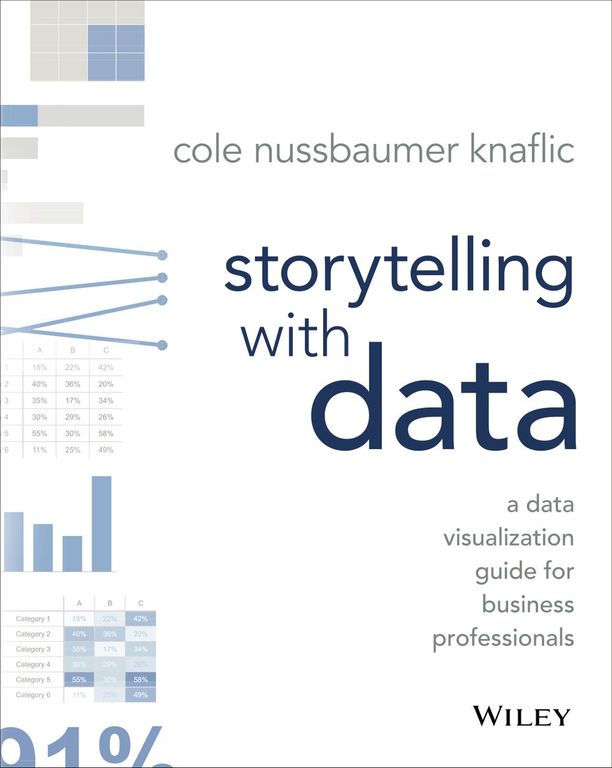
Nova: Absolutely. Because we're fundamentally wired for stories, not spreadsheets. And today, we're diving into how strategic storytelling is the ultimate unfair advantage in business. We're drawing insights from two incredible books: "Storytelling with Data: A Data Visualization Guide for Business Professionals" by Cole Nussbaumer Knaflic, a brilliant mind who honed her craft at Google, showing us how to make numbers sing. And then, the iconic "Start with Why: How Great Leaders Inspire Everyone to Take Action" by Simon Sinek, a book that has truly reshaped how countless leaders and organizations articulate their purpose and connect with their audience on a deeper level.
Atlas: Wow, those are two heavy hitters, but in very different lanes. Knaflic is about the 'how' of data presentation, and Sinek is about the 'why' of motivation. How do these two seemingly different approaches converge to create this "unfair advantage" you're talking about? What's the core, almost primal power of storytelling that unites them both?
The Foundational Power of Strategic Storytelling
SECTION
Nova: That’s the brilliant part. They both tap into the same fundamental human truth: we process the world through narrative. Dry facts? They’re like isolated islands. Stories are the bridges that connect them, giving them meaning, context, and emotional resonance. Think about Knaflic’s work. She's not just saying 'make pretty charts.' She’s saying, 'your data needs a plot, characters, a conflict, and a resolution.'
Atlas: Okay, but isn't data supposed to be objective? How do you 'storytell' with it without manipulating it? That sounds a bit out there for someone who values precision.
Nova: That’s a common misconception, and a great question. It’s not about manipulating the data; it’s about. Imagine a business presentation where the speaker just shows a complex sales chart with a hundred data points. The audience sees numbers, but they don't anything. They don't understand the journey. Now, imagine that same presenter starts by saying, "We faced an unprecedented challenge last quarter. Our market share was shrinking by 2% each month, threatening our very existence. But then, a small team had an audacious idea…" And they show the data, guiding you through the dips and climbs, showing how their idea reversed the trend. The data hasn't changed, but your understanding and emotional investment have. That’s Knaflic’s genius: turning data into a compelling journey of discovery.
Atlas: That’s actually really inspiring. So, it's about making the audience a part of the discovery, not just a recipient of information. And I see how Sinek connects here. He’s talking about the ultimate "why" behind the data, right?
Nova: Exactly. Sinek’s "Start with Why" became a global phenomenon because it articulated something we intuitively knew but rarely practiced. He argues that most companies communicate from the outside-in: 'Here’s what we do, here’s how we do it, want to buy it?' But truly inspiring leaders and organizations communicate from the inside-out, starting with their 'why.' Their purpose, cause, or belief.
Atlas: So you're saying, for our listeners who are managing high-pressure teams or pitching innovative ideas, it’s not enough to explain the 'what' or even the 'how'? You have to explain it matters, it should exist?
Nova: Precisely. Think of Apple. They don’t just say, "We make great computers." Their 'why' is about challenging the status quo, empowering creativity, thinking differently. The computer is just their 'what.' When you start with 'why,' you're speaking directly to the limbic brain, the part of our brain responsible for feelings, trust, and loyalty. That's where decisions are made. A company that communicates its 'why' isn't just selling products; it's selling a belief system. And people don't buy what you do; they buy why you do it.
Atlas: That makes me wonder about the ripple effect. If I, as an aspiring professional, can articulate my 'why' for a project, it's not just about getting buy-in; it's about inspiring deeper engagement from my team, my stakeholders, even myself. It’s a shift from compliance to conviction.
From Theory to Traction: Practical Application of Narrative in Business
SECTION
Nova: That’s the entire point, Atlas. Understanding the power is one thing, but how do we actually it? How do we take these profound insights and weave them into our everyday professional lives? Because it’s not just for TED Talks or major product launches. It applies to everything.
Atlas: Okay, so how do you actually do that? I can see the big picture, but how does someone in a daily grind, with deadlines looming, actually infuse 'why' into a routine report or a quick email? That sounds like a tall order.
Nova: It’s about reframing. Instead of saying, "We're implementing a new project management software," you start with, "Our goal is to eliminate the frustrating bottlenecks that slow down your creativity, so you can focus on what truly matters: delivering exceptional results." The software is the 'what,' but the 'why' is about empowering your team and removing pain points. It’s a subtle shift, but it changes everything.
Atlas: That’s a great way to put it. So, basically you’re saying, before I even talk about the features of the new software, I talk about the problem it solves and the bigger purpose it serves for the team?
Nova: Exactly. And beyond reframing the 'why,' there's the power of personal anecdotes and case studies, even in professional settings. We often feel we have to be stoic and purely factual in business. But that's a mistake. A brief, relevant personal story can make a dry topic immediately relatable and memorable.
Atlas: Can you give an example? Like how would that play out in real life?
Nova: Absolutely. Imagine a manager introducing a new, somewhat unpopular compliance procedure. Instead of just listing the new rules, they might start by saying, "I remember early in my career, I made a mistake on a compliance form because I rushed it. It caused a huge headache for our client and nearly cost us the account. From that day on, I understood that these procedures aren't just red tape; they're safeguards for our reputation and our relationships." Now, suddenly, the new procedure isn't just a rule; it's a lesson learned, a shared experience, and its importance is crystal clear.
Atlas: Wow, that’s kind of heartbreaking, but impactful. It humanizes the process. So, when I’m preparing for a presentation or even just a difficult conversation with a colleague, what’s the ‘tiny step’ I can take to inject more narrative? What’s my starting point?
Nova: Before you draft a single slide or even outline your talking points, ask yourself this: "What's the emotional journey I want my audience to take?" Or, "What's the single most important 'why' behind this project, not just for the company, but for the people I'm speaking to?" If you can answer that, your narrative will naturally begin to unfold. It’s about being intentional with your communication, understanding that every interaction is an opportunity to connect, not just to inform.
Synthesis & Takeaways
SECTION
Nova: So, what we've really been exploring today, Atlas, is that strategic storytelling isn't merely a communication tactic; it's a fundamental aspect of human connection and leadership. It’s about translating purpose into tangible impact. It's the difference between being heard and being remembered, between compliance and true conviction.
Atlas: I can definitely relate. It's about becoming a leader who doesn't just manage tasks, but truly inspires people to rally behind a shared vision. It’s about understanding that every single interaction, big or small, has the potential for a narrative that moves people.
Nova: Exactly. Your story isn't just about what you do, but who you are, and why it matters. And that 'why' is your most powerful tool. So, for all our listeners out there, we challenge you: think of a recent project or idea you presented. How could you reframe it to 'start with why' and make it more inspiring?
Atlas: Yes! Take that tiny step. Because in a world saturated with information, the ability to tell a compelling story is your greatest narrative advantage. It's how you cut through the noise and truly connect.
Nova: This is Aibrary. Congratulations on your growth!