

Crafting Your Strategic Narrative: Storytelling for Impact
Golden Hook & Introduction
SECTION
Nova: Atlas, I was reading this wild story about a CEO who presented a meticulously crafted financial report, dozens of slides, all the numbers perfectly aligned, and by the end, his board was just… blank. Like they'd been staring at a tax form for an hour.
Atlas: Oh man, I’ve been in those meetings. The kind where you can almost hear the collective internal groan. You've got the data, it's irrefutable, but it lands with all the impact of a wet noodle.
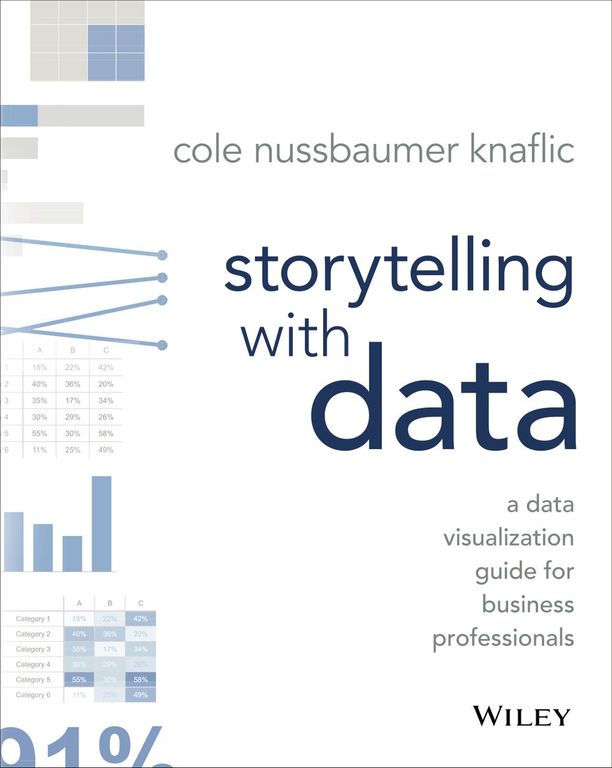
Nova: Exactly! It makes you wonder, if the numbers are so clear, why don't people it? Why don't they on it? And that's precisely what we're dissecting today, drawing heavily from two incredibly insightful books: Cole Nussbaumer Knaflic’s "Storytelling with Data: A Data Visualization Guide for Business Professionals" and Simon Sinek's "Start with Why: How Great Leaders Inspire Everyone to Take Action."
Atlas: Ah, Sinek! The 'why' guy. I remember his TED Talk went absolutely viral, it was a phenomenon for a reason. He really tapped into something fundamental about human motivation. And Knaflic's book, I've seen it on so many data analysts' desks. It's often praised for making data communication so much more intuitive, though some have mentioned it can feel a bit prescriptive at times.
Nova: Absolutely. Knaflic’s background in analytics at Google really grounds her work in practicality, which is why it resonated so much with professionals. And Sinek, well, he’s almost a modern philosopher of leadership. What's so fascinating is how these two, from seemingly different fields, converge on this one undeniable truth that changes everything about how we communicate.
Atlas: So basically, you're saying we're going to uncover the secret sauce that turns those blank stares into nods of enthusiastic agreement? Because honestly, that sounds like a superpower for anyone who has to present numbers.
Nova: Precisely. We're going to dive into why data alone often isn't enough, and then we'll explore the transformative power of articulating the 'why' behind your numbers.
The Insufficiency of Raw Data: Why 'What' and 'How' Fall Short
SECTION
Nova: So, let's start with Knaflic's core argument: Data alone isn't enough. People often think that if they just present the right charts, the most beautiful visualizations, the data will speak for itself. But that's a dangerous misconception.
Atlas: I mean, that sounds a bit out there. We're constantly told to be data-driven, to trust the numbers. Are you saying we shouldn't? What do you mean it's not enough?
Nova: Not at all! The data is crucial. But Knaflic emphasizes that effective data communication goes beyond just creating pretty charts. It's about crafting a clear, compelling with your data. Think about it: a bar chart showing declining revenue numbers is a 'what.' It tells you what happened. A complex regression analysis might tell you 'how' it happened. But neither of those inherently tells you 'why' it matters, or 'what we should do about it.'
Atlas: Okay, so it’s like showing someone a picture of a broken car engine. You can see all the parts, maybe even identify a broken component, but without understanding that component broke, or the car is used for, the information is incomplete.
Nova: That's a perfect analogy! Knaflic gives this fantastic example: Imagine you're presenting financial analysis to a diverse group of stakeholders—some are engineers, some are marketing, some are sales, and then you have the executives. Each group speaks a different language, has different priorities. If you just throw up a spreadsheet or a complex dashboard, you're asking them to translate it themselves. You're asking them to the story.
Atlas: That sounds rough, but isn't that their job? To interpret the data?
Nova: It is, to a degree. But we're talking about inspiring and. When you force people to hunt for the narrative, you introduce friction, misunderstanding, and often, inaction. Knaflic talks about how our brains are wired for stories. We remember narratives, not just isolated facts. Stories provide context, meaning, and emotional connection. Without that, data is just noise.
Atlas: So what you're saying is, if I’m presenting, say, a quarterly sales report, just showing the growth percentages isn't enough. I need to explain those percentages are what they are, and it means for our future.
Nova: Exactly. Let me give you an example that Knaflic might use. She talks about the difference between showing a slide with a complex sales funnel, and showing a simplified funnel where you specifically highlight the one stage that's underperforming, and then tell a story about that stage is underperforming—maybe a new competitor, a change in marketing spend, or a shift in customer behavior. The data is still there, but now it's framed within a narrative that drives people to focus on the problem and strategize solutions. It's not just "here are the numbers," it's "here's the situation, here's what's happening, and here's why it matters."
Atlas: That’s a great way to put it. I can definitely relate to being in meetings where someone just throws up a graph, says "numbers are down," and then everyone just stares at each other, waiting for someone else to figure out what to do. The context, the story, is what gives it teeth.
Nova: Precisely. And that's where Sinek's work on "Start with Why" comes in, bridging the gap from just understanding the 'what' and 'how' to truly inspiring 'why.'
The Power of 'Why': Articulating Purpose for Deep Resonance
SECTION
Nova: Sinek’s argument is deceptively simple but profoundly powerful: people are inspired by you do something, not just or you do it. He illustrates this with his famous Golden Circle concept: most companies communicate from the outside-in—what they do, how they do it, and then maybe, if they get around to it, why. But truly inspiring leaders and organizations communicate from the inside-out: they start with their 'why.'
Atlas: So you’re saying that instead of a company saying, "We make great computers," they should say, "We believe in challenging the status quo, and we happen to make great computers"?
Nova: That’s the classic Apple example Sinek uses, and it’s spot on. Think about it in a financial context. If you're an analyst presenting a strategic investment plan, you could just show the projected ROI, the market analysis, the risk assessments. That’s the 'what' and the 'how.' It's rational, it's logical.
Atlas: And it’s probably met with those blank stares we talked about earlier. Or a lot of very logical, but often uninspired, questions.
Nova: Exactly! But what if you started by articulating the 'why'? What if you said, "We believe in creating a sustainable future for our company and our community, and this investment strategy is designed to secure that future by diversifying our energy portfolio and fostering innovation in green tech"? Now, you're not just presenting numbers; you're presenting a vision, a purpose.
Atlas: Wow, that’s actually really inspiring. That gives me chills. It transforms a cold, hard financial decision into something with meaning. It's not just about making money; it's about we're making money.
Nova: And that's the key. When the 'why' is clear, people don't just understand the strategy; they in it. They become emotionally invested. Sinek argues that this taps into a deeper part of our brain, the limbic system, which controls feelings and decision-making, rather than just the neocortex, which handles rational thought. So, when you lead with 'why,' you're speaking directly to the part of the brain that drives loyalty, trust, and action.
Atlas: So, for our listeners who are in finance or strategy, this means reframing their presentations. Instead of just showing the spreadsheet, they need to paint the picture of the future that the spreadsheet enables.
Nova: Precisely. Take that tiny step Knaflic suggests: "Can you reframe its key findings around a central 'why' and present it as a compelling story rather than just a collection of facts?" If you're an analyst, a strategist, someone who sees the numbers, you're driven by impact. This isn't just about making your reports look better; it's about making them. It's about ensuring your insights actually lead to change.
Atlas: I've been thinking about this a lot lately, especially with the user profile we’re speaking to. Someone who understands the numbers, but also seeks the 'how' and 'why' behind success. They're driven by impact and building a meaningful career. It feels like this is the missing piece for a lot of highly analytical people—they've mastered the 'what' and 'how,' but the 'why' is what connects it all to purpose.
Nova: It absolutely is. These insights fundamentally solve the problem of ineffective communication by providing frameworks to transform raw data and complex strategies into engaging narratives that inspire confidence and action. It’s the difference between merely informing and truly inspiring.
Synthesis & Takeaways
SECTION
Nova: So, what we've really explored today is how the cold, hard facts of data, while essential, are only one part of the equation. To truly drive impact and inspire action, you have to wrap those facts in a compelling strategic narrative.
Atlas: And that narrative has to start with the 'why.' It's not just about showing the numbers; it's about articulating the purpose, the vision, the belief behind those numbers. That's what resonates deeply and moves people beyond mere understanding to genuine commitment.
Nova: Exactly. Whether you're presenting a budget, a new project, or a long-term strategy, leading with your 'why' transforms it from a dry report into an inspiring call to action. It allows you to connect with your audience on an emotional level, making your message unforgettable and your impact undeniable.
Atlas: It’s empowering to think that the same data can yield vastly different results just by how it's presented and framed. It's about understanding human psychology, not just spreadsheets. For anyone out there who feels their meticulous work gets lost in translation, this is your secret weapon. Start with the 'why,' tell the story, and watch the impact multiply.
Nova: Powerful stuff. And a perfect reminder that even in the most analytical fields, the human element of storytelling remains paramount. It’s what transforms information into inspiration. This is Aibrary. Congratulations on your growth!