

Crafting Compelling Narratives for Impact
Golden Hook & Introduction
SECTION
Nova: Okay, Atlas, quick game. I'll give you a common, well-intentioned phrase people use when trying to inspire change, and you tell me the single biggest problem with it, in one witty sentence. Ready?
Atlas: Oh, I like that! My brain is already buzzing. Hit me.
Nova: Alright, here's the phrase: "We need to present all the facts and figures to show our impact."
Atlas: Oh, man. The biggest problem? It assumes logic alone moves mountains, when in reality, people are moved by mountains they can.
Nova: Exactly! You just nailed the core challenge we're dissecting today. We’re often told that data speaks for itself, and that clarity is king. But what if clarity isn't enough? What if the real power lies in something far more ancient and deeply human?
Atlas: That makes me wonder, if facts aren't the whole story, then what is? We’re constantly bombarded with information, especially in the philanthropic world, where everyone's trying to convey impact. How do you cut through that noise?
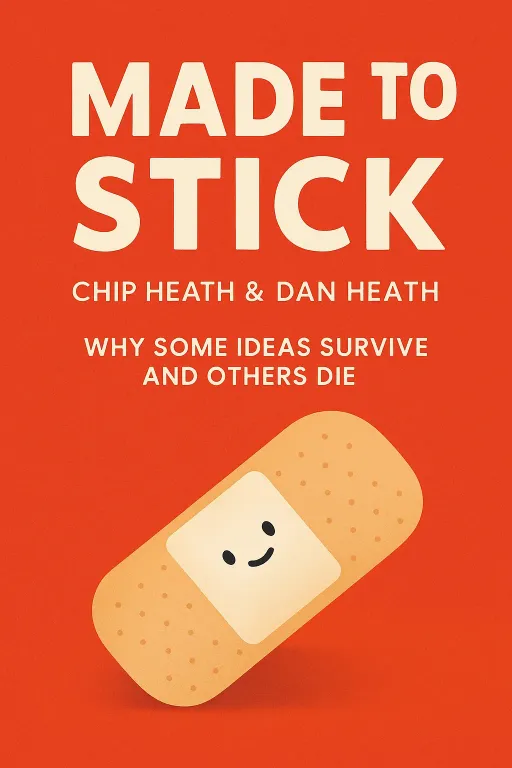
Nova: That’s where the magic happens. Today, we’re diving into the brilliant insights from two pivotal books: by Chip and Dan Heath, and by Cole Nussbaumer Knaflic. What's fascinating about the Heath brothers is their background – they're academic heavyweights, one a professor at Stanford, the other at Duke, but they write in a way that feels like a conversation with incredibly smart, engaging friends. They've distilled decades of research into why some ideas endure and others vanish, and their work has influenced everything from marketing to education.
Atlas: Right, like, they're not just theorizing; they're showing us the actual mechanics of how to make an idea… well,. And for anyone trying to advocate for a cause or present a grant application, that's gold.
Nova: Absolutely. And Knaflic builds on that, specifically for data, showing us how to take those seemingly dry numbers and turn them into compelling narratives. She spent years analyzing how people consume information at Google, realizing that even the most insightful data is useless if it doesn't tell a clear, human story. So, today we're going to explore how to make your message not just heard, but deeply felt and acted upon, transforming complex information into compelling narratives that inspire genuine impact.
The Science of Sticky Ideas
SECTION
Nova: So, let's start with. The Heath brothers introduce six principles, which they cleverly abbreviate as SUCCESs: Simple, Unexpected, Concrete, Credible, Emotional, and Stories. And they argue that if an idea embodies these traits, it has a far greater chance of sticking in someone's mind and influencing their behavior.
Atlas: Okay, so, SUCCESs. That's a great mnemonic. But wait, can you give me an example of how one of these principles, say 'Unexpected,' plays out in the real world? Because for someone trying to get a grant approved, 'unexpected' might sound… risky.
Nova: That's a perfect question because it highlights the nuance. 'Unexpected' doesn't mean outlandish or unprofessional. It means breaking a pattern, defying an expectation, or introducing an element of surprise that grabs attention and holds it. Think about the famous "Nordstrom Tire Story."
Atlas: Oh, I think I know this one! The customer tried to return tires to Nordstrom, even though Nordstrom doesn't sell tires, and they took them back, right?
Nova: Exactly! It's a legendary customer service tale. Why does it stick? Because it's unexpected. You expect a retail store to say, "Sorry, we don't sell those." But Nordstrom's response defies that expectation, creating a story that's been told and retold for decades, reinforcing their brand values. It's not just a fact; it's a narrative that creates an emotional impact.
Atlas: That’s a great example. It’s like, it’s not just about delivering information, it’s about delivering it in a way that creates a little cognitive friction, in a good way, that makes you lean in. For our listeners who are trying to get people to pay attention to, say, a climate change report, how do you make 'unexpected' work without being sensational?
Nova: That's where 'Concrete' comes in, often hand-in-hand with 'Unexpected.' Another classic example from the Heath brothers is the "Velcro Theory of Aerodynamics." In the 1980s, engineers were trying to design planes that could withstand bird strikes. They were presenting complex equations and technical specs. But one engineer simply said, "A chicken hitting a windshield at 600 miles per hour."
Atlas: Whoa. That’s incredibly concrete. And unexpected, because it's so visceral. You immediately understand the problem without needing a single formula.
Nova: Precisely. It brings the abstract problem into a tangible, even shocking, reality. It's simple, unexpected, and concrete. It creates a vivid mental image that is incredibly hard to forget. For ethical strategists and philanthropic leaders, this means translating your impact from abstract percentages into the face of a child whose life was changed, or the tangible difference a new well makes in a village.
Atlas: So basically you’re saying, instead of saying, "We reduced poverty by X percent," you'd say, "Meet Maria, who can now afford school supplies because of X program." It’s about making it personal.
Nova: Exactly. And that leads us directly into the 'Emotional' and 'Stories' principles. We are hardwired for stories. Stories provide context, emotion, and a sequence of events that makes information digestible and memorable. Think about the 'Tale of the Three Little Pigs.' It's a simple story, but it teaches a concrete lesson about hard work and preparation that sticks with you far more than a lecture on structural integrity.
Atlas: That’s such a powerful point. It’s like, we tell ourselves stories as humans to make sense of the world. So, if we can frame our impact, our data, as a story, we’re tapping into something fundamental. But what if your 'story' is about, say, a budget deficit or a demographic trend? How do you make that emotional or story-driven without fabricating details?
Transforming Data into Emotive Stories
SECTION
Nova: That’s where Cole Nussbaumer Knaflic and come in. She isn't suggesting you invent narratives. She's showing you how to the narrative your data and then present it in a way that highlights the human element and evokes empathy.
Atlas: Okay, so, it’s not just about pretty charts.
Nova: Far from it. Knaflic’s whole philosophy is that the most effective data visualizations tell a story. She emphasizes understanding your audience and their context, and then designing your visuals to guide them to the insights you want them to take away. One of her key lessons is to eliminate clutter. Every single element on your graph should serve a purpose. If it doesn't, it's distraction.
Atlas: That makes sense. I’ve seen so many graphs that are just… visual noise. Too many colors, too many labels, too much going on. You end up looking at it and just feeling overwhelmed, not informed.
Nova: Right? And she gives a fantastic example of a complex organizational chart. Instead of showing every single box and line, she suggests highlighting the the viewer needs to follow to understand the specific point you're trying to make. You de-emphasize everything else, making the critical information pop. It's about intentional focus.
Atlas: So it’s like, if you want to show how a donation moves from a donor to a beneficiary, you don't show the entire accounting department's structure. You highlight the direct line of impact.
Nova: Exactly! Another incredibly powerful technique Knaflic advocates is the use of pre-attentive attributes. These are things we process visually before we even consciously think about them – like color, size, or position. You can use these to draw the audience's eye immediately to the most important data point. For instance, if you want to highlight a critical drop in funding, you make that specific bar or line a contrasting color.
Atlas: That’s actually really inspiring for anyone in philanthropic seeking. Instead of just presenting the numbers, you're curating the experience of understanding those numbers. You're shaping the narrative through design. This feels like a direct application of the 'Concrete' and 'Unexpected' principles from the Heath brothers.
Nova: It absolutely is. Knaflic helps you operationalize those principles for data. She tells a story about a team presenting data on customer satisfaction. They had a complex dashboard with dozens of metrics. It was comprehensive, but nobody could make sense of it quickly. She helped them simplify it down to just a few key metrics, visualizing the trend of customer satisfaction over time with clear annotations explaining the trends were happening.
Atlas: So, it wasn’t just the 'what,' it was the 'why.' That sounds crucial for evoking empathy. Because if you just show a declining trend, it’s a statistic. If you show a declining trend, suddenly it's a human problem.
Nova: Precisely. It connects the dots from raw data to human consequence. Knaflic's methodology helps you move from simply presenting facts to building a case, creating a narrative arc that transforms passive observation into active understanding and, hopefully, action. It's about designing your communication so that your audience sees what you want them to see, understands what you want them to understand, and feels what you want them to feel.
Atlas: That's a huge shift. It's not just about being factual; it's about being persuasive and empathetic, which is so vital for anyone trying to align values with resources, as our profile suggests. You're not just reporting; you're advocating.
Synthesis & Takeaways
SECTION
Nova: And that's the profound takeaway from both of these works. Effective communication isn't just about what you say, but fundamentally, you say it. It's about understanding that human beings respond to stories, to emotion, to the unexpected. It's about transforming a dry statistic about your organization's impact—like a 15% increase in community health outcomes—into a vivid story that evokes empathy and calls for support.
Atlas: Right, like, "Meet Mr. Henderson, who, thanks to a 15% increase in available local health services, can now receive regular check-ups and spend more time with his grandchildren." That’s a game-changer for anyone trying to communicate impact. It turns numbers into faces.
Nova: Exactly. It's about making your message resonate and inspire action. So, for our listeners, before your next presentation, before your next grant application, don't just gather the facts. Outline your core message using the SUCCESs principles: Simple, Unexpected, Concrete, Credible, Emotional, Stories. And then, when you're visualizing your data, ask yourself: Am I just showing numbers, or am I telling a story that will make someone the impact?
Atlas: That’s a powerful challenge. It really pushes us beyond simply reporting and into truly connecting. It’s about building with purpose, as we often talk about.
Nova: Absolutely. Because when you master the art of crafting compelling narratives, you don't just share information; you ignite a vision. You don't just ask for support; you inspire a movement. And that, truly, is the science of sticky stories for impact.
Atlas: That’s such a hopeful way to look at it. It gives me chills, thinking about the potential to truly connect hearts and minds through these principles.
Nova: This is Aibrary. Congratulations on your growth!