

Beyond Buzzwords: Crafting Brand Narratives That Resonate Deeply
Golden Hook & Introduction
SECTION
Nova: Most brands are talking to themselves in a crowded room, wondering why no one's listening. We're about to expose the biggest mistake they're making and how a simple shift can turn monologue into magnetic connection.
Atlas: Oh, I like that. Magnetic connection. Because honestly, in a world saturated with information, just shouting facts about your brand… it's like trying to get noticed in Times Square by holding up a tiny, handwritten sign. It just doesn’t work.
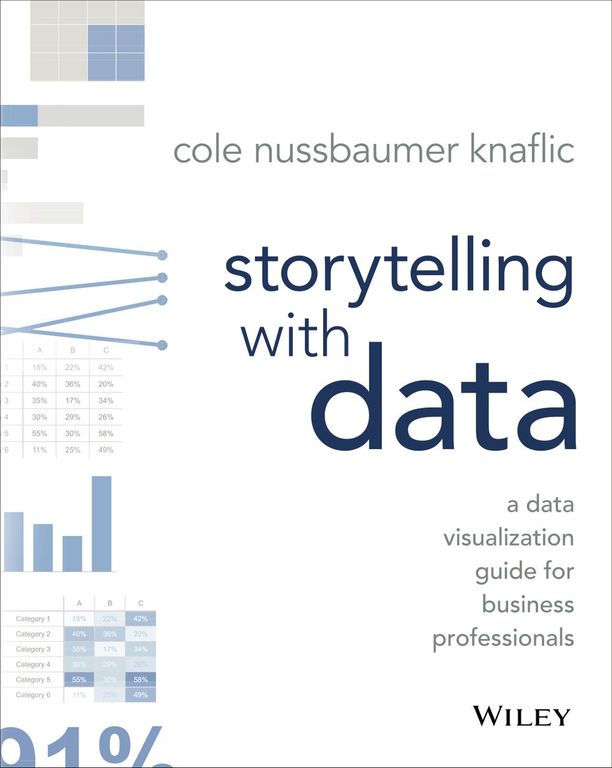
Nova: That's right, Atlas. And today, we're dissecting this crucial shift through the lenses of two absolute powerhouses: Cole Nussbaumer Knaflic's "Storytelling with Data," which literally transformed how analysts communicate, and Donald Miller's "Building a StoryBrand," a framework that's become a bible for countless businesses.
Atlas: I can definitely relate. Knaflic, if I recall, came from a very analytical background, right? Bridging that gap between raw numbers and human understanding. It's a huge challenge for anyone working with complex data.
Nova: Precisely. She spent years at Google, wrestling with complex data for internal presentations and external reports. She realized the biggest challenge wasn't collecting the data, but communicating it effectively so it actually people, so decisions could be made. It wasn’t about showing all the numbers; it was about telling the story those numbers represented.
Atlas: Storytelling with data. That sounds almost contradictory to some of our more traditional, fact-driven listeners.
The Data-Driven Narrative: Crafting Clarity and Impact
SECTION
Nova: Well, that's exactly where the magic happens. Knaflic's core principle, foundational to her widely acclaimed work, isn't about fabricating tales. It's about recognizing that the human brain is hardwired for narrative. When you present data as a story – with a beginning, middle, and end, a challenge, and a resolution – it becomes infinitely more memorable and persuasive. She emphasizes understanding your audience above all else. Who are you talking to? What do they care about? What action do you want them to take?
Atlas: So you're saying even the most strategic analyst, presenting quarterly performance reviews or market trends, needs to think like a storyteller?
Nova: Absolutely. Think about a typical quarterly report. Usually, it's a deluge of charts, graphs, and bullet points. Dry, dense. But imagine a tech company, instead of just presenting rising user acquisition numbers, they frame it as "The Journey of the User."
Atlas: Okay, tell me more.
Nova: They start with a specific user pain point they identified three months ago – for example, users abandoning their sign-up process halfway through. That's the. Then, they introduce a new product feature or a UI/UX update they implemented – that's the. And finally, they show the data: a 20% reduction in sign-up abandonment and a 15% increase in active users. The numbers aren't just numbers anymore; they're the of a solved problem, a successful journey for the user.
Atlas: That’s a great way to put it. You've just made "increased user engagement" sound like a mini-epic. But what if the data the story, but it's a really dense one? For our listeners who are strategic analysts presenting complex insights to C-suite leadership, how do you make that accessible without "dumbing it down"?
Nova: That’s a brilliant question, and it's where Knaflic really shines. It's not about simplification to the point of losing integrity; it's about. You identify the "so what." What does this data for the business? What decision does it inform? For C-suite leaders, they don't need to see every single data point. They need the distilled narrative that leads to a clear recommendation. The story isn't about the data collection process; it's about the of the data.
Atlas: I can see how that would be powerful. But wait, isn't there a risk of just dressing up bad news? Or manipulating the narrative to only show the positive?
Nova: That's a critical distinction. Knaflic isn't advocating for manipulation. She's advocating for honest, ethical framing. If the news is bad, the story should be about the challenge, the current problem, and the proposed path forward. The narrative structure helps you acknowledge the problem clearly, explain its roots with data, and then present a solution. It transforms a complaint into a call to action, backed by evidence. It's about providing context and meaning, not just raw figures.
The Hero's Journey Brand: Positioning Customers for Success
SECTION
Nova: Speaking of impact and making information resonate, that brings us to Donald Miller, who takes the narrative idea we just discussed and puts the customer squarely in the spotlight. His "Building a StoryBrand" framework is essentially an adaptation of the classic hero's journey, but with your customer as the hero, not your brand.
Atlas: Oh, I love that. The customer as the hero. It sounds so obvious, but so many brands still talk about endlessly.
Nova: Exactly! Miller argues that customers aren't looking for another hero; they're looking for a guide. They have a problem, and they're searching for someone to help them solve it. Your brand's job isn't to be the shining knight; it's to be Yoda, or Gandalf, or Haymitch. The wise, experienced mentor who understands their struggle and offers a clear path.
Atlas: So, the brand is the guide, not the hero. Can you give me an example of how this plays out? Because for a future-proof innovator trying to make a significant mark, understanding this distinction is crucial.
Nova: Absolutely. Think about a B2B software company selling project management tools. A traditional marketing message might focus on features: "Our software has Gantt charts, Kanban boards, and AI integration!"
Atlas: And they'd highlight how their AI is, how their features are...
Nova: Right. Which is fine, but it positions the as the hero. Miller flips that. The hero is the project manager, overwhelmed by chaotic deadlines, missed milestones, and frustrated team members. their problem. The software company then positions itself as the guide, offering a clear plan: "Use our intuitive tools to streamline communication, visualize progress, and hit every deadline." The success? The project manager successfully delivers complex projects, earns recognition, and reduces their stress. The brand isn't the star; it's the enabler of the project manager's triumph.
Atlas: That’s actually really inspiring. It frames the product's value in terms of the customer's personal and professional victory. But what about brands that innovative, disruptive? Do they still need to play the guide? Or can they be the hero of their own story, disrupting an industry?
Nova: That's a great challenge. Even disruptors are guiding customers to a better future, a new way of being the hero in their own industry. Take a company that introduces a completely new technology. They're not saying, "Look how amazing are for inventing this!" They're saying, "You, the customer, are frustrated with the old, inefficient way. have a solution that will empower to innovate, to save time, to achieve things you couldn't before." They're guiding the customer from an old, problematic world into a new, successful one. The brand's innovation serves the customer's heroism.
Atlas: I can see that. It's about framing the disruption the customer, not the company. The customer still gets to be the one who embraces the new, overcomes the old, and ultimately wins.
Synthesis & Takeaways
SECTION
Nova: Exactly. Whether you're trying to make complex data understandable, or build an entire brand narrative, the core principle is the same: empathy and clarity. Understand your audience, understand their journey, and then position your message to guide them effectively.
Atlas: It's about transforming brand communications from mere information delivery into experiences that connect emotionally and drive action. It's deep, but it's also incredibly practical.
Nova: In a world drowning in information, the brands that truly win aren't the loudest, or even necessarily the most innovative in a vacuum. They're the ones that speak directly to the hero within each of us, offering a clear path, not just a product. The real impact is measured in the transformation of the customer, in their achieved success, not just the features or the raw data points of the solution. It's the profound human connection that ultimately builds loyalty.
Atlas: That’s such a hopeful way to look at it. So, the tiny step from our book is to reframe a marketing message with the customer as the hero. But for our listeners, the strategic analysts, the impact drivers, the innovators, what's one immediate action they can take beyond that?
Nova: I'd say, pick one recent communication you've been involved in – an internal presentation, a pitch, a marketing email. Now, identify honestly: who is the hero of that story? Is it you, your team, your product, your data? Or is it truly the person receiving the message, the audience, the customer? Then, flip it. Re-draft it with them as the undeniable protagonist. What problem are facing? How are guiding to success?
Atlas: We'd love to hear what you discover in your own communications. Share your "hero's journey" reframing with us! This is Aibrary. Congratulations on your growth!