

Amplify Your Legacy: Storytelling for Digital Impact and Connection
Golden Hook & Introduction
SECTION
Nova: Atlas, quick, off the top of your head: what’s the secret ingredient to making an idea truly, utterly, stick around in someone's brain? Not just for five minutes, but for years?
Atlas: Oh, that's a loaded question, Nova. My first thought? Probably a catchy jingle that you can't get out of your head, like those old shampoo commercials. Or maybe, just maybe, a really embarrassing personal story that no one can unhear. You know, the kind that becomes legend.
Nova: Exactly! You're already tapping into the raw power of memory and emotion. Because today, that’s precisely what we’re diving into: how to transform what might seem like dry, cold facts, especially in the world of finance, into unforgettable narratives. We're talking about building legacies, not just balance sheets.
Atlas: That resonates with anyone who’s ever tried to explain a complex financial product to someone with a glazed-over look in their eyes. It’s a challenge.
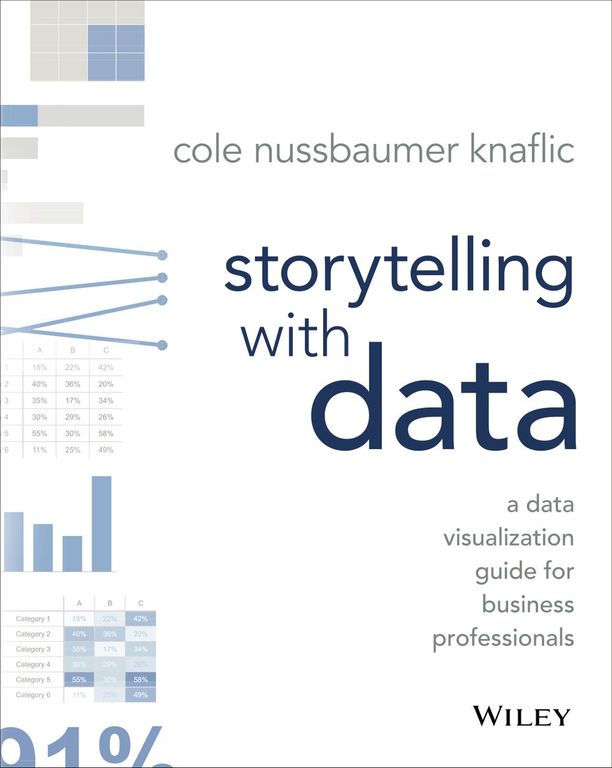
Nova: It is. And our first guide on this journey is Cole Nussbaumer Knaflic, with her incredibly practical book, "Storytelling with Data." Cole, interestingly, honed her craft at Google, where she was essentially a data wizard, tasked with making sense of mountains of information for some of the brightest minds on the planet. Her entire ethos is about moving beyond just presenting numbers to crafting narratives that captivate and connect.
Atlas: Moving beyond the spreadsheet, then. I like that. So we're talking about not just showing the data, but making it sing?
Nova: Precisely. And after that, we'll dive into how to make those data-driven songs truly with Chip and Dan Heath's "Made to Stick." Today we'll explore how to craft compelling narratives directly from data, then we'll discuss the six principles that make any idea, especially financial advice, truly unforgettable and shareable.
Crafting Data-Driven Narratives: From Numbers to Resonance
SECTION
Nova: So, let's start with Cole Nussbaumer Knaflic. Her fundamental premise is simple yet profound: in a noisy digital world, simply presenting facts isn't enough to build legacies. You need to tell a story. And for financial professionals, this means taking complex financial concepts and finding the human narrative within them.
Atlas: But how does this work when you're looking at, say, a decade of market performance data? It's not exactly a fairy tale. You have charts, graphs, percentages. Where's the narrative arc there?
Nova: That’s where Knaflic’s framework shines. Instead of just showing a line graph of a stock's performance over ten years, you tell the of that stock. You might say: "Imagine a company that started as a small disruptor, weathered two major economic downturns, made a pivotal acquisition here, and despite temporary dips, consistently innovated to reach this point." You highlight the turning points, the challenges, the triumphs. You give it a protagonist, a journey.
Atlas: So it's like a financial architect drawing a blueprint, not just listing materials. You're giving them the vision, not just the raw specs, and showing them these specs matter.
Nova: Exactly! Knaflic emphasizes identifying the core message first. What is the single most important thing you want your audience to take away from this data? Then, choose appropriate visuals that that story, and ruthlessly eliminate clutter. Think about how many financial reports you’ve seen that are just… overwhelming. Too much data, not enough insight.
Atlas: Oh, I've seen enough of those to last a lifetime. Charts with 15 different lines, tiny labels, a sea of numbers that just makes your eyes glaze over. It’s like trying to drink from a firehose.
Nova: Right? Knaflic would argue that’s not communication; that’s data dumping. She talks about the "curse of knowledge"—we, as experts, know so much that we forget what it's like to know. We present everything, assuming our audience will connect the dots. But they won't. You have to connect them them, with a narrative.
Atlas: So, for someone trying to explain, say, the long-term benefits of compound interest, instead of just showing a future value table, you could tell the story of two hypothetical investors: one who started early and consistently, and one who delayed. Show their journey, their sacrifices, and their eventual outcomes.
Nova: Precisely! You make it concrete, you give it characters, you inject a touch of emotion. It's not just about the numbers anymore; it's about the those numbers impact. Knaflic’s work shows us that when data tells a story, it moves from being merely understood to being, and that's where true connection and action begin. It's about building conviction, not just comprehension.
Atlas: That gives me chills. It’s a powerful shift in perspective.
The Art of 'Sticky' Ideas: Making Financial Advice Unforgettable
SECTION
Nova: And that naturally leads us to the next layer of impact: once you have your clear data story, how do you make it truly unforgettable? This is where Chip and Dan Heath, with their landmark book "Made to Stick," come in. The Heath brothers are masters at distilling complex academic research into incredibly accessible and actionable principles. They've identified six key principles that make any idea "sticky."
Atlas: Six principles, huh? Lay them on me. I'm imagining it's not "just say it louder."
Nova: Far from it! They call them SUCCESs: Simplicity, Unexpectedness, Concreteness, Credibility, Emotions, and Stories. Apply these to your financial advice, and you make it unforgettable and shareable.
Atlas: Unexpectedness in retirement planning? That sounds like a contradiction. Usually, it's about predictability and consistency. How do you make something inherently predictable feel unexpected?
Nova: Great question! You're right, it's not about making the unexpected, but the of the idea. Instead of just stating "you need to save X amount," you could use an unexpected statistic. For example, "Did you know that the average 65-year-old couple today needs over $300,000 in retirement, beyond what Medicare covers?" That's unexpected for many, and it immediately grabs attention. It reframes the problem.
Atlas: Wow, that’s kind of heartbreaking, but it absolutely punches you in the gut and makes you pay attention. It’s a jolt.
Nova: Exactly. It creates a "knowledge gap" that your audience wants to fill. Or, for simplicity, instead of a detailed breakdown of every asset class, you might say: "Our core investment strategy is designed around this one simple idea: 'Grow wealth steadily, protect against big losses.'" It's a mantra, easy to grasp.
Atlas: So for someone trying to explain a complex tax strategy, how do they make it "concrete" without getting lost in jargon?
Nova: Perfect example. Instead of talking about abstract percentages and clauses, make it tangible. You could say, "By implementing this strategy, you could save enough on taxes this year to cover two family vacations," or "This isn't just a tax deferral; it's the equivalent of putting a new car in your driveway every five years." You're translating abstract financial gains into real-world, tangible benefits.
Atlas: That’s a bit like taking a complicated map and highlighting just one key landmark. You simplify the journey by making the destination clear and appealing.
Nova: Precisely. And then there’s Credibility: it could be your own expertise, or external validation. Emotions: connecting financial decisions to dreams, fears, security. And of course, Stories: which brings us full circle back to Knaflic. The Heath brothers really drive home that stories are the ultimate sticky principle because they naturally incorporate so many of the others.
Atlas: It seems like these principles are all working in concert. You craft a compelling data narrative, then you layer on these sticky principles to ensure it's not just understood, but truly absorbed and remembered.
Synthesis & Takeaways
SECTION
Nova: Absolutely. What both Knaflic and the Heath brothers teach us is that in a world drowning in information, the real currency isn't just data; it's clarity, connection, and memorability. For anyone looking to amplify their legacy, whether it's through financial advice, thought leadership, or simply inspiring others, mastering storytelling is non-negotiable.
Atlas: It’s not just about getting people to understand; it’s about getting them to it, to on it, and to carry that message forward. It’s about building a legacy through connection, not just calculations. You’re not just an architect of wealth; you become an architect of understanding and impact.
Nova: Beautifully put. So, for our tiny step this week, we challenge you: take one complex financial concept you often explain, and draft a short social media post for it. Focus on just sticky principle from "Made to Stick"—maybe unexpectedness, or concreteness. Try to make that concept resonate beyond the numbers.
Atlas: And share your attempts with us! We'd love to see how you're transforming those cold facts into captivating stories.
Nova: This is Aibrary. Congratulations on your growth!