

Crafting Compelling Narratives: The Power of Strategic Storytelling
Golden Hook & Introduction
SECTION
Nova: Forget everything you think you know about "natural born storytellers." What if the most compelling narratives aren't magic, but meticulously engineered?
Atlas: Whoa, engineered? That sounds a bit… clinical for something as human as a story. I always thought it was more about raw talent, that spark. Are you saying it’s a science project?
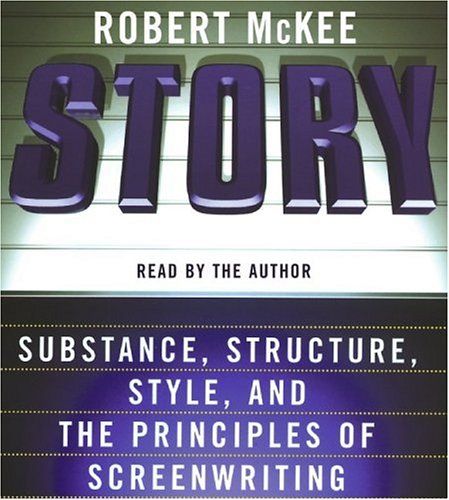
Nova: Not a science project in a cold, sterile lab, Atlas, but definitely an architecture. We're talking about the universal principles that underpin every single story that has ever gripped you, from ancient myths to your favorite binge-worthy series. And to really dive into this, we have to talk about Robert McKee’s legendary book,.
Atlas: McKee, the screenwriting guru? So, we're talking Hollywood blockbusters and Oscar-winning scripts here? Because I'm trying to figure out how that applies to, say, someone trying to inspire their team, or an influencer building a community.
Nova: Exactly! That's the brilliance of McKee. His work, born from decades of teaching screenwriters how to craft narratives that resonate, reveals that these principles aren't just for the silver screen. They are the grammar of human experience. He’s taught everyone from aspiring writers to seasoned directors, and his insights are so foundational that they apply to literally any form of communication where you want to move people. It’s about understanding the deep human need for narrative, and then intentionally crafting your communication to meet that need.
The Universal Blueprint: Deconstructing Gripping Narratives
SECTION
Atlas: So, if it's an architecture, what are the load-bearing walls? What's the foundational structure McKee lays out that makes a story, well, a?
Nova: At its core, McKee shows us that a gripping tale isn't just a sequence of events. It's a carefully constructed journey. Think of it like this: every compelling story starts with an "inciting incident." This is the event that shatters the protagonist's ordinary world, creating an imbalance. Then, you have the "rising action," which isn't just things happening, but a series of escalating conflicts and choices the protagonist makes in pursuit of their desire.
Atlas: Okay, so the inciting incident is like… my coffee machine breaking this morning, throwing my whole routine into chaos? And the rising action is my desperate attempt to find a new one before my meeting?
Nova: Precisely! And then you hit the "climax"—the point of no return, the biggest confrontation, where the protagonist faces their greatest fear or obstacle. For your coffee machine, it might be discovering the last one in stock, but it’s broken, and you have a choice: give up or find an alternative. Finally, the "resolution" brings a new balance, a changed world, whether for better or worse. You either get your coffee, or you learn to live without it, forever changed by the experience.
Atlas: That's actually really inspiring. So, even a mundane morning can be a tiny epic! But if we’re talking about influencing people, leading teams, or building a brand, how do we apply this? When I’m giving a presentation, I’m not exactly leading my audience through a dragon-slaying quest.
Nova: Ah, but you are leading them through a journey! Imagine you're a leader trying to get your team to adopt a new, complex software system. The "inciting incident" isn't a dragon, it's the current system's inefficiency causing real problems. The "protagonist" isn't just one person, it's the entire team facing this challenge. The "rising action" is their struggle to adapt, the training, the initial frustrations. Your role as the leader is to guide them through the "climax" – perhaps a challenging first big project using the new system – towards the "resolution" of increased productivity and success.
Atlas: I can see that. It's not about making up fiction, it's about recognizing the inherent narrative in real-world challenges and framing them in a way that people can connect with emotionally. But wait, that sounds a bit like… manipulating emotions. Isn't there a fine line between compelling storytelling and just playing on people’s feelings?
Nova: That’s a sharp observation, Atlas. The difference lies in authenticity and purpose. McKee isn't advocating for deception; he's revealing the universal structures that make resonate more deeply. When you understand how stories work, you can present your message, your vision, or your product in a way that respects the audience's journey, rather than just dictating to them. It’s about empathy, really. You’re meeting them where they are in their own narrative.
Hero's Journey for Your Message: The StoryBrand Framework
SECTION
Nova: And that naturally leads us to the second key idea we need to talk about, which often acts as a practical counterpoint to McKee's structural principles. Once you understand the blueprint of a compelling narrative, how do you make sure your message is built on it, especially when trying to inspire, connect, or lead? This is where Donald Miller's comes in.
Atlas: Okay, so if McKee gives us the universal grammar, what does Miller offer? Another layer of complexity, or a simplification?
Nova: Miller is all about radical simplification, but with profound impact. He argues that most businesses and communicators make a fundamental mistake: they make themselves the hero of their own story. Miller’s seven-part StoryBrand framework flips that on its head. He says, clarify your message so customers will listen by positioning your as the hero.
Atlas: So, it's not about story, but story? That’s going to resonate with anyone who struggles with feeling self-conscious about promoting themselves. But for an influencer, for a leader, isn’t part of their job to share their own journey and expertise? How do you reconcile that?
Nova: That's the genius of it. You, the influencer, the leader, don't disappear. You become the. Think about it: every hero needs a guide. Luke Skywalker had Obi-Wan. Frodo had Gandalf. Your audience, your followers, your team – they are the characters facing a problem, and they need a guide who understands their struggle and has a plan to help them succeed.
Atlas: I like that. So, the seven parts then? Give me the breakdown of how this guide-hero dynamic actually works.
Nova: Alright, here’s the quick-fire StoryBrand breakdown:
Atlas: That's incredibly clear. So, if I'm an influencer trying to teach a new skill, my audience is the character, their problem is feeling overwhelmed by the skill, I'm the guide, my course is the plan, signing up is the call to action, avoiding stagnation is avoiding failure, and mastering the skill is success. That just makes so much sense! But isn't there a risk of sounding too formulaic? Or even a bit… salesy?
Nova: Not if it's authentic. The goal isn't to trick people; it's to cut through the noise and provide clarity. Miller says, "If you confuse, you lose." In a world saturated with information, people respond to clear calls to action that promise to solve problems. Adao, for instance, as an influencer, doesn't just share her journey; she implicitly positions her audience as the ones seeking growth, and she guides them with insights and actionable advice. Her insights aren't just heard, they're, because they address the audience's inherent desire for progress.
Atlas: That's a powerful distinction. It's about empathy and clarity, not manipulation. It makes me think about how many times I've been confused by a message because the speaker was so focused on their own brilliance, they forgot to tell me how it applied to life.
Synthesis & Takeaways
SECTION
Nova: Exactly! And that's where McKee and Miller converge. McKee gives you the structural integrity, the deep understanding of stories work on a human level. Miller gives you the audience-centric focus, ensuring that your message, whatever it is, is framed as a journey. Together, they form a formidable toolkit for anyone looking to truly connect, inspire, and lead.
Atlas: So, strategic storytelling isn't about being a "natural" or even being overtly "creative." It's about understanding human psychology, the architecture of narrative, and then applying a framework that puts your audience squarely at the center of their own success. It’s about being a better guide.
Nova: Absolutely. It's about recognizing that every interaction, every presentation, every piece of content you create, is an opportunity to tell a story. And when you tell a story well, one that resonates because it speaks to your audience's deepest desires and helps them overcome their biggest challenges, you don't just convey information. You create transformation. You move people.
Atlas: That gives me chills. It’s not just about what you say, it's about how you help others see themselves in the journey you’re outlining. So, what's one tiny step, one immediate action our listeners can take tonight to start applying this combined wisdom?
Nova: Pick one core message you want to convey this week. It could be for a colleague, your team, or even just explaining something to a friend. Now, identify their "problem" and how you can be their "guide" to a "successful" outcome, even just for a five-minute conversation. Frame it as their journey, not yours.
Atlas: That’s brilliant. It's about shifting perspective, right? And that's something we can all start doing immediately. This has been an incredibly insightful dive into the power of crafting compelling narratives.
Nova: It truly has. And we hope it sparks some powerful storytelling in all of you.
Atlas: This is Aibrary. Congratulations on your growth!