

Crafting Compelling Narratives: The Power of Story for Impact
Golden Hook & Introduction
SECTION
Nova: What if the reason your brilliant ideas aren't landing, your messages aren't sticking, or your influence feels stagnant, isn't because of what you're saying, but how you're saying it?
Atlas: Oh, I know that feeling. It's like you've got all the right data, all the logical arguments lined up, and still, it just… bounces off. For anyone trying to lead effectively or make their vision a reality, that's incredibly frustrating.
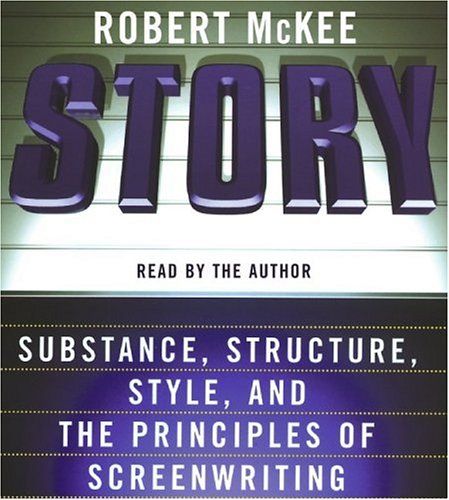
Nova: Exactly! And today, Atlas, we're diving deep into why that happens and how to fix it, by unpacking 'Crafting Compelling Narratives: The Power of Story for Impact.' We're drawing inspiration from two titans in the field: Robert McKee's groundbreaking 'Story: Style, Structure, Substance, and the Principles of Screenwriting' and Donald Miller's incredibly practical 'Building a StoryBrand.'
Atlas: Oh, I like that. McKee, the screenwriting legend, seems like an interesting starting point for business and leadership. What's the connection there?
Nova: Well, what's so fascinating about McKee, Atlas, is that he's often called the 'Aristotle of our time' for screenwriters, yet his principles are so universal, they apply to literally any form of communication where you want to move an audience. He distills the essence of what makes human beings connect with a narrative, whether it's on a movie screen or in a boardroom. It's about understanding the deep human psychology of story.
Atlas: Right, like the underlying code. So, it's not just about telling a good yarn for entertainment, but fundamentally about how humans process information and make decisions?
Nova: Precisely. And that deep understanding is what we're going to explore first. We’re going to uncover the hidden blueprints that make any message unforgettable, revealing how stories bypass resistance and create deep emotional resonance, ultimately making your ideas stick and move people to action.
The Universal Anatomy of Story: Beyond Entertainment
SECTION
Nova: So, let's start with McKee. He argues that story isn't just an art form; it's a fundamental human need, a way we make sense of our chaotic lives. At its core, every compelling story, from a blockbuster movie to a powerful presentation, involves a character with a desire, facing obstacles in an external reality, and making choices to overcome them.
Atlas: So you're saying it's always about desire meeting resistance? That makes a lot of sense. But for someone trying to, say, influence their team to adopt a new project management system, what's their 'character desire' and 'external reality' look like? I imagine a lot of our listeners are thinking, 'How does this apply to my Monday meeting?'
Nova: That's a great question, and it's where the magic happens. Let's take a hypothetical. Imagine a startup founder, Sarah, pitching her groundbreaking tech to a room full of skeptical investors. Her initial pitch is all about the tech specs: "Our algorithm is 30% faster, our UI is intuitive, our market share projections are through the roof." It's facts, facts, facts.
Atlas: And the investors are probably nodding politely, maybe checking their phones. I've seen that movie before.
Nova: Exactly! Because Sarah made herself and her tech the hero. But then she reads McKee. She realizes the investors aren't just looking for a product; they have their own desire: to find the next big thing, to make an impact, to generate significant returns. Their external reality is a market flooded with mediocre ideas and high risk.
Atlas: Okay, so the investor is the hero, facing the problem of too many pitches and not enough innovation.
Nova: Yes! So Sarah reframes her pitch. She starts by painting a picture of the investors as visionaries, as problem-solvers. She describes the market pain point not as 'our tech solves X,' but as 'you, the discerning investor, know the enormous potential in Y, but you've been held back by Z.' She positions her tech not as the solution, but as the indispensable guide that will help —the investors—achieve desire. She tells a story where they are the protagonist, and her company is the wise mentor.
Atlas: Wow. That's actually really inspiring. It's a complete shift in perspective. So, instead of "Look at my amazing product," it becomes, "Here's how I can help you, the hero, achieve your incredible goal."
Nova: Precisely. And the choices she makes in her narrative—the challenges she highlights, the path she lays out—are all designed to resonate with journey, not hers. The result? They lean in. They ask questions. They see themselves in the story she’s telling.
Atlas: But wait, isn't this just manipulation? Or is it about genuine connection? I mean, for someone driven by a desire for influence, there's a fine line between persuasion and perceived manipulation.
Nova: That's a crucial distinction. It's absolutely about genuine connection. Manipulation is about coercing someone into doing something against their best interest. Authentic storytelling, built on these universal principles, is about clarifying how your solution genuinely helps someone achieve and overcome. It’s about meeting them where they are and showing them a path they to take, not one you force them down. It’s a profound act of empathy, really.
Atlas: That gives me chills. That's such a hopeful way to look at it. It transforms communication from a battle of wills into a collaborative journey.
Strategic Storytelling: The StoryBrand Framework for Influence
SECTION
Nova: And that naturally leads us to the second key idea we need to talk about, which often acts as a counterpoint to the more abstract principles of McKee: Donald Miller's StoryBrand Framework. Now that we understand the deep psychology, how do we one of these impactful narratives in a practical, step-by-step way?
Atlas: Okay, so McKee gives us the 'why' and the 'what' of story at a fundamental level. Now Miller gives us the 'how to' for applying it directly?
Nova: Exactly. Miller simplifies story into seven universal plot points that every human brain is wired to respond to. And the core idea, which echoes our startup founder example, is this: the customer is the hero, not your company, not your product, not even you. Your job is to be the guide.
Atlas: That makes sense, but it's also counter-intuitive for many. We're often taught to highlight our own achievements, our own expertise. So, how does a leader, for example, trying to persuade stakeholders on a new strategy, make the the hero, not the strategy itself or their own brilliant ideas?
Nova: Let's consider a leader, Alex, who needs to implement a difficult, company-wide operational change. Her initial instinct might be to present the new system with all its features and benefits, explaining why developed it and why thinks it's great. That's leader as hero.
Atlas: Been there. Done that. And usually, the team just sees more work, more disruption.
Nova: Right. So, Alex, applying StoryBrand, shifts her focus. She identifies her team's 'problem.' Maybe it's inefficient workflows, missed deadlines, or a sense of being overwhelmed by outdated tools. That's the 'Hero has a Problem.' She articulates more than her solution.
Atlas: So, she's not just saying 'here's a new system,' but 'are you tired of X, Y, and Z frustrations?'
Nova: Precisely. Then, she positions herself not as the inventor of the system, but as the 'guide.' She says, "I understand these frustrations, and I've found a path forward." She then presents the new system as 'The Plan'—a clear, actionable path for them to overcome their problem. It's not about the system itself, but about the transformation it offers.
Atlas: I’m curious, what about the 'villain' in StoryBrand? Is it always a competitor, or can it be more subtle? What if the 'problem' isn't obvious to everyone yet?
Nova: That's a critical point. The 'villain' is rarely a person; it's usually an internal struggle, an external obstacle, or even a philosophical evil. For Alex's team, the villain might be 'outdated processes' or 'missed opportunities due to inefficiency.' If the problem isn't obvious, the guide's role is to articulate it so clearly that the hero recognizes it as their own. It's about empathizing with their unarticulated frustrations.
Atlas: So, she’s essentially saying, "I see your struggle, I've got a map, and I'll walk with you."
Nova: Exactly. And then she gives a clear 'Call to Action': "Let's implement this system together, starting with X next week." She's not just informing; she's inviting them into a story where they are the protagonist, and she's there to help them win. The influence comes from serving as their trusted guide, not from dictating the path.
Synthesis & Takeaways
SECTION
Nova: So, whether we're looking at McKee's universal principles or Miller's practical framework, the profound insight is this: our most powerful tool for influence and connection isn't logic alone; it's the ability to frame our message as a story where our audience is the hero.
Atlas: So basically you're saying, genuine influence comes not from being the smartest person in the room, but from being the most empathetic storyteller? The one who truly understands the hero's journey your audience is on?
Nova: Absolutely. It's about shifting your perspective from 'what I want to say' to 'what story my audience needs to hear.' When you do that, you bypass resistance, foster emotional resonance, and make your message not just understood, but remembered and acted upon.
Atlas: That's actually really inspiring. It's about making our audience feel seen, understood, and like they're on a journey we can help them navigate. For all our listeners who are striving to clarify their message and lead more effectively, that's a game-changer.
Nova: It truly is. It transforms communication from a monologue into a shared adventure. So, I want to leave you with this question: What story is your audience desperately waiting to hear you tell, where they are the hero, and you are their trusted guide?
Atlas: That’s a powerful question to reflect on.
Nova: This is Aibrary. Congratulations on your growth!