

Weaving Worlds: Mastering Narrative to Unify Your Insights.
Golden Hook & Introduction
SECTION
Nova: You know, Atlas, for years, the advice has been "specialize, specialize, specialize." But what if your greatest strength isn't narrowing down, but skillfully connecting everything?
Atlas: Hold on, are you saying my intellectual scattered brain is actually a superpower? Because that's a narrative I can definitely get behind.
Nova: Absolutely! That's precisely what we're diving into today on Aibrary: the art of "Weaving Worlds." It's about mastering narrative to unify your insights. We're talking about taking those brilliant, disparate ideas you've collected – the kind that often feel like they belong in different universes – and giving them a narrative architecture so they resonate and connect with others.
Atlas: That resonates deeply. So many of our listeners, the polymaths and visionaries, they're always seeking meaning, always trying to bridge academic rigor with artistic expression, or connect seemingly unrelated fields. But the challenge is, how do you make that vast tapestry of knowledge coherent and impactful? It’s not enough just to the connections; you have to them.
Nova: Exactly. And that's where narrative comes in. Today, we're going to explore how storytelling, drawing on the profound insights of thinkers like Lisa Cron and Joseph Campbell, isn't just for fiction writers. It's the ultimate tool for synthesis, for transforming your unique vision into something truly accessible and memorable.
The Internal Struggle: Making Ideas Relatable
SECTION
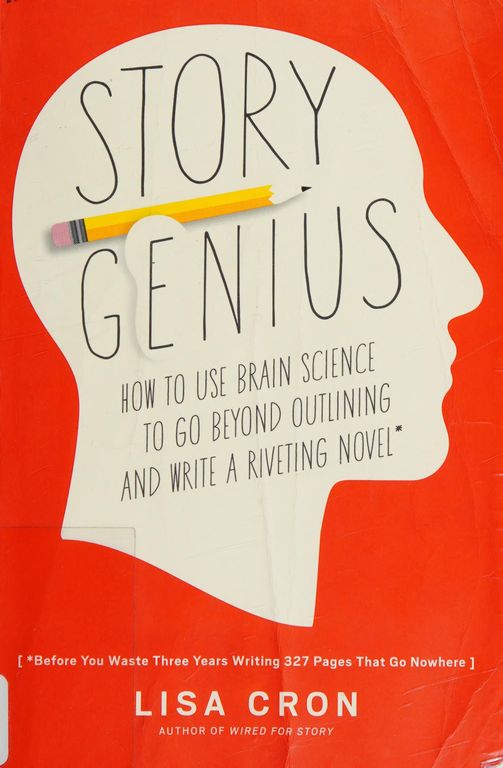
Nova: Let's start with Lisa Cron, author of "Story Genius." Her core argument, which is incredibly powerful when applied beyond novels, is that a compelling story always begins with understanding a character's internal struggle. It’s what drives the plot, what makes us care.
Atlas: That sounds great for a character in a book, but how does that translate to, say, explaining a complex economic theory, or the intricacies of climate science? Ideas don't have internal struggles, do they? I mean, for someone trying to integrate, say, neuroscience with abstract art, where's the "character" and their "struggle" there?
Nova: That's a brilliant question, Atlas, and it's where we shift our perspective. The "character" isn't always a person. It can be the listener, the field of study, or even the prevailing misunderstanding of a concept. And the "internal struggle" is the problem, the confusion, the paradox that your brilliant idea resolves. Consider quantum physics. For decades, it was this abstract, mathematical beast. The "character" was the curious human mind, and its "struggle" was reconciling our classical, intuitive understanding of the world with the bizarre, counter-intuitive reality of the quantum realm.
Atlas: So, the struggle wasn't just about the equations, but about the disconnect, the deep conceptual dissonance?
Nova: Precisely. Einstein himself struggled with it, calling quantum entanglement "spooky action at a distance." That's the internal struggle! When physicists began to frame it not just as equations, but as a deep philosophical mystery, a challenge to our very perception of reality, that's when it started to become more relatable, even if still mind-bending. The narrative became about humanity's struggle to grasp the universe's true nature.
Atlas: I see. So, for a polymath, it’s about identifying the core intellectual or conceptual struggle that their integrated insight actually. It's not just presenting information, but presenting it as the answer to a deep-seated question or confusion that the audience, or even the field itself, is grappling with. That gives meaning to the disparate pieces.
Nova: Exactly. It gives context, relevance, and most importantly, emotional resonance. Your integrated knowledge isn't just a collection of facts; it's the resolution to a profound intellectual tension.
Universal Patterns: The Hero's Journey of Ideas
SECTION
Nova: Once you've identified that core struggle, you can then map it onto something deeply, universally familiar. This brings us to Joseph Campbell and his monumental work, "The Hero with a Thousand Faces." Campbell showed us that across cultures and millennia, there are universal narrative patterns – the monomyth, or the Hero's Journey – that make stories deeply resonant and timeless.
Atlas: This is fascinating. How does a polymath's personal quest for synthesis, or the journey of an interdisciplinary idea, fit into a "Hero's Journey"? Is the "Hero" the person, or the idea itself, venturing through different academic silos?
Nova: It can be both, and that’s the beauty of it. The "Hero" can absolutely be the individual polymath, venturing into unknown intellectual territories, facing the "call to adventure" of a new discipline, overcoming the "trials" of conflicting methodologies, and ultimately returning with the "elixir" – the unified, breakthrough insight. Or, and this is truly powerful, the "Hero" can be the.
Atlas: The idea as a hero? Tell me more.
Nova: Imagine a concept like "systems thinking" or "emergence." Its journey began as a seed, a "call to adventure" in one discipline, perhaps biology. It then faced "trials" as it tried to cross the threshold into engineering, then sociology, encountering resistance from established paradigms, the "guardians of the threshold." It found "allies" in interdisciplinary thinkers, passed through "ordeals" of proving its validity in diverse contexts, and eventually returned as a fundamental "elixir" – a transformative way of understanding complex problems across fields.
Atlas: That's an incredible way to frame it. It gives a grand narrative to the very process of intellectual integration. It's not just connecting dots; it’s showing the epic quest those dots undertook to finally form a constellation. For our listeners who feel their diverse interests are just disparate threads, this offers a compelling loom to weave them into.
Nova: Precisely. It reveals the inherent story, the underlying pattern that gives your unique blend of knowledge its universal appeal. It makes your insights not just unique, but timeless.
Tiny Step & Synthesis
SECTION
Nova: So, bringing it all back to "Nova's Take": to integrate your diverse knowledge, to make it accessible and impactful, you absolutely need to tell a story. It's the fundamental framework.
Atlas: I get the profound importance of it now. But for someone who's just starting to grapple with this, someone whose mind is bursting with brilliant but disconnected ideas, what’s the smallest, most immediate step they can take? Where do they begin weaving their worlds?
Nova: The tiny step is simple but powerful. Choose just one complex idea you're passionate about – it could be anything from your academic work to an artistic pursuit. Now, try to explain it to a friend, not as a lecture, but using a simple narrative arc. Identify the 'character' – who is this story about, or who is the audience for this idea? – and their 'struggle' – what problem, confusion, or challenge does this idea address?
Atlas: So it's not about forcing a story, but the story already inherent in the connections we're trying to make. It’s about uncovering the drama within the data, the quest within the concept. That’s incredibly liberating. It connects directly to the growth recommendation for our listeners: to trust their unique blend of passions, recognizing they are not opposing forces, but allies in a larger narrative.
Nova: Exactly, Atlas. Your unique blend of insights your story. It's the narrative of your journey, the resolution of a universal struggle, the elixir you bring back from your intellectual adventures. The true power lies not just in having brilliant ideas, but in their narrative architecture. It's about building bridges with words, crafting a vision that resonates deeply.
Atlas: And in doing so, you're not just sharing information; you're inviting others to embark on that journey with you, to see the world through your integrated lens. So, for everyone out there with a mind full of amazing, disparate thoughts, take that tiny step. Find the character, find the struggle, and start telling your unique story.
Nova: Your insights deserve to be heard, and narrative is the master key.
Atlas: This is Aibrary. Congratulations on your growth!