

Unlocking the Power of Narrative: Crafting Accessible Stories
Golden Hook & Introduction
SECTION
Nova: You know, it’s a strange thing, but some of the most powerful stories ever told are locked away. Not behind bars, not in hidden vaults, but in plain sight. They're in books, in histories, in the very narratives that shape our world.
Atlas: Whoa, that’s a pretty bold statement, Nova. Locked away? I thought stories were meant to be shared, to resonate. What makes you say they’re inaccessible?
Nova: Exactly! They meant to be shared. But often, the way they're told, the context they demand, or even just the sheer volume of information can act as invisible barriers. We assume everyone can just pick up a classic and instantly connect, but that's not always the case.
Atlas: So, you’re talking about more than just physical access to books, aren't you? It’s about the, the —the ability to truly engage with a narrative. That makes me wonder, if stories are so vital, how do we unlock them for everyone?
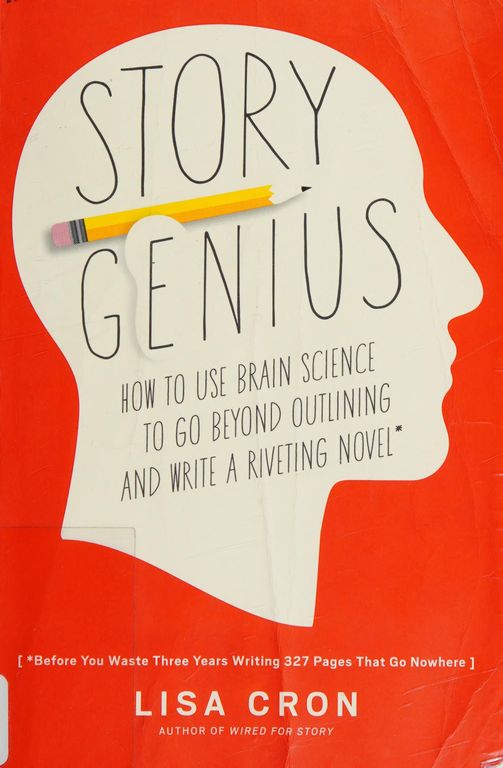
Nova: That’s the million-dollar question, Atlas. And today, we’re tapping into the brilliance of two narrative architects who, from different angles, give us the blueprint. We’re talking about Lisa Cron, author of "Story Genius," and Donald Miller, who gave us "Building a StoryBrand." These aren't just books for novelists or marketers; they're manuals for making story, message, universally resonant and truly accessible.
Atlas: Oh, I like that. So, not just about writing a bestseller, but about crafting a message that truly breaks barriers. That sounds incredibly empowering, especially for anyone who feels passionate about sharing important narratives.
The Architecture of Engagement
SECTION
Nova: Absolutely. Let's start with Lisa Cron's "Story Genius." Her core premise is revolutionary for how we think about connection: a story doesn't start with plot or character description; it starts with the. She argues that every compelling narrative, whether it's a novel or a historical account, resonates because we see ourselves in the protagonist's inner conflict.
Atlas: Okay, so you’re saying it’s not about the external events, but the internal turmoil that makes a story click with an audience? How does that apply to, say, making a complex historical text more accessible?
Nova: It's precisely there, Atlas. Think about it: a historical text might present a series of dates, names, and political shifts. Dry, right? But if you frame it through the internal struggle of a key figure—their fears, their aspirations, their moral dilemmas—suddenly, it transforms. You're not just learning facts; you're experiencing a human journey. Cron calls this "building a story from the inside out." It’s about finding that universal human experience buried beneath the details.
Atlas: That makes a lot of sense. So, instead of just presenting the facts of, say, a civil rights movement, you’d focus on the personal courage and internal conflict of a leader or an ordinary person caught in the struggle. That’s a powerful shift. It turns information into empathy.
Nova: Exactly! It's how you create that "universal resonance." We all have internal struggles, even if our external circumstances are vastly different. By tapping into that, you create an immediate, visceral connection. This is crucial for accessibility because it bypasses intellectual hurdles and goes straight to the heart.
Atlas: So, Cron gives us the emotional architecture. What about Donald Miller’s "Building a StoryBrand"? How does that fit into this idea of accessible narratives? Because "StoryBrand" always struck me as being very business-focused.
Nova: It’s a brilliant complement, actually. Miller takes the essence of storytelling and distills it into a seven-part framework for clear, compelling messaging. While it's widely used in marketing, its principles are fundamentally about effective communication. He argues that every good story, every good message, positions the audience as the and the communicator as the.
Atlas: In other words, it’s not about and how smart am, it’s about and how can overcome your challenges with my help. That’s a huge paradigm shift for a lot of people trying to convey complex ideas.
Nova: Precisely. Miller's framework forces you to articulate the 'problem' your audience faces, the 'solution' you offer, and the 'success' they'll achieve. For literature accessibility, this is invaluable. It’s not just about saying, "Literature is good for you." It's about identifying the specific problem a community has in engaging with literature—be it intimidation, lack of context, or perceived irrelevance—and then positioning accessible narratives as the solution that leads to a richer, more connected life.
Atlas: Okay, so Cron helps us understand the of a story, how to make it universally felt. And Miller gives us a practical framework for articulating the of that story, making it clear and compelling. It’s like one focuses on the emotional connection and the other on the strategic delivery.
Nova: You nailed it. Think of it this way: Cron teaches you how to write a song that moves people to tears. Miller teaches you how to package that song, choose the right concert venue, and promote it so the right audience shows up and understands its profound message. Both are essential for not just creating a story, but for ensuring that story and makes an impact.
Atlas: So, for anyone wanting to liberate stories, to make them truly free and impactful, you need both the internal resonance and the clear, compelling messaging. It’s not enough to have a great story; you have to tell it in a way that people can immediately grasp its relevance to their own lives.
Your Narrative Blueprint & Practical Application
SECTION
Nova: Exactly. And that brings us to the practical application, the "Tiny Step" recommended by our content: applying the StoryBrand framework to articulate the 'problem' that literature accessibility solves for a specific community. This isn't abstract; this is boots-on-the-ground action for anyone passionate about empowering voices.
Atlas: That’s where the rubber meets the road. Because it’s one thing to understand the theory, but another to actually something. So, if I'm someone who deeply cares about preserving legacies and connecting people to stories, how do I even start to identify that "problem" using the StoryBrand framework?
Nova: Let's take a hypothetical. Imagine a community where traditional literature is seen as elitist or irrelevant. The problem isn't necessarily that they can't the words. The problem might be the perception that these stories have nothing to say about lives, struggles, culture. Or perhaps they feel intimidated by the language or the sheer volume.
Atlas: So, the "problem" isn't a lack of books, but a lack of or. That’s a subtle but crucial distinction. How would you then frame the 'solution' of literature accessibility using Miller's framework?
Nova: You'd position literature accessibility not as "reading more books," but as "discovering your own voice through the echoes of history" or "finding validation for your experiences in universal narratives." The accessible version becomes the 'guide' that helps them bridge that gap. The 'success' isn't just finishing a book, but feeling seen, understood, and empowered by its insights.
Atlas: That’s powerful. Instead of saying, "Here's Shakespeare, read it," you're saying, "Here's a story that speaks to power and ambition, just like the challenges you might face in your community. Let me show you how to connect with it." It shifts the emphasis from the text to the.
Nova: Precisely. And this is where Cron's insights come back in. When you're making a story accessible, you're not dumbing it down. You're surfacing the inherent internal struggles within that narrative that will resonate with your specific audience. You're finding the character's "desire" and "need" that mirrors theirs.
Atlas: So, for someone wanting to build a community around literature, or leverage digital storytelling for accessibility, this "Tiny Step" of identifying the problem is foundational. It ensures that your efforts are genuinely meeting a need, not just pushing a product.
Nova: Exactly, Atlas. It's about empathy-driven advocacy. You're not just a liberator of stories; you're a strategic empath, understanding the specific barriers and crafting a pathway that speaks directly to the audience's internal world and their desire for connection and understanding. It's about making sure that the stories, once freed, don’t just exist, but truly thrive and resonate with those who need them most.
Atlas: That sounds like a journey of profound impact.
Synthesis & Takeaways
SECTION
Nova: It truly is. What we’ve seen today is that unlocking the power of narrative, making it truly accessible, isn't a simple task of removing physical barriers. It's a sophisticated art and science. It demands that we understand the deep, internal human struggles that make any story resonate, as Lisa Cron teaches us.
Atlas: And then, it requires us to clearly articulate the value and the pathway to that resonance, positioning the audience as the hero, just as Donald Miller outlines. It’s about building bridges, not just opening doors.
Nova: The profound insight here is that accessibility isn't about simplification; it's about. It’s about understanding the specific internal and external barriers a community faces in connecting with narratives, and then using the architecture of compelling storytelling to dismantle those barriers, one resonant message at a time. It's a call to action for anyone who believes in the transformative power of a well-told story.
Atlas: I love that. Strategic empathy. So, for our listeners who are driven by a sense of purpose, who want to empower voices and preserve legacies through literature, that tiny step — applying the StoryBrand framework to articulate the problem accessibility solves — is where it all begins. It's about understanding you're trying to reach and they need these stories, before you even think about to deliver them.
Nova: Absolutely. Choose one story, one book, one community, and articulate that problem. See what happens when you approach accessibility not as a task, but as an act of profound, empathetic storytelling.
Atlas: That’s actually really inspiring. It redefines what it means to be a "liberator" of stories. This is Aibrary. Congratulations on your growth!