

The Narrative Engine: How to Craft Stories That Persuade and Influence
Golden Hook & Introduction
SECTION
Dr. Roland Steele: Jachi, as a professional writer, your entire world is built on the power of story. But what if I told you that the most common mistake that businesses, marketers, and even many writers make is telling the wrong kind of story altogether?
Jachi: That's a bold claim, Roland. In media and publishing, we're in a constant tug-of-war between the art of the narrative and the science of audience metrics. We live and die by what engages people. So the idea that there's a 'wrong' kind of story... that's immediately fascinating. You have my full attention.
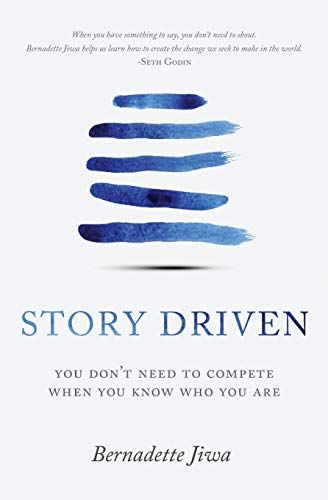
Dr. Roland Steele: It’s a provocative idea, right? And it’s the central argument in a fantastic book by Bernadette Jiwa called 'Story Driven.' She argues that we've become obsessed with telling people we do, when we should be focused on telling them we do it. And that's what we're going to dissect today.
Jachi: Okay, I'm in. So where do we start?
Dr. Roland Steele: We'll dive deep into this from two perspectives. First, we'll explore the critical shift from leading with data to leading with a powerful story. Then, we'll get really strategic and discuss how to find and build what Jiwa calls your 'Difference Story'—the narrative that truly sets you apart and persuades your audience.
Jachi: Connection first, then differentiation. I like it. It feels like a logical progression for anyone trying to influence an audience. Let's do it.
Deep Dive into Core Topic 1: The Human Story vs. The Data Story
SECTION
Dr. Roland Steele: Excellent. So, Jiwa's first major point is this fundamental conflict between what she calls the 'Data Story' and the 'Human Story.' The Data Story is the default for most organizations. It's the 'what.' It's the features, the specifications, the numbers, the quarterly reports. It's logical, it's rational, and... it's often incredibly boring.
Jachi: And it's what so many people think makes them sound credible. "We have 20% more processing power," or "Our readership grew by 15% last quarter." It’s the language of the boardroom, not the coffee shop.
Dr. Roland Steele: Precisely. The Human Story, on the other hand, is the 'why.' It’s about values, beliefs, and the change you want to see in the world. It’s not about what your product; it's about what it to the person using it. The most famous example Jiwa uses, and it's a classic for a reason, is TOMS Shoes.
Jachi: Ah yes, the 'One for One' model.
Dr. Roland Steele: Exactly. Let's really paint the picture. The Data Story for TOMS is: "We are a for-profit company that manufactures and sells simple, canvas espadrille-style shoes." If they had led with that, they would have been one of a thousand shoe companies competing on price and style. It's a completely forgettable story.
Jachi: You'd see them on a shelf and walk right by.
Dr. Roland Steele: You would. But their founder, Blake Mycoskie, didn't tell that story. After a trip to Argentina where he saw children without shoes, he created a new narrative. The Human Story of TOMS became: "For every pair of shoes you purchase, we will give a new pair of shoes to a child in need." All of a sudden, the transaction is completely reframed.
Jachi: It’s no longer a purchase. It's an act of philanthropy. You're not just a consumer; you're a participant in a mission. The shoe itself almost becomes secondary. It's a souvenir of the good deed you just did.
Dr. Roland Steele: It's a souvenir of the story! That's a perfect way to put it. The shoe is the tangible artifact of the narrative you've bought into. Jiwa's point is that this Human Story creates a powerful emotional incentive that data simply cannot match. You feel good. You feel part of something bigger. That feeling is what drives loyalty and advocacy, not the thread count of the canvas.
Jachi: This resonates so much with what I see in media. An article can be filled with impeccable data and statistics about, say, a refugee crisis. It can lay out the numbers, the logistics, the geopolitical failures. And it might get some clicks from policy wonks. But it's the single, deeply reported profile of one family—their journey, their fears, their hopes—that's the story that goes viral. It's that story that drives millions in donations.
Dr. Roland Steele: So the data provides the scale, but the human story provides the motivation?
Jachi: Exactly. As a writer, you learn this lesson the hard way. You can't just present the facts and expect people to care. You have to find the human anchor. You have to give the data a heartbeat. The job is to find the person who embodies the statistic. You lead with their face, their voice, their struggle, and you zoom out to show the data that proves their story isn't an anomaly, but a representation of a larger truth.
Dr. Roland Steele: 'Give the data a heartbeat.' I love that, Jachi. That's the entire concept in a single phrase. You're not ignoring the data; you're contextualizing it within a narrative that our brains are actually wired to receive and respond to. You're moving from informing to mobilizing.
Jachi: And it's a constant fight. Editors, stakeholders, they often want the big, flashy number in the headline because it feels concrete. But the real, lasting impact—the persuasion—comes from that Human Story. It's the difference between an article people read and an article people.
Deep Dive into Core Topic 2: Discovering Your 'Difference Story'
SECTION
Dr. Roland Steele: That's a brilliant distinction. And it leads us perfectly into the second major idea from 'Story Driven.' Once you've learned to connect with your audience on a human level—once you've given your data a heartbeat—Jiwa says you have to answer the next, even more strategic question: "Why should they choose?"
Jachi: Right. Because TOMS wasn't the only charitable company, and my article about a refugee isn't the only one out there. The human connection gets you in the door, but it doesn't guarantee you'll make the sale or win the argument.
Dr. Roland Steele: Exactly. This is where she introduces the concept of the 'Difference Story.' This isn't a mission statement you hang on a wall or a marketing slogan. It's the core, authentic narrative of what makes you unique. It's the story of your values, your worldview, and your specific way of doing things that no one else can replicate.
Jachi: So it's your unique value proposition, but framed as a narrative.
Dr. Roland Steele: Precisely. Let's use a more grounded example. Imagine a small, local bakery in a town with a giant supermarket. The supermarket's Data Story is 'We sell 50 kinds of bread, 24 hours a day, at the lowest prices.' They compete on data. The small bakery can't win that fight.
Jachi: They'll never be cheaper or have more variety.
Dr. Roland Steele: Never. So they have to tell a Difference Story. Their story might be: "We believe the world moves too fast. We use a sourdough starter that our founder's grandmother brought from Italy 70 years ago. We know the names of the farmers who grow our wheat, all within ten miles of here. We only bake 100 loaves a day, and when they're gone, they're gone."
Jachi: That's not a story about bread. That's a story about community, heritage, quality, and scarcity. It's a story about a philosophy of life. You're not just buying lunch; you're buying into a worldview.
Dr. Roland Steele: You've got it. And notice what that story does. It acts as a powerful filter. If you're in a hurry and want a cheap loaf, that story actively tells you, "We are not for you." It repels the wrong customer. But for someone who shares those values of slowness, locality, and tradition, that bakery becomes the choice. The supermarket isn't even a competitor anymore. That's the power of a great Difference Story.
Jachi: As an ESTP, a 'Persuader,' this is the part that really gets my gears turning. This is the tool. This is how you move from being one option among many to being the only logical choice for the right people. You can, in a good way, weaponize this.
Dr. Roland Steele: Weaponize it. Tell me more. How would you do that as a writer?
Jachi: When I'm pitching an editor, I don't just pitch a topic. That's a commodity. I pitch my Difference Story. I wouldn't just say, "I want to write about the financial crisis." I'd say, "Everyone is covering the financial crisis by talking to economists and CEOs. My Difference Story as a writer is that I find the hidden human economies—the people on the fringes who are creating new systems to survive. I will tell the story of the crisis not from the top down, but from the bottom up, through the eyes of someone who has created a barter network in their neighborhood."
Dr. Roland Steele: Wow. So you're not just selling the idea. You're selling your unique, un-replicable way of executing that idea. You're making yourself the only person who can write version of the story.
Jachi: Exactly. It's the same for a publication. Why do people subscribe to The New Yorker? It's not just for 'articles.' It's for their Difference Story: a commitment to literary long-form journalism, iconic cartoons, and a specific intellectual, slightly witty worldview. You can't get that anywhere else. That story is their entire brand and their most powerful persuasive tool.
Synthesis & Takeaways
SECTION
Dr. Roland Steele: So it’s really a powerful one-two punch. The Human Story creates the initial emotional connection, it opens the door. It gives the facts a heartbeat. But it's the Difference Story that closes the deal. It articulates your unique value and turns that connection into a conscious choice.
Jachi: Absolutely. The first makes them listen, the second makes them believe in. You need both. A Human Story without a Difference Story is just a generic feel-good moment. A Difference Story without a Human Story can feel arrogant or abstract. Together, they are the engine of persuasion.
Dr. Roland Steele: A perfect summary. It's about connecting with universal human truths, and then articulating your unique perspective on those truths. So, Jachi, as we wrap up, what's the single, actionable takeaway for our listeners—the writers, the creators, the entrepreneurs—who want to put this into practice tomorrow?
Jachi: It's simple, but it's not easy. The next time you start a project—whether it's writing an article, designing a product, or building a company—stop. Before you write a single word or a line of code, take out a piece of paper and answer two questions.
Dr. Roland Steele: What are they?
Jachi: First: What is the fundamental human truth I am trying to connect with here? Forget the features, forget the data. What is the feeling, the value, the 'why'? And second: What is the story of how I see this, or do this, differently than anyone else in the world? What is my un-replicable perspective?
Dr. Roland Steele: The Human Story and the Difference Story.
Jachi: That's it. If you can answer those two questions with clarity and honesty, you're no longer just making more noise in a crowded world. You're not just telling a story. You're starting a movement. And that is how you truly persuade and influence.