

Beyond Translation: The Art of Living in Another Language's Soul.
Golden Hook & Introduction
SECTION
Nova: Atlas, quick! Italian. First three things that pop into your head.
Atlas: Pasta. Sunshine. Passion. Hand gestures. Confusing grammar.
Nova: Exactly! That last one, "confusing grammar," is where we start today, because it points to a much deeper feeling many language learners experience. It’s the feeling of performing, not truly expressing yourself, when you’re speaking a new language.
Atlas: Oh, I know that feeling. It’s like you’re constantly translating in your head, trying to get it perfect, and by the time you speak, the moment’s passed. You sound like a robot.
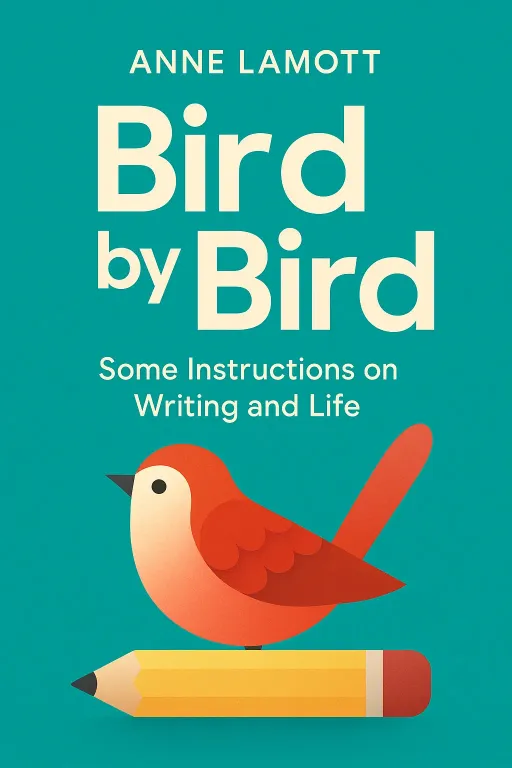
Nova: Precisely. And that quest for perfection often keeps us from finding the true soul of a language. Today, we're diving into that journey with insights from two unexpected literary guides: Anne Lamott's "Bird by Bird: Some Instructions on Writing and Life" and Ted Chiang's masterful collection, "Stories of Your Life and Others."
Atlas: Hold on, Anne Lamott, the writer known for her raw honesty and that famous advice about 'shitty first drafts'? And Ted Chiang, the sci-fi genius? What do they have to do with learning Italian? That sounds a bit out there.
Nova: Well, Lamott, whose own struggles with perfectionism led her to embrace the messy reality of creation, teaches us that the path to authentic expression, whether in writing or speaking a new language, begins with allowing yourself to be imperfect. It's about giving yourself permission to just, even if it's not good. And Chiang, a reclusive author who has won numerous prestigious awards despite a small body of work, shows us how language isn't just a tool, but a lens that can fundamentally reshape our perception of reality itself.
Atlas: So you're saying that to truly live in another language's soul, we need to embrace our linguistic 'shitty first drafts' be open to having our minds blown by new ways of seeing the world? That’s going to resonate with anyone who struggles with feeling inauthentic when speaking a new tongue.
Beyond Translation: The Performance vs. Authentic Expression in Language Learning
SECTION
Nova: Absolutely. Think about it: when you're learning a new language, especially one like Italian with all its rich history and cultural nuances, there's this immense pressure. You feel like you're on a stage, every word a performance. You're constantly trying to translate directly from your native tongue, and it creates this stilted, unnatural speech. You're not. You're a caricature of yourself.
Atlas: Yeah, I can definitely relate. I remember trying to tell an Italian friend how I felt about something really personal, and all I could manage were these bland, dictionary-definition sentences. It felt like I was explaining my emotions to a computer, not a human. It was incredibly frustrating.
Nova: That’s the feeling. And Anne Lamott’s 'shitty first drafts' philosophy directly addresses this. She famously said, "Almost all good writing begins with terrible first efforts. You need to start somewhere." For language learners, this means letting go of the need for perfection. Your first attempts at expressing complex thoughts in Italian will be clunky. They'll be grammatically incorrect. They might even be a little embarrassing. But they are.
Atlas: I mean, that sounds terrifying, though. What if your 'shitty first draft' offends someone? Or you just sound completely unintelligent? Isn't there a risk in just letting loose with imperfect language?
Nova: That’s a great question, and it highlights the vulnerability involved. But there's a difference between being careless and being courageous. Lamott isn't advocating for sloppiness; she's advocating for creation over paralysis. It's about getting the words out, making the connection, and then refining. It's about 'paying attention,' as she calls it – not just to the grammar, but to the rhythm, the intonation, the cultural context that informs how Italians their words.
Atlas: So it's like, stop trying to be Shakespeare in your second language and just try to be yourself, even if that self is a bit… unpolished?
Nova: Exactly! Imagine a language learner, let's call her Sofia, trying to express a nuanced feeling of bittersweet nostalgia – a common Italian sentiment, 'malinconia.' In English, she might say, "I feel a bit sad thinking about the past, but also happy for the memories." In Italian, she might initially translate word-for-word, creating something like "Mi sento un po' triste pensando al passato, ma anche felice per i ricordi." It's technically correct, but it lacks the depth, the sigh, the cultural weight of 'malinconia.'
Atlas: That makes sense. It’s not just about the words, it’s about the behind the words, and how the culture has shaped that feeling.
Nova: Right. If Sofia embraces her 'shitty first draft,' she might fumble through a few attempts, she might use the wrong tense, but she's to convey 'malinconia' – its rhythm, its cultural context, its emotional resonance. And in that effort, in that vulnerability, she starts to move beyond merely performing a translation to genuinely expressing herself. She starts to find her own voice, even with an accent and a few grammatical errors. It’s an act of profound courage, trusting that the connection is more important than the perfection.
Language as a Lens: How a New Tongue Reconfigures Perception and Reality
SECTION
Nova: And that naturally leads us to the second key idea, which often acts as a counterpoint to what we just discussed: how a new language isn't just a different way to say things, but a fundamentally different way to things. Atlas, have you ever encountered a concept in one language that simply doesn't exist, or isn't easily translatable, into another?
Atlas: Oh, absolutely! Like the German word 'Schadenfreude,' that pleasure derived from someone else's misfortune. There's no single English word for that, and it makes you realize how that concept is just… baked into the German worldview in a way it isn't in English.
Nova: That’s a perfect example. And Ted Chiang explores this idea to its extreme in his brilliant novella "Story of Your Life," which was adapted into the film "Arrival." In it, a linguist learns an alien language that fundamentally changes her perception of time. She begins to experience past, present, and future simultaneously, not just as memories or predictions, but as a unified whole.
Atlas: Wow. So you're saying learning a language can literally rewire your brain, not just add new vocabulary? That’s mind-blowing.
Nova: It is. Chiang's work, which is meticulously crafted and has garnered numerous awards for its philosophical depth, helps us understand that language isn't just a communication tool; it's an operating system for your brain. Think about Italian. It has words like 'campanilismo,' which refers to the fierce loyalty people feel towards their local town or village, a concept deeply rooted in Italy's history of city-states and regional identities. Or 'dolce far niente,' the sweetness of doing nothing.
Atlas: I love 'dolce far niente.' It’s a concept I desperately try to embody.
Nova: Exactly! These aren't just phrases; they're embedded worldviews. When you learn Italian, you don't just learn the words for 'sweet' and 'do nothing'; you start to internalize a cultural philosophy that values leisure and presence in a way that might be less prominent in, say, a hyper-productive English-speaking culture. It subtly reconfigures your priorities, your understanding of time, your emotional landscape.
Atlas: So it's not just about ordering coffee; it's about potentially seeing time differently, or understanding emotions in a completely new dimension, just by engaging with the language? That's incredible. How does that help an aspiring linguist connect more authentically, though?
Nova: It's precisely it changes your perception. When you deeply engage with these unique linguistic concepts, you start to understand the cultural narrative, the history, the philosophy embedded within the Italian language. You begin to feel the 'soul' of the language, not just its structure. And that understanding allows for a much deeper, more empathetic connection with native speakers, because you're not just translating words; you're sharing a worldview. It's about moving from understanding is said to understanding it's said, and what it truly in its cultural context.
Synthesis & Takeaways
SECTION
Nova: So, bringing it all together: Anne Lamott shows us that the courage to embrace our 'shitty first drafts' in a new language—to be vulnerable and imperfect—is the essential first step. It's the messy, human act of creation. And Ted Chiang reveals that this act of creation, this immersion, then opens the door to profound perceptual shifts, allowing the new language to reconfigure our understanding of the world, our emotions, and even time itself.
Atlas: That’s actually really inspiring. It frames language learning not as a chore, but as an adventure of self-discovery and a profound act of empathy. It's about trusting the process and allowing yourself to be transformed.
Nova: Exactly. True language mastery isn't about flawless grammar; it's about the willingness to be vulnerable, to make mistakes, and to let the language change you from the inside out. It's an act of profound empathy that transcends cultural barriers and offers a uniquely human connection. For anyone out there learning Italian, or any new language, we have a small healing moment recommendation.
Atlas: Oh, I love that. What is it?
Nova: Choose a simple Italian children's story or poem. Read it aloud. Don't worry about understanding every single word. Just focus on feeling its rhythm, its emotional flow, the sound of it in your mouth. Let the language wash over you. It's a small step towards feeling its soul.
Atlas: That's a perfect example of embracing the journey. And to our listeners, we'd love to hear about your own 'shitty first drafts' in language learning, or moments where a new language totally shifted your perspective. Share your stories!
Nova: This is Aibrary. Congratulations on your growth!